

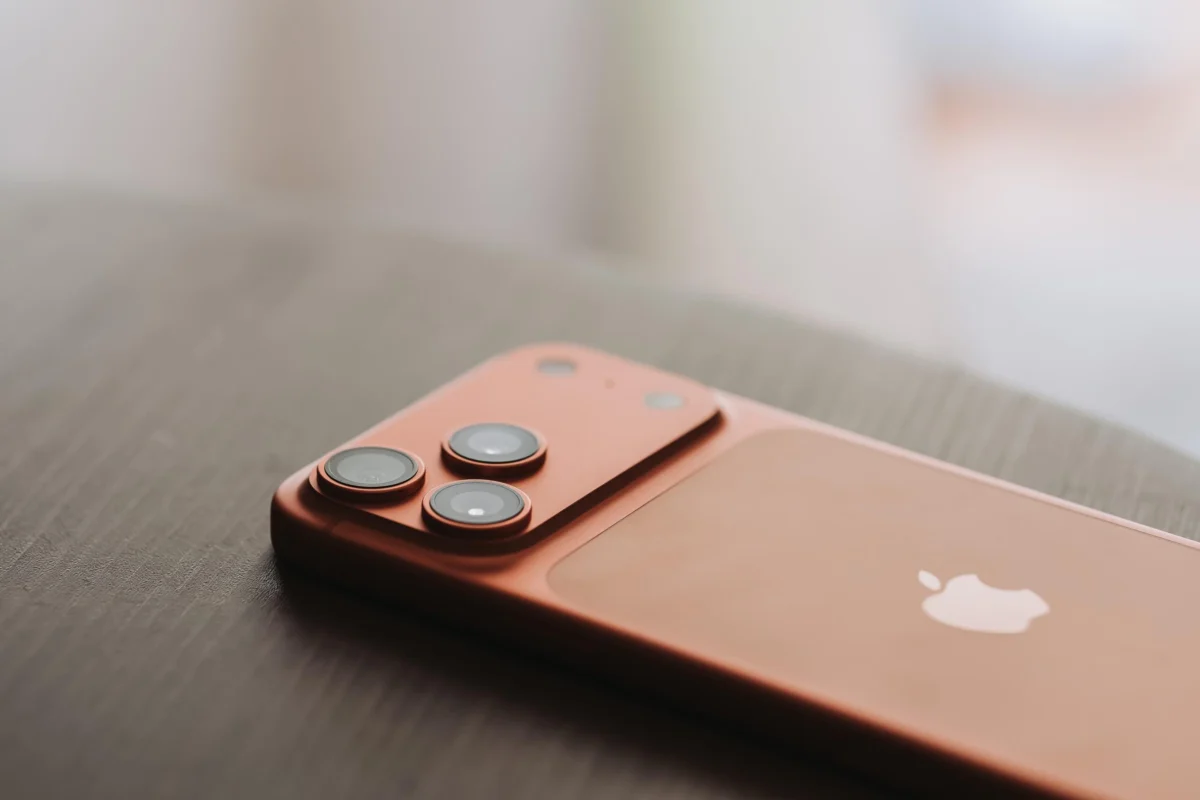
As the sweltering heat of August settles over Cupertino, the global technology community has turned its collective gaze toward the most anticipated date on the silicon calendar: the annual Apple autumn keynote. While the company has yet to distribute its iconic minimalist invitations, a confluence of historical patterns, supply chain signals, and leadership transitions suggests that the iPhone 18 Pro is rapidly approaching its debut. This year, however, the stakes are significantly higher than a mere incremental update. With a new Chief Executive Officer slated to take the stage and the looming specter of Apple’s first foray into the foldable market, the September event represents a fundamental pivot in the company’s decade-long trajectory.
To understand the timing of the iPhone 18 Pro launch, one must look at the rigid, almost liturgical rhythm Apple has established over the last fifteen years. Since 2011, the company has utilized the month of September as its primary launchpad for mobile hardware, with only the iPhone 4S breaking the mold with an October release. Within that September window, Apple historically favors the first or second Tuesday of the month. However, 2026 presents a unique calendar conflict. Labor Day in the United States falls on Monday, September 7. Historical data reveals that Apple meticulously avoids scheduling major events on the day immediately following a national holiday, largely to accommodate the travel schedules of international press and to ensure its own internal teams are not required to work through a holiday weekend.
This logistical constraint points directly to Wednesday, September 9, as the definitive date for the keynote. By selecting a Wednesday, Apple maintains its preferred "early September" momentum while respecting the holiday buffer. If this timeline holds, we can expect the official media invitations to be dispatched on Wednesday, August 26—exactly fourteen days prior to the event. This two-week lead time has become the standard operational procedure for Apple’s marketing department, providing just enough runway to build global hype without allowing the news cycle to stagnate.
The 2026 keynote will be historic for reasons beyond hardware. On September 1, just days before the event, John Ternus is expected to officially assume the role of CEO. While Tim Cook’s tenure has been defined by unprecedented operational efficiency and the massive expansion of the Services division, Ternus represents a return to a more product-centric leadership style. As the former head of hardware engineering, Ternus has been the architect behind the transition to Apple Silicon and the redesign of the MacBook Pro. His first keynote will be a litmus test for the "Ternus Era," and industry analysts are watching closely to see if his presentation style leans more toward the showmanship of Steve Jobs or the measured pragmatism of Cook.
The centerpiece of this presentation will undoubtedly be the iPhone 18 Pro and its larger sibling, the iPhone 18 Pro Max. Rumors from the supply chain suggest that these devices will push the boundaries of mobile photography further than any previous iteration. We are expecting a refined tetraprism zoom lens system that could offer up to 10x optical zoom without the loss of detail associated with digital cropping. Furthermore, the integration of "Apple Intelligence"—the company’s proprietary generative AI suite—is expected to be baked into the core of the A20 Pro chip. This silicon will likely be manufactured on TSMC’s cutting-edge 2nm process, offering a leap in power efficiency that could redefine battery life expectations for professional users.
However, the "One More Thing" that has the industry buzzing is the potential unveiling of the first foldable iPhone. For years, Apple has sat on the sidelines while Samsung, Google, and various Chinese manufacturers experimented with flexible displays. Apple’s philosophy has rarely been to be the first to market; rather, they aim to be the first to get the technology "right." If the foldable iPhone debuts alongside the iPhone 18 Pro, it will likely be positioned as a hyper-premium "Ultra" category device. This would not only serve as a halo product for the brand but also as a direct challenge to the dominance of the Samsung Galaxy Z Fold series.

This technological ambition comes with a significant caveat: the cost of entry. The global semiconductor industry is currently grappling with a persistent shortage of high-density memory chips and specialized display controllers. These supply chain headwinds, combined with the increased research and development costs of the 2nm chip process, make a price hike for the iPhone 18 Pro nearly inevitable. Analysts are forecasting a $100 to $200 increase across the Pro lineup. This would bring the starting price of the iPhone 18 Pro Max to approximately $1,199 or $1,299, a psychological threshold that Apple has previously been hesitant to cross for its standard flagship.
The pricing for the foldable model is expected to be even more aggressive. Given the complexity of the hinge mechanism and the use of specialized "Ultra Thin Glass," a starting price of $2,000 is not outside the realm of possibility. While this may seem astronomical, it aligns with Apple’s strategy of "upskilling" its user base. By introducing a device at this price point, Apple creates a new tier of luxury technology, further distancing itself from the commoditized mid-range smartphone market. To soften this blow, the company is expected to lean heavily on its "Apple Upgrade" leasing programs and trade-in incentives, effectively turning a high-cost purchase into a manageable monthly subscription for the enthusiast consumer.
The implications of this launch extend far beyond Apple’s balance sheet. The broader smartphone industry often takes its cues from Cupertino’s pricing and release schedules. If Apple successfully normalizes a $1,200 flagship and a $2,000 foldable, it provides "price cover" for competitors like Google and Sony to raise their own margins. Furthermore, the shift toward a John Ternus-led Apple may signal a renewed focus on hardware aesthetics and "mechanical delight," potentially forcing competitors to move away from the utilitarian designs that have dominated the last few years.
In addition to the iPhones, the September 9 event will likely see the debut of the Apple Watch Series 12 and the Apple Watch Ultra 4. While the Series 12 is expected to be a refined iteration focused on health sensing—potentially including long-rumored non-invasive blood glucose monitoring—the Ultra 4 will likely target the extreme endurance market with even greater satellite connectivity features. The synergy between the iPhone 18 Pro and these wearables remains a cornerstone of Apple’s "walled garden" ecosystem, ensuring that once a consumer enters the cycle, the cost of switching to an Android alternative becomes prohibitively high in terms of both money and data portability.
As we look toward the projected on-sale date of Friday, September 18, the narrative of the iPhone 18 Pro is becoming clear. It is a device caught between two worlds: the reliable, iterative success of the past and a bold, expensive, and flexible future. The move to a new CEO, the introduction of 2nm silicon, and the jump into the foldable market suggest that Apple is no longer content to simply maintain its market share. Instead, it is attempting to reinvent the very definition of a "mobile device" in an age where hardware and artificial intelligence are becoming indistinguishable.
The next few weeks will be a period of intense speculation, but the roadmap is set. On August 26, the world will likely receive the confirmation it expects. On September 9, John Ternus will walk onto the stage at the Steve Jobs Theater. And on September 18, the first wave of consumers will hold in their hands the result of years of secretive development. Whether the iPhone 18 Pro and the foldable "Ultra" can justify their premium price tags in a volatile global economy remains to be seen, but one thing is certain: Apple is betting the next decade on the belief that consumers will always pay for the pinnacle of engineering, regardless of the cost. The "Ternus Era" is about to begin, and it promises to be as lucrative as it is transformative.
