

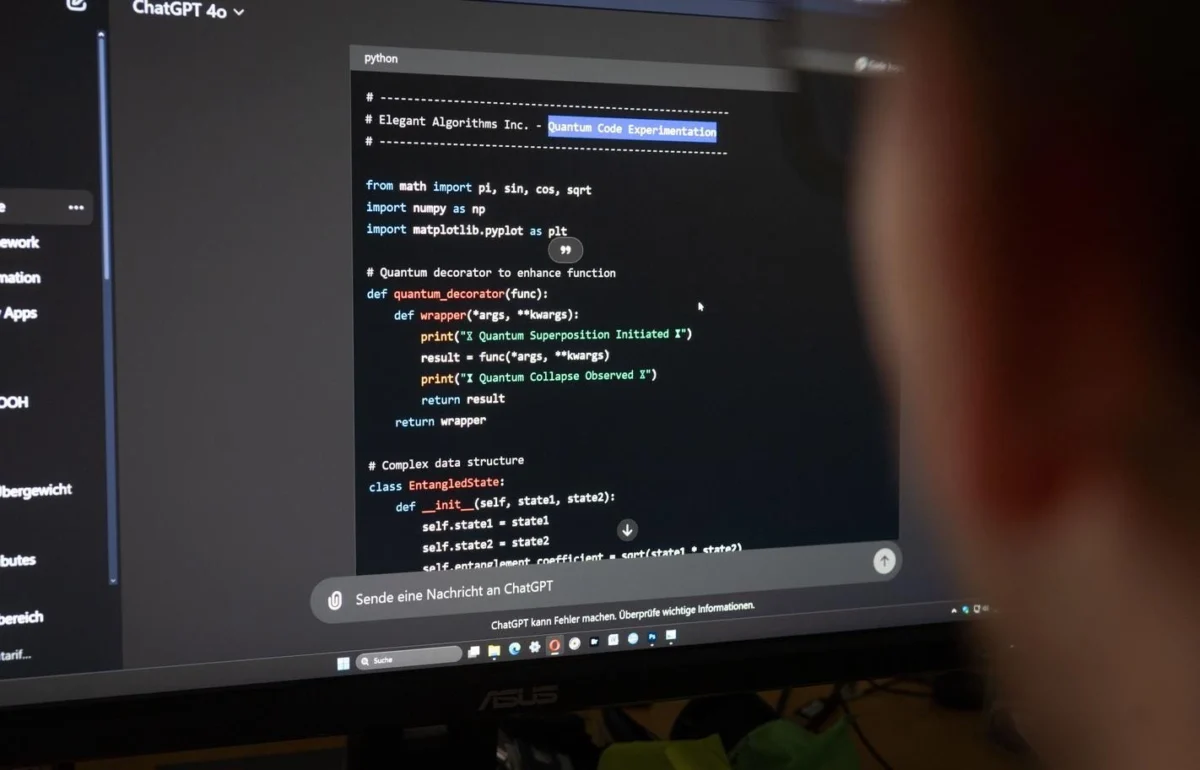
The traditional trajectory of the software engineering career, once defined by a steady climb from junior syntax-wrangling to senior system design, is undergoing a violent structural realignment. In June, a landmark financial event served as a clarion call for this shift: SpaceX finalized an all-stock deal to value Anysphere, the four-year-old startup behind the AI-powered code editor Cursor, at a staggering $60 billion. This valuation represents a six-fold increase in just nine months, marking the fastest ascent from product launch to multibillion-dollar revenue in the history of enterprise software. Yet, as capital floods into the tools that automate the act of programming, the human labor market for those very skills is cratering. In the same month the SpaceX deal was struck, employment for junior software developers recorded its 33rd consecutive month of decline. The paradox is stark: the global economy’s demand for code is reaching an all-time high, but its demand for humans to write that code is increasingly restricted to an elite tier of senior architects.
To understand the velocity of this change, one must look at the fiscal performance of Anysphere. After closing an initial seed round with the OpenAI Startup Fund in 2023, the company’s revenue trajectory defied historical SaaS benchmarks. Annualized revenue climbed from $100 million in early 2025 to over $2 billion by February 2026. By the time heavyweights like Nvidia, Andreessen Horowitz, and Thrive Capital were negotiating a Series D round, SpaceX preempted the market with its $60 billion valuation. This price tag implies a multiple of roughly 15 times Cursor’s estimated $4 billion in annualized revenue for 2026—a bet that growth will continue to outpace even the most aggressive projections. For context, industry titans like Slack, Zoom, and Snowflake required between five and nine years to reach their first billion in revenue. Cursor achieved it in three. This is not merely a successful product launch; it is the financial market pricing in the obsolescence of the entry-level coder.
The deal signals a fundamental migration of value within the software stack. Andrej Karpathy, a seminal figure in AI and former director of AI at Tesla, recently suggested that the era of "vibe coding"—a term for high-level, intent-based programming—is already moving into the rearview mirror. According to Karpathy, the frontier has shifted from single-line autocomplete tools to autonomous agents capable of planning, testing, and self-correcting across entire codebases. In this new paradigm, the "hard" part of programming—the syntax, the boilerplate, the debugging of logic errors—is handled by the model. The scarce resources left are human judgment, "taste," and the ability to specify and review high-level architectural goals. Venture capital is no longer betting on the "writer" of the code; it is betting on the "editor" and the tools that empower them.
However, this transition has sparked a fierce philosophical debate within the developer community. Many practitioners argue that the "code is secondary" narrative is a dangerous oversimplification. Developer Senko Rasic recently voiced a viral critique, suggesting that dismissing the technical craft of coding as "the easy part" is an affront to the decades of rigorous engineering that built the modern world. Rasic points to the sustained high salaries, the complexity of LeetCode interviews, and the deep technical knowledge required to maintain legacy systems as evidence that coding has always been a high-skill discipline. His argument is that technical understanding and aesthetic judgment are inextricably linked; one cannot effectively "judge" code if they do not understand the underlying mechanics of how it was constructed. By outsourcing the technical foundation to AI, Rasic warns, developers risk losing the very intuition required to exercise the "taste" that the industry now claims to value.
The data suggests that regardless of the philosophical merits of the craft, the labor market is moving on. Data from Stanford’s Digital Economy Lab, utilizing ADP payroll records for millions of U.S. workers, reveals a grim reality for the next generation of engineers. Employment in AI-exposed occupations for workers aged 22 to 25 fell 4.3 percent year-over-year in June. This contraction, which began in late 2023, shows no signs of abating. Similarly, Indeed’s Hiring Lab reported that U.S. tech job postings have plummeted 36 percent from pre-pandemic levels, with entry-level roles taking the hardest hit—dropping 25 percent in 2024 alone. A 2024 SHRM survey found that 70 percent of hiring managers believe AI can already perform the work typically assigned to interns. The market is not rejecting the output of software engineering; it is simply realizing that it no longer needs to pay a human $100,000 a year to produce what a model can generate for pennies.

This "hollowing out" of the junior ranks presents a looming systemic risk. If the entry-level positions disappear, the pipeline for future senior engineers—the "judges" and "architects" of tomorrow—is effectively severed. SignalFire’s 2026 State of Talent report highlighted this danger, noting that entry-level hiring is down 65 percent at major tech firms and 76 percent at startups compared to 2019. The report warns that companies prioritizing short-term margin by automating junior tasks are inadvertently creating a massive leadership and senior-talent shortage five to ten years down the line. We are, in effect, eating our seed corn.
Amidst this trend, a few contrarian voices are emerging. IBM recently made waves by announcing plans to triple its entry-level hiring in the United States. While competitors are slashing headcount, IBM’s leadership argues that the role of the junior engineer is not vanishing but evolving. In their view, the junior developer of 2026 will spend less time in the "engine room" of syntax and more time in customer-facing roles, translating business needs into the high-level specifications that AI agents require. This strategy suggests a belief that judgment can be trained through orchestration rather than through the manual labor of coding. Whether this model can produce the same level of technical depth as the traditional apprenticeship remains to be seen.
The broader economic outlook remains complex. Despite the current bloodbath in entry-level hiring, the Bureau of Labor Statistics still projects a 15 percent growth in software developer roles through 2034—a rate five times the average for all other occupations. The disconnect between these projections and the current hiring freeze suggests a "Great Reskilling" is underway. The job description is changing from "developer" to "orchestrator." Future growth will likely not come from companies hiring thousands of programmers to build features manually, but from a smaller number of highly skilled engineers using "systems of coordination" to manage fleets of AI agents.
This shift is reflected in where venture capital is concentrating its bets. Investment is bifurcating into two distinct categories. First, there is the "agentic layer"—tools like Cursor that generate code at an industrial scale. These companies are being priced at astronomical multiples because they represent the new "manufacturing" plant for software. Second, there is the "coordination and review" infrastructure. Firms like Andreessen Horowitz and Foundation Capital are increasingly backing startups that build the "connective tissue" for multi-agent software work—tools that encode how engineering decisions are made, how code is reviewed for security, and how complex systems are maintained without a human having to read every line of the underlying logic.
Ultimately, the $60 billion valuation of a code editor is a signal that the industry has reached a point of no return. We are moving toward a future where the cost of generating code approaches zero, while the cost of deciding what to build—and ensuring it works within a complex ecosystem—remains high. For the aspiring developer, the barrier to entry is no longer learning the syntax of Python or Java; it is the acquisition of the high-level architectural wisdom that used to take a decade to earn. The industry is currently building the tools to manufacture this judgment cheaply, but until those tools are perfected, the gap between the "senior" who knows what to build and the "junior" who is no longer needed to write it remains the most volatile space in the global economy. Those who can bridge that gap, either through innovative training models or by building the infrastructure of the "agentic era," are the ones who will define the next decade of technology.
