

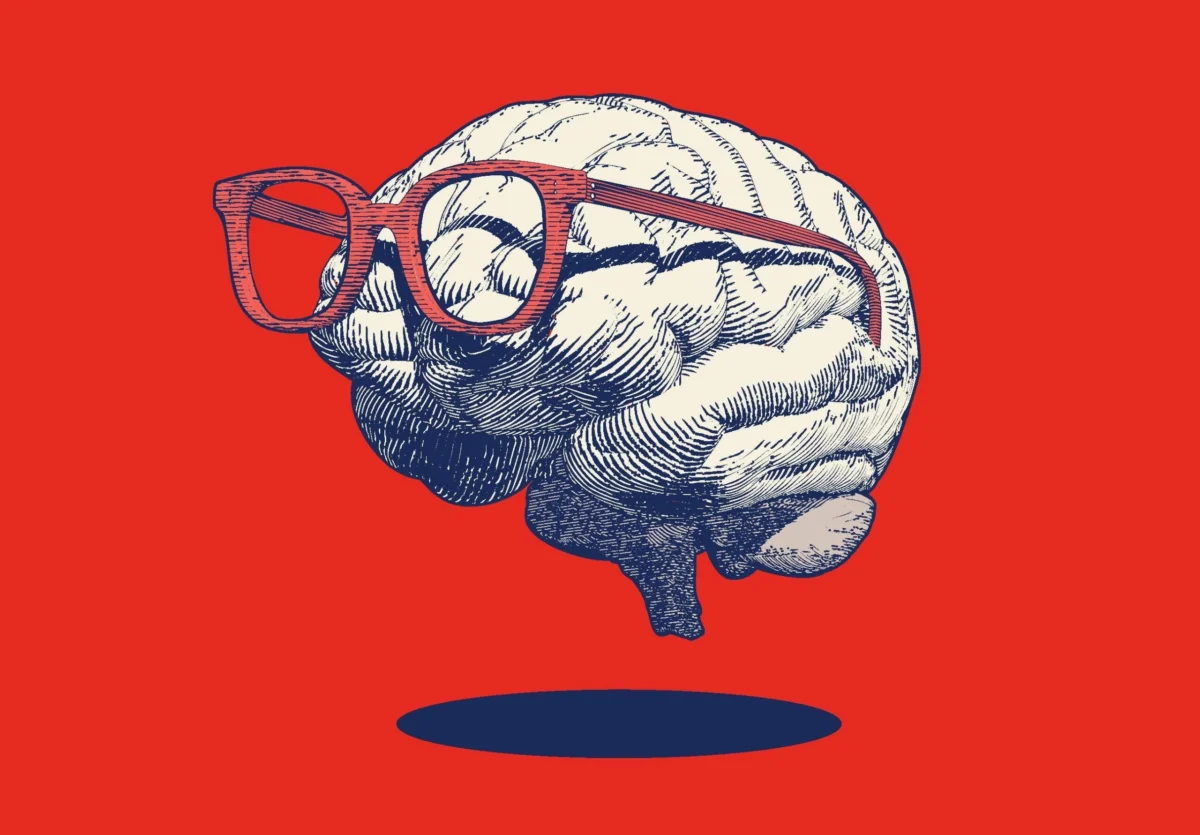
In the relentless pursuit of replicating human intelligence, the technological community has reached a crossroads where digital architecture, despite its staggering speed and scale, faces an inherent plateau. For decades, the industry has relied on the binary logic of silicon—and more recently, the probabilistic leaps of quantum computing—to simulate the nuances of thought. Yet, a fundamental gap persists between the cold, static execution of a digital neuron and the pulse of organic "gray matter." This realization has birthed a radical new frontier in biotechnology and defense: the development of lab-grown brain organoids, a field where scientists are no longer just coding intelligence, but growing it.
The concept of "wetware"—biological components used as computational units—is shifting from the realm of speculative science fiction into the rigorous environment of academic and military research. At the forefront of this movement is a growing body of work centered on three-dimensional neural cultures. These are not merely clusters of cells; they are sophisticated, self-organizing structures that exhibit the foundational building blocks of learning and memory. Unlike traditional artificial intelligence (AI), which requires massive datasets and rigid algorithmic frameworks, these organoids offer a glimpse into a form of intelligence that is adaptive, power-efficient, and inherently resilient.
The Rise of Organoid Intelligence
The scientific community has begun to recognize that while digital systems excel at processing structured data, they struggle with the "uncertainty" that defines the physical world. This has led researchers at institutions like Johns Hopkins University to explore "organoid intelligence" (OI). By using human stem cells and guiding them through chemical signaling, scientists can encourage these cells to differentiate into neurons. Over several weeks, these cells form intricate, three-dimensional networks that generate spontaneous electrical activity, effectively creating a living, responsive neural structure in a laboratory setting.
Dr. Lena Smirnova, a leading voice in environmental health and engineering, suggests that these organoids provide an ethical and human-specific framework for studying the mechanics of the mind. In the immediate term, they serve as revolutionary tools for pharmacology and the study of neurological disorders. However, the long-term trajectory points toward something far more disruptive: biological computing systems that could complement, or even surpass, traditional AI in specific mission-critical applications. These systems are being designed to interface directly with machines, creating a hybrid architecture that leverages the strengths of both silicon and biology.
Autonomous Systems and the "Fragility" Problem
The strategic impetus for this research is most visible in the evolution of modern warfare. The current generation of autonomous drones has fundamentally altered the theater of combat. These machines are fast, precise, and increasingly inexpensive, built from a cocktail of commercially available hardware and sophisticated software. They can navigate hostile zones and execute strikes with a level of autonomy that was unthinkable a decade ago. Yet, for all their prowess, they remain remarkably fragile.
The vulnerability of digital autonomous systems lies in their dependence on a rigid infrastructure. A drone relying on silicon-based AI is only as capable as its power supply and its connection to external data. If a GPS signal is spoofed, the drone can be misdirected; if its communication link to the cloud is severed, it becomes an isolated, ineffective piece of hardware. Furthermore, as environments become more unpredictable and "noisy," digital systems often reach their computational limits, unable to process the sheer volume of chaotic information in real-time without exhausting their batteries or overheating their processors.
Nature, however, solved this problem eons ago. The human brain, a network of roughly 86 billion neurons, operates without a satellite link or a cloud-based server. It is a self-contained, sensing, and adapting unit that manages to produce extraordinary cognitive outputs while consuming a mere 20 watts of power—less than the energy required to run a dim lightbulb. This extreme efficiency is the "holy grail" for defense contractors and aerospace engineers.
The Advantage of Neuroplasticity and Event-Driven Logic
The primary reason biological systems outperform digital ones in uncertain environments is neuroplasticity. Digital systems are largely fixed once they are deployed; while they can be "fine-tuned," their underlying architecture does not physically rewire itself in response to new stimuli. In contrast, the brain is a dynamic organ. Neurons constantly strengthen or weaken their synaptic connections based on lived experience. This allows biological entities to reorganize after trauma—much like a stroke patient relearning to walk—and to pivot their strategies when faced with unprecedented conditions.

Beyond plasticity, the brain utilizes an "event-driven" processing model. A standard computer processor cycles through instructions at a set clock speed, crunching data regardless of whether that data is meaningful. The brain, however, only spends significant energy when something in the environment changes. This is why a person eventually stops "feeling" the clothes on their skin; the brain filters out static, irrelevant information to preserve energy for novel threats or opportunities.
For a military drone, this biological logic would be transformative. A bio-hybrid system wouldn’t need to process every pixel of a clear blue sky; it would remain in a low-power state until a meaningful change—a heat signature, a movement, or a frequency shift—triggered a neural response. This would allow for extended mission durations and a level of stealth and resilience that current battery and processor technologies cannot achieve.
Engineering the Interface: Microelectrode Arrays
To harness the power of these organoids, researchers are developing sophisticated "feedback loops" using microelectrode arrays. These are microscopic systems capable of both sensing and stimulating neural tissue. By placing these arrays directly against the living organoid, scientists can "listen" to the electrical patterns of the neurons and, crucially, deliver controlled electrical pulses back into the system.
This two-way communication allows researchers to "guide" the organoid’s development and learning process. It is a form of training that goes beyond software updates; it is a literal shaping of biological thought. By observing how the organoid reacts to specific inputs and rewarding certain neural pathways through stimulation, scientists are essentially teaching biological matter how to process information. This capability is what moves organoids from being mere biological samples to being functional components of a computational system.
Control Theory and the Ethics of Accountability
As the defense industry explores these "grown" systems, the conversation inevitably turns to accountability. In a commercial setting, a system failure might result in a loss of revenue. In a contested military environment, a failure can result in the loss of life. This is where "control theory" becomes vital. Control theory provides the mathematical and engineering frameworks necessary to anticipate failures and design systems that degrade "gracefully."
The challenge with biological systems—and indeed with many advanced AI "black boxes"—is their inherent unpredictability. If a biological-digital hybrid makes a mistake, how do we trace the error? Defense researchers are focused on creating robust designs where, if a system must fail, it does so on human terms. The integration of biological matter into weapons systems also raises profound ethical questions regarding the source of the cells and the nature of "consciousness" in a lab-grown context. While current organoids lack anything resembling sentience, the trajectory of the technology demands a proactive ethical framework to ensure these tools are used responsibly.
The Bio-Digital Convergence
The future of intelligence is increasingly viewed not as a competition between biology and machines, but as a convergence. The next generation of defense technology will likely not be purely engineered in a cleanroom or purely grown in a lab; it will be a synthesis of the two. We are entering an era where "intelligence" is a commodity that can be grown, guided, and integrated into the very fabric of our hardware.
This shift has massive implications for the global tech economy. The demand for specialized bio-foundries could soon rival the demand for semiconductor fabs. Companies that can bridge the gap between neurology and software engineering will become the new titans of the defense sector. We are looking at a future where the most advanced autonomous systems are not just programmed to think, but are endowed with the resilient, adaptive qualities of life itself.
As we stand on this frontier, the message to the technology industry is clear: the limitations of silicon are no longer the limitations of intelligence. By looking inward at the biological mechanisms of the human brain, we are unlocking a new paradigm of computing that is as efficient as it is enigmatic. The race to build the "perfect" brain is no longer a biological quest—it is the new frontline of global technological supremacy. For those watching the space, the evolution from digital AI to organoid intelligence represents the most significant shift in computational theory since the invention of the transistor. The biological revolution has begun, and it is being grown in a petri dish.
