

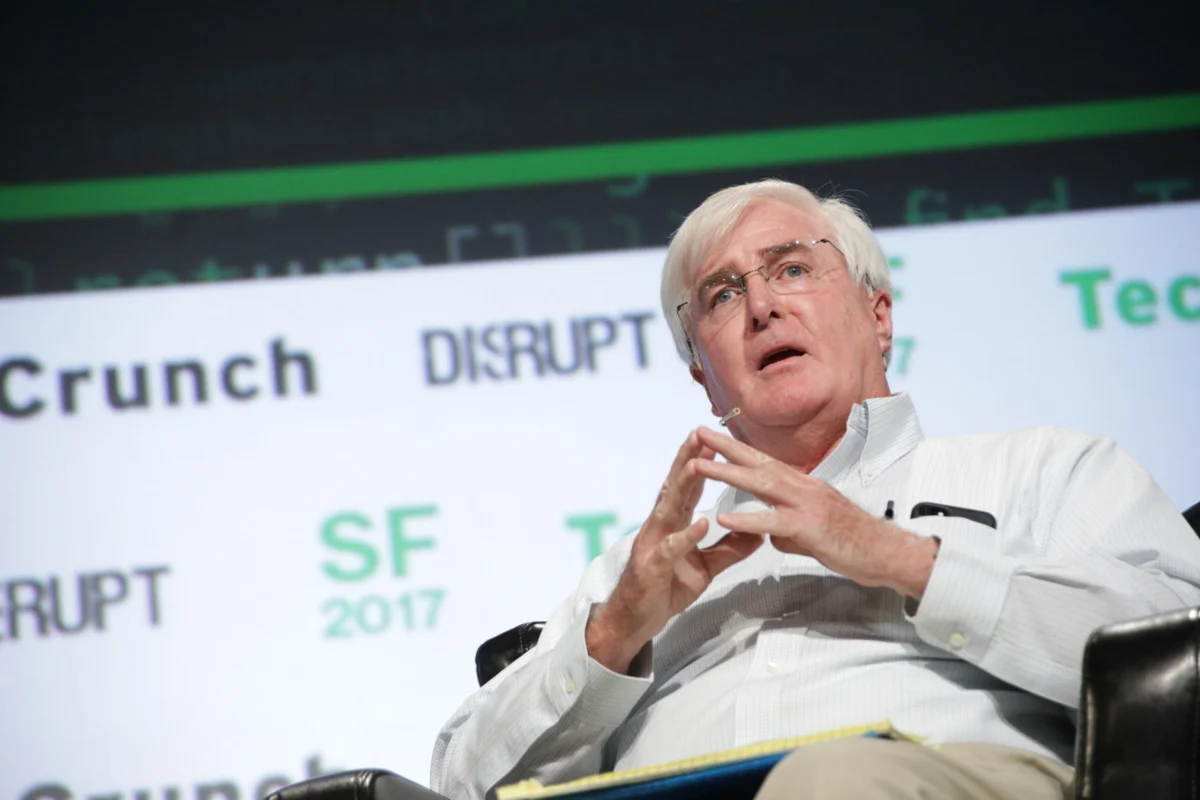
In an announcement that reverberated through the upper echelons of the global technology sector, Ron Conway, the veteran financier often hailed as the "Godfather of Silicon Valley," disclosed on Friday that he has been diagnosed with a rare form of cancer. The news, shared via a personal statement on social media, marks a significant moment for an industry that has seen Conway serve as a primary catalyst for growth over the last three decades. While the diagnosis necessitates a recalibration of his professional commitments, Conway emphasized a message of resilience, optimism, and a meticulously planned transition of power within his firm, SV Angel.
Conway’s disclosure was characterized by the same directness that has defined his career as one of the world’s most prolific angel investors. While he chose to keep the specific type of cancer private to avoid external speculation regarding his prognosis, he confirmed that he is receiving care from a specialized medical team at the University of California, San Francisco (UCSF). For those familiar with Conway’s civic involvement, the choice of UCSF is deeply symbolic; he has been a long-standing benefactor and advocate for the institution, championing its role as a world-class center for medical innovation. His statement underscored a fighting spirit, noting that he has never been one to retreat from a challenge, whether in the boardroom or in personal adversity.
A Strategic Shift in Focus
The immediate fallout of the diagnosis involves a shift in Conway’s day-to-day operational involvement. He indicated that he will be "stepping back from some of my usual activities" to prioritize his treatment regimen. However, the move is far from a total retirement. Conway intends to maintain a "focused and balanced schedule" that allows him to continue advising founders during what he calls "inflection points." This terminology is central to the SV Angel philosophy: the belief that a venture capitalist’s most significant value is delivered not through constant oversight, but through surgical, high-impact guidance during the most critical moments of a startup’s lifecycle.
By narrowing his scope, Conway aims to preserve his energy for the high-level strategic mentoring that has made him a legendary figure among entrepreneurs. This "inflection point" strategy ensures that the institutional knowledge Conway has accumulated through hundreds of successful exits remains accessible to the next generation of innovators, even as he manages his health.
The Continuity of SV Angel
Perhaps the most critical aspect of Conway’s announcement for the broader investment community is the reassurance regarding the stability of SV Angel. In the world of venture capital, "key man risk"—the danger that a firm will collapse or lose its way if a founding partner departs—is a constant concern for limited partners and portfolio companies alike. Conway addressed this head-on by detailing a succession plan that has actually been in motion for a decade.
He clarified that his son, Topher Conway, has been the primary driver of the firm’s investment decisions for the better part of the last ten years. This revelation serves to decouple the firm’s future performance from Ron Conway’s immediate physical presence. Topher Conway has quietly built a reputation as a savvy and disciplined investor, navigating the shift from the social media and mobile era into the current age of generative artificial intelligence.
Further strengthening the leadership bench is Ronny Conway, another of Ron’s sons, who joined SV Angel as a managing partner in 2024. Together, the brothers represent a bridge between the foundational principles of early-stage investing and the rapidly evolving technological landscape of the 2020s. According to the elder Conway, the duo brings experience derived from witnessing nearly every major technology cycle in Silicon Valley’s history, positioning them to lead the firm’s aggressive pursuit of founders building the future of AI.
The Legacy of the "Super Angel"
To understand the weight of this news, one must look at the indelible mark Ron Conway has left on the technology industry. Long before "angel investing" was a formalized asset class, Conway was pioneering the model of the high-volume, founder-friendly seed investor. Through his early vehicles and eventually SV Angel, he was a first-check or early-stage participant in companies that have since become the bedrock of the modern digital economy, including Google, Facebook, Twitter, Airbnb, Pinterest, and Dropbox.
Conway’s influence, however, was never just about the capital. He was the ultimate "connector." In an era where Silicon Valley operated on a "pay it forward" culture, Conway was the central node in the network. He specialized in making the one introduction that could change a company’s trajectory—connecting a young Mark Zuckerberg to experienced executives or helping the founders of Google navigate their early scaling challenges.

His approach to investing was famously based on the person rather than just the product. Conway often spoke about looking for "the fire in the belly" of a founder. This human-centric approach allowed him to spot winners long before they had a viable business model or significant revenue. His diagnosis today brings a poignant human element to a figure who has spent his life betting on the resilience and ingenuity of others.
Navigating the AI Frontier
The timing of Conway’s diagnosis comes as Silicon Valley is gripped by the most significant technological shift since the dawn of the internet: the rise of Artificial Intelligence. SV Angel has pivoted sharply toward this sector, recognizing that AI represents a fundamental platform shift.
The firm’s focus on AI is not merely a trend-following exercise but a continuation of Conway’s belief in transformative technologies. By empowering Topher and Ronny Conway to lead this charge, the firm is ensuring that it remains at the vanguard of the AI boom. The younger Conways are reportedly focused on the "infrastructure and application" layers of AI, looking for founders who can turn large language models into sustainable, industry-disrupting enterprises.
Ron Conway’s reduced role may actually provide a blueprint for how legendary VCs can transition into an emeritus status. By focusing only on the most critical "inflection points," he allows the new leadership to define the firm’s identity in the AI era while still providing the "Conway touch" when it matters most.
The Civic Pillar of San Francisco
Beyond his balance sheet, Ron Conway has been a tireless champion for the city of San Francisco. At a time when many tech leaders were publicly divesting from the city or criticizing its governance, Conway remained a vocal proponent of its recovery and growth. He was instrumental in the "sf.citi" initiative, which aimed to bridge the gap between the tech industry and local government to solve urban challenges.
His health news is, therefore, a matter of concern not just for the tech community, but for the civic fabric of San Francisco. His work with UCSF, both as a donor and now as a patient, highlights the intersection of technology, philanthropy, and public health. Conway has often argued that Silicon Valley’s greatest export isn’t just software, but a mindset of solving impossible problems. He is now applying that mindset to his own medical journey.
Industry Implications and the Future of Venture Capital
The news of Conway’s illness also touches upon a broader conversation regarding health and transparency in the C-suite and the investment world. In recent years, there has been a growing trend of high-profile leaders disclosing health challenges early, moving away from the "invulnerability" myth that once dominated corporate culture. Conway’s decision to share his diagnosis, while maintaining boundaries on the specifics, strikes a balance between personal privacy and professional responsibility.
For the venture capital industry, this event underscores the importance of generational planning. Many of the firms that rose to prominence in the 1990s and 2000s are currently facing succession questions. SV Angel appears to have avoided the internal friction that often plagues these transitions by keeping the leadership within the family and starting the process years in advance.
As the tech world processes the news, the sentiment is one of overwhelming support for a man who has given so much to the ecosystem. From the "PayPal Mafia" to the new wave of AI researchers, the "Conway network" is vast and loyal. While the "rare form of cancer" presents a formidable opponent, the consensus in the Valley is that if anyone is equipped to navigate such a challenge with grace and tactical precision, it is Ron Conway.
The future of SV Angel seems secure, anchored by the next generation of Conways and a portfolio that remains at the cutting edge of innovation. As Ron Conway focuses on his health and his high-level advisory role, his legacy as the architect of the modern startup ecosystem continues to evolve. His story remains a testament to the power of networking, the importance of founder-first investing, and the enduring spirit of an industry that, despite its massive scale, still feels like a small community when one of its giants faces a personal battle.
