


ype to Harvest Corporate Microsoft and Google Credentials via Multi-Platform Phishing Frameworks
The modern threat landscape is increasingly defined by the weaponization of corporate enthusiasm for emerging technologies. In a calculated evolution of social engineering tactics, malicious actors have launched an aggressive campaign utilizing fabricated high-profile events hosted by prominent artificial intelligence and aerospace enterprises—including OpenAI, Anthropic, and SpaceX—to compromise corporate network access. Cybersecurity researchers have uncovered a complex, multi-tiered credential harvesting operation that leverages dual phishing-as-a-service (PhaaS) frameworks. By dangling enticing rewards such as extended access to elite generative AI models and exclusive industry assets, the orchestrators behind this campaign are successfully bypassing traditional corporate defenses to seize control of vital Microsoft and Google enterprise accounts.
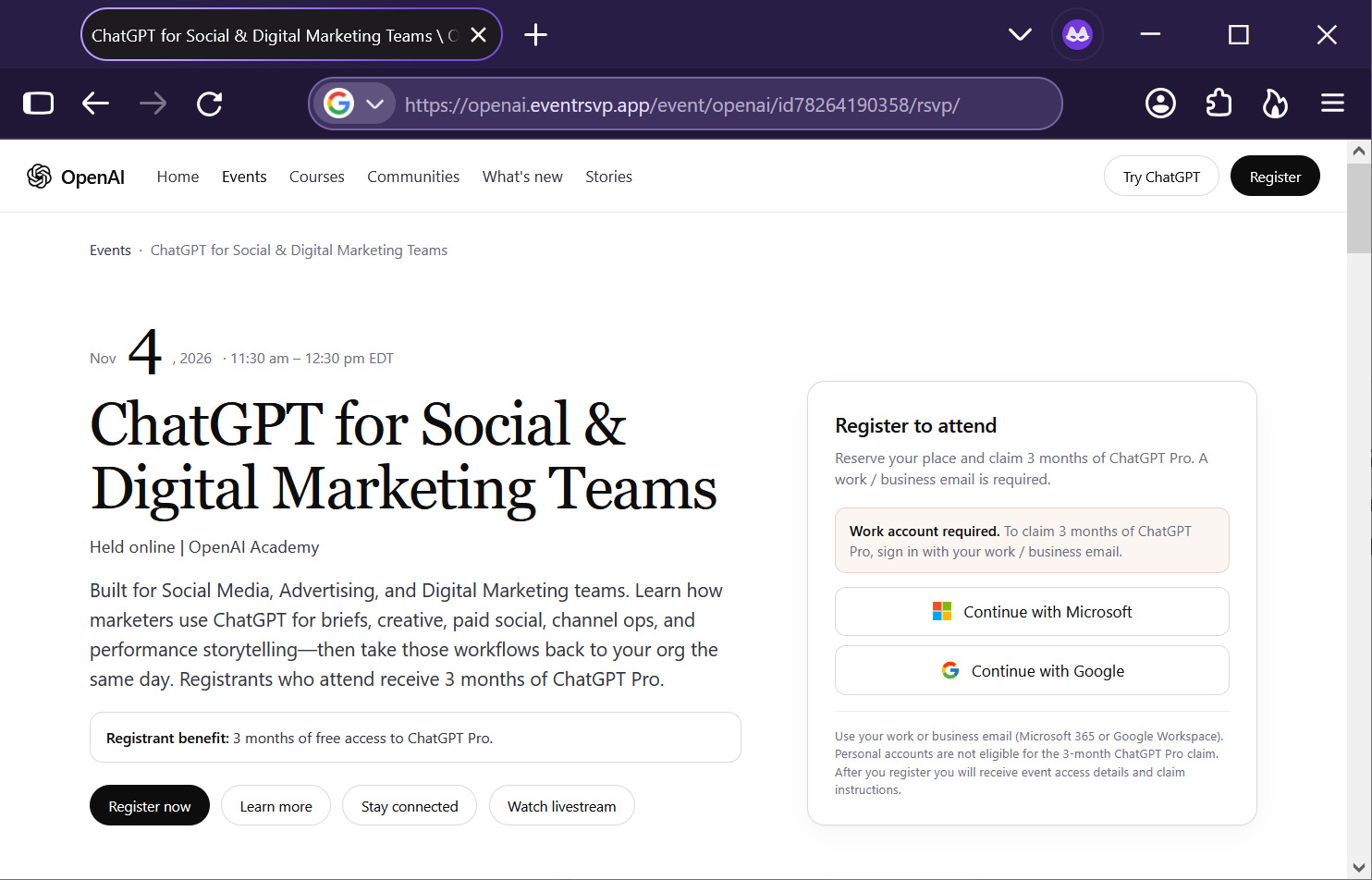
The mechanics of this campaign highlight a growing trend among cybercriminal syndicates: the modular integration of specialized service platforms to maximize attack efficacy. Rather than relying on a singular deceptive login page, the perpetrators deploy customized front-end kits—tracked as ZoomMock and MSDRoot—to establish hyper-realistic event registration portals. These environments are engineered to mimic authoritative corporate branding, complete with fabricated schedules, professional layouts, and authoritative event descriptors.
To ensure operational longevity and evade automated security scraping, the infrastructure incorporates aggressive defensive layers. Visitors to the malicious registration links are initially greeted by Cloudflare CAPTCHA challenges designed to screen out automated security crawlers and sandbox environments. Once human verification is established, prospective victims are presented with an interface offering access to premium rewards, such as multi-month subscriptions to advanced AI systems or purported private corporate equity shares. Claiming these incentives, however, is contingent upon a mandatory corporate identity validation step, prompting users to authenticate using their enterprise credentials via designated "Continue with Microsoft" or "Continue with Google" utility portals.
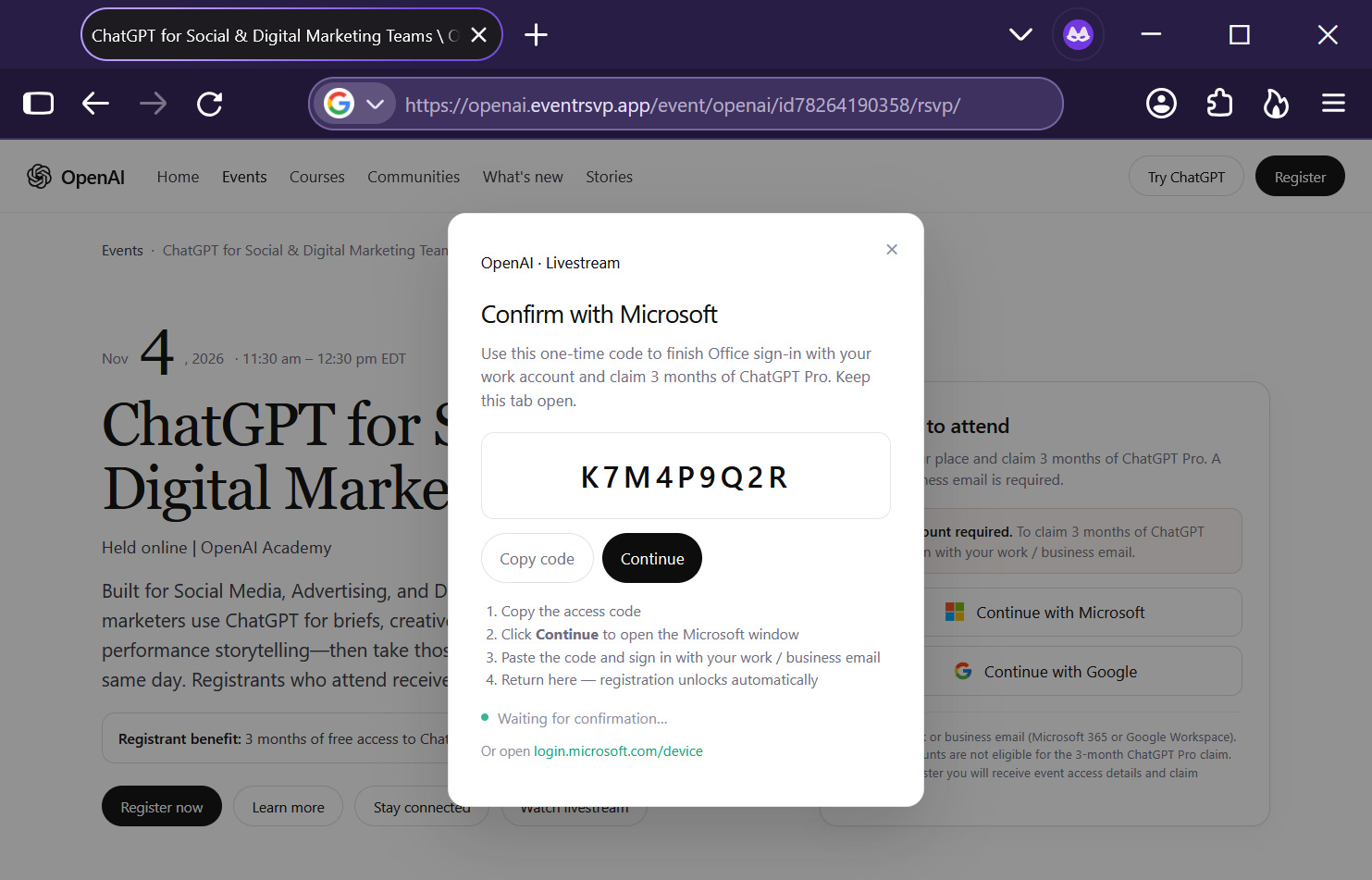
Behind this polished interface lies a sophisticated technological architecture capable of executing disparate exploitation vectors depending on the targeted identity provider. When an unsuspecting employee selects the Microsoft authentication route, the backend infrastructure interfaces with the Kali365 PhaaS platform. This platform initiates a Microsoft device code phishing attack, a method that subverts the legitimate OAuth 2.0 device authorization grant flow. Instead of typing credentials directly into a traditional form, the victim is provided with a unique alphanumeric code and instructed to visit Microsoft’s legitimate device login webpage to complete the authorization.
This technique represents a profound challenge for enterprise defense strategies. By guiding the user to an authentic Microsoft domain to input the generated code, the attack sidesteps many standard domain-reputation filters and heuristics. Once the user approves the prompt, the Kali365 framework successfully acquires the authentication tokens, granting the adversaries deep access to the victim’s Microsoft Entra ID environment and interconnected single sign-on (SSO) applications. Furthermore, the threat actors incorporate a secondary staging phase utilizing a reverse proxy framework known as VoidProxy, allowing them to subsequently capture traditional passwords and active session cookies to guarantee persistence.
Conversely, when targets choose the Google authentication path, the infrastructure bypasses device code flows entirely in favor of an adversary-in-the-middle (AiTM) execution model. VoidProxy operates as a real-time proxy sitting between the victim’s browser and the legitimate Google sign-in portal. As the user inputs their credentials and navigates multi-factor authentication (MFA) challenges, the proxy transparently intercepts every transmission, harvesting not only the primary credentials but also the resulting authentication session cookies. By securing active session tokens, the attackers can effectively replicate the victim’s authenticated state, thereby neutralizing standard multi-factor authentication controls and gaining unfettered access to Google Workspace environments.
The breadth of applications accessible through these compromised tokens underscores the severe risk profile associated with such intrusions. Compromised Microsoft Entra or Google Workspace accounts rarely serve as isolated points of failure; rather, they act as master keys to the modern enterprise software ecosystem. With a single successful session hijack, malicious entities can pivot into connected corporate tools including customer relationship management platforms, cloud storage repositories, human resources software, enterprise communication hubs, and project management utilities. This lateral movement enables extensive data exfiltration, business email compromise, and the staging of subsequent internal attack chains.
Industry analysts note that this operation is part of a broader, highly organized wave of technology-themed deception campaigns observed throughout recent quarters. Security researchers from organizations such as ANY.RUN and Cofense have previously documented parallel campaigns wherein attackers abused legitimate webinar infrastructure—including Zoom and GoTo Webinar—to distribute fraudulent event invitations. By leveraging the trusted domain reputation of legitimate communication platforms and URL shorteners from providers like Google and Zapier, the threat actors significantly increase the probability that their phishing emails will bypass corporate email gateways and perimeter defenses.
The psychological component of these campaigns remains a critical driver of their success. The relentless pressure on modern professionals to stay ahead of the artificial intelligence curve creates a fertile ground for social engineering. Employees across marketing, engineering, and administrative departments are eager to experiment with advanced tools that promise increased productivity and innovation. Cybercriminals exploit this professional curiosity by framing their fraudulent portals as exclusive previews, early-access workshops, or VIP industry gatherings, preying on the fear of missing out and the drive for professional advancement.
Mitigating the risks posed by sophisticated dual-Phaas campaigns requires a fundamental shift in organizational defense postures. Traditional security awareness training, while necessary, is increasingly insufficient against highly polished social engineering campaigns that mimic trusted platforms with absolute fidelity. Enterprises must implement technical controls designed to restrict vulnerable authentication mechanisms. For instance, organizations should audit and restrict the usage of device code authentication flows, disabling the feature entirely for user roles that do not strictly require it.
Additionally, organizations must accelerate their transition toward phishing-resistant multi-factor authentication frameworks. Conventional MFA methods, such as SMS codes, push notifications, and standard hardware OTP tokens, remain vulnerable to AiTM interception and proxy-based session hijacking. Deploying FIDO2-compliant security keys or passkeys establishes cryptographic binding between the user’s browser and the legitimate service domain, rendering proxy attacks ineffective because the authentication challenge cannot be successfully relayed to a third-party domain.
Furthermore, security operations centers (SOCs) must enhance their behavioral monitoring capabilities to detect anomalies associated with session theft and unauthorized API usage. Implementing continuous monitoring for impossible travel, atypical device registrations, and sudden spikes in OAuth application grants can provide early warning indicators of a compromise before adversaries can fully weaponize stolen credentials. As threat actors continue to refine their methodologies and harness multi-platform infrastructure, enterprise resilience will depend heavily on a combination of strict protocol enforcement, advanced telemetry, and proactive defense-in-depth strategies.
