

Hardware-based enterprise networking equipment has long been a favored target for sophisticated threat actors seeking persistent, low-profile footholds within corporate and governmental ecosystems. Because network switches, routers, and firewalls operate deep within core infrastructure and frequently sit on the perimeter without traditional endpoint detection and response (EDR) agents installed, they represent high-value real estate for espionage campaigns.
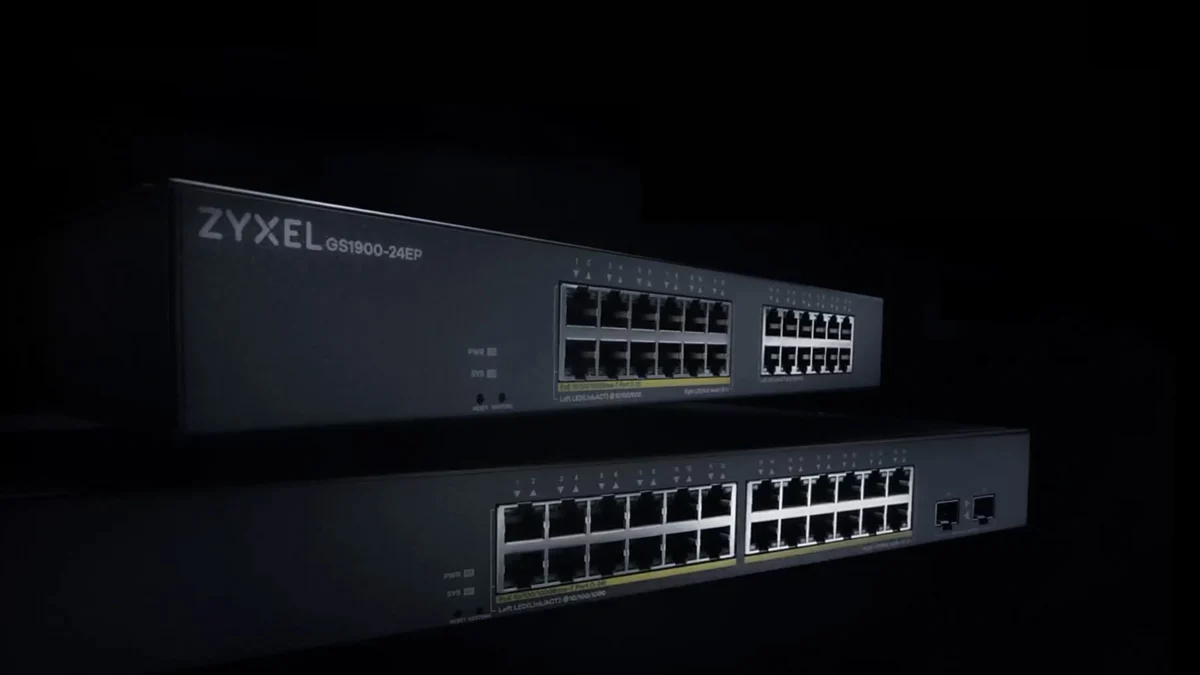
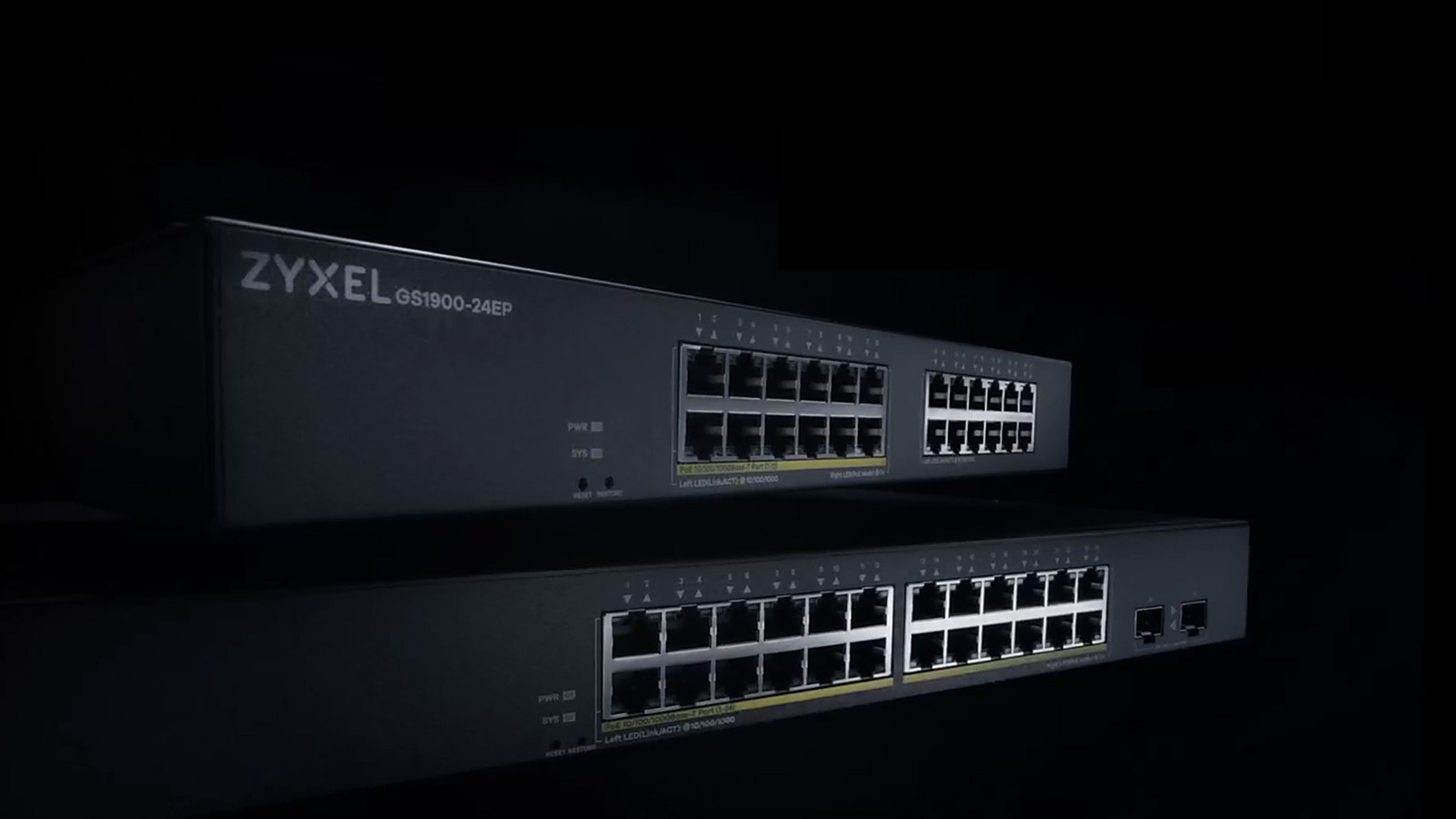
A stark reminder of this architectural vulnerability surfaced recently when network infrastructure vendor Zyxel rushed out emergency patches for a zero-day vulnerability impacting its widely deployed GS1900 series network switches. Exploited in the wild prior to disclosure, the flaw allowed unauthenticated, remote attackers to harvest sensitive configuration files, capture hashed root credentials, and compromise nearly a thousand enterprise-grade devices spread across dozens of nations.
The security defect, officially cataloged as CVE-2026-107441, manifests as a severe out-of-bounds write vulnerability residing within the web-based management interface of the affected hardware. By transmitting meticulously crafted HTTP requests across the network, an unauthorized actor can manipulate memory structures, bypass authentication boundaries, and execute arbitrary operating system commands with root privileges. Ten distinct models within the GS1900 product family are impacted by the flaw, prompting Zyxel to issue emergency firmware updates on October 22, followed by a formal public advisory published on November 3.
However, the path to identifying and remediating CVE-2026-107441 was far from straightforward. For weeks, cybersecurity researchers, threat intelligence analysts, and federal response agencies operated under the false assumption that these malicious intrusions were merely the ongoing exploitation of an entirely different, previously patched security weakness.
The timeline of confusion began on June 16, 2026, when Zyxel published security fixes for CVE-2026-7273—a pre-authentication buffer overflow vulnerability affecting the exact same lineup of GS1900 switches. Network administrators and automated patch management systems were urged to apply the June updates immediately to safeguard their enterprise environments.
Despite these preventive measures, malicious activity began registering on global threat radars shortly after mid-August. Cybersecurity telemetry gathered by threat intelligence firm GreyNoise detected an active, targeted campaign orchestrated by a suspected Chinese-speaking advanced persistent threat (APT) cluster tracked under the moniker "Kapibala." Telemetry reports indicated that the malicious actors had successfully penetrated 996 unique devices distributed across 48 countries.
During these operations, the Kapibala syndicate leveraged remote command execution capabilities to deploy automated staging scripts. These payloads systematically scraped critical device configurations, extracted hashed root-level credentials, and harvested granular internal network maps. Analysts subsequently linked the Kapibala group to the broader "Red Heron" malicious campaign—a multi-pronged cyberespionage operation that had earlier made headlines for exploiting a critical vulnerability in self-hosted Gitea instances to deploy advanced Linux rootkits, such as SIXZUT, alongside custom backdoors like JITTERLY.
When GreyNoise publicly unmasked the global Zyxel switch campaign on September 21, the firm naturally attributed the exploitation activity to CVE-2026-7273, presuming that attackers were targeting organizations that had failed to deploy the June firmware patches. Moving with urgency, the U.S. Cybersecurity and Infrastructure Security Agency (CISA) added CVE-2026-7273 to its authoritative Known Exploited Vulnerabilities (KEV) catalog on the very same day, issuing a strict federal directive mandating civilian government agencies to secure their affected infrastructure within a compressed operational window.
Yet, a deeper technical investigation conducted by firmware security specialists at Binarly shattered this neat narrative. While performing forensic analysis on infrastructure tied to the Red Heron network—specifically hunting for artifacts related to the JITTERLY backdoor and the SIXZUT rootkit—Binarly researchers stumbled upon an exposed staging archive. Inside, they discovered an obfuscated Python script engineered specifically to target Zyxel GS1900 hardware.
Reverse-engineering the exploit script revealed a startling operational nuance. Rather than blindly targeting legacy firmware versions, the exploit actively probed the targeted switch to determine whether it was running firmware patched against CVE-2026-7273. This confirmed that the attack tooling had been deliberately crafted or updated to interact with devices that administrators assumed were secure. By September 28, Binarly formally verified that the exploit retained complete efficacy against all ten specific firmware variations that Zyxel had released in June to remediate the initial buffer overflow.
A meticulous code-level examination by the Binarly research team uncovered how the exploit circumvented defensive programming. While Zyxel’s June security advisory had successfully introduced checks designed to mitigate straightforward stack-based buffer overflows, the malicious actors discovered a bypass vector: by systematically corrupting a specific parameter counter before it underwent validation checks, the exploit could circumvent the newly implemented guardrails. This manipulation enabled the malicious payload to overwrite critical memory regions and execute unauthorized commands unhindered, even on devices running the supposedly updated software versions.

On September 29, Binarly disclosed its critical findings directly to Zyxel. Following a comprehensive internal validation process, the hardware vendor acknowledged the existence of the distinct, unpatched vulnerability on October 11, formally assigning it the CVE identifier CVE-2026-107441. Zyxel categorized the flaw independently of the June incident because the underlying exploit logic capitalized on a separate code weakness: the complete lack of strict length validation for incoming HTTP parameters.
To neutralize the threat permanently, Zyxel engineered comprehensive firmware updates released on October 22. These updated builds institute rigorous parameter size restrictions and thoroughly validate parameter counts prior to copying any incoming data into system memory, successfully closing the door on this novel exploitation vector.
This episode highlights a persistent and growing challenge in modern vulnerability management: the phenomenon of "patch-gap" exploitation and the evolution of n-day attacks. Threat actors increasingly invest in reverse-engineering vendor patches the moment they are released, mapping out the limits of the developer’s defensive logic to discover adjacent, overlooked code flaws. When a patch addresses a symptom rather than the systemic architectural weakness, sophisticated adversaries can frequently weaponize parameter manipulation or logic bypasses to achieve the exact same operational outcomes.
Furthermore, the incident underscores the systemic risks inherent in edge networking equipment. Switches and routers frequently exist in a visibility blind spot for corporate security teams. Because traditional security agents cannot be deployed directly onto proprietary switch operating systems, organizations must rely entirely on vendor-supplied firmware integrity and timely patch cycles. When a zero-day vulnerability emerges in these foundational layers, defenders are left structurally exposed until manual physical or remote interventions can be coordinated across hundreds or thousands of nodes.
Security practitioners and network administrators overseeing Zyxel GS1900 deployments are strongly urged to verify their firmware versions immediately and apply the latest vendor patches. Organizations must also audit their management planes, ensuring that web administrative interfaces are never exposed directly to the public internet and are instead strictly sequestered behind dedicated, monitored management VLANs and Zero Trust access policies. As threat groups continue to refine their capability to target foundational network hardware, robust asset inventory management and accelerated patch deployment cycles remain the ultimate line of defense against supply-chain and edge infrastructure compromise.
