

The geopolitical and economic landscape of the silicon industry shifted fundamentally when Amazon CEO Andy Jassy finalized a staggering $50 billion investment deal with OpenAI. While the headlines focused on the sheer capital involved, the technical heart of the agreement lies in a high-security development facility in Austin, Texas. Here, within the walls of a laboratory that blends the grit of a machine shop with the precision of a semiconductor cleanroom, Amazon Web Services (AWS) is architecting a future where the artificial intelligence revolution is no longer beholden to the supply chains and pricing whims of a single hardware titan. The centerpiece of this strategy is Trainium, a custom-designed AI accelerator that has quietly secured the allegiance of the industry’s most influential players, including Anthropic, OpenAI, and even the notoriously insular Apple.

The existence of this laboratory is a testament to Amazon’s long-game strategy. While much of the tech world spent the last two years scrambling for a dwindling supply of Nvidia’s H100 GPUs, Amazon was doubling down on a decade-long internal initiative. This effort traces its lineage back to 2015, when Amazon acquired the Israeli chip designer Annapurna Labs for approximately $350 million. At the time, the move seemed like a niche play for infrastructure efficiency. Today, that investment has blossomed into a multi-billion dollar business unit that threatens to disrupt the GPU monopoly by offering what Nvidia cannot: total vertical integration within the world’s largest cloud ecosystem.
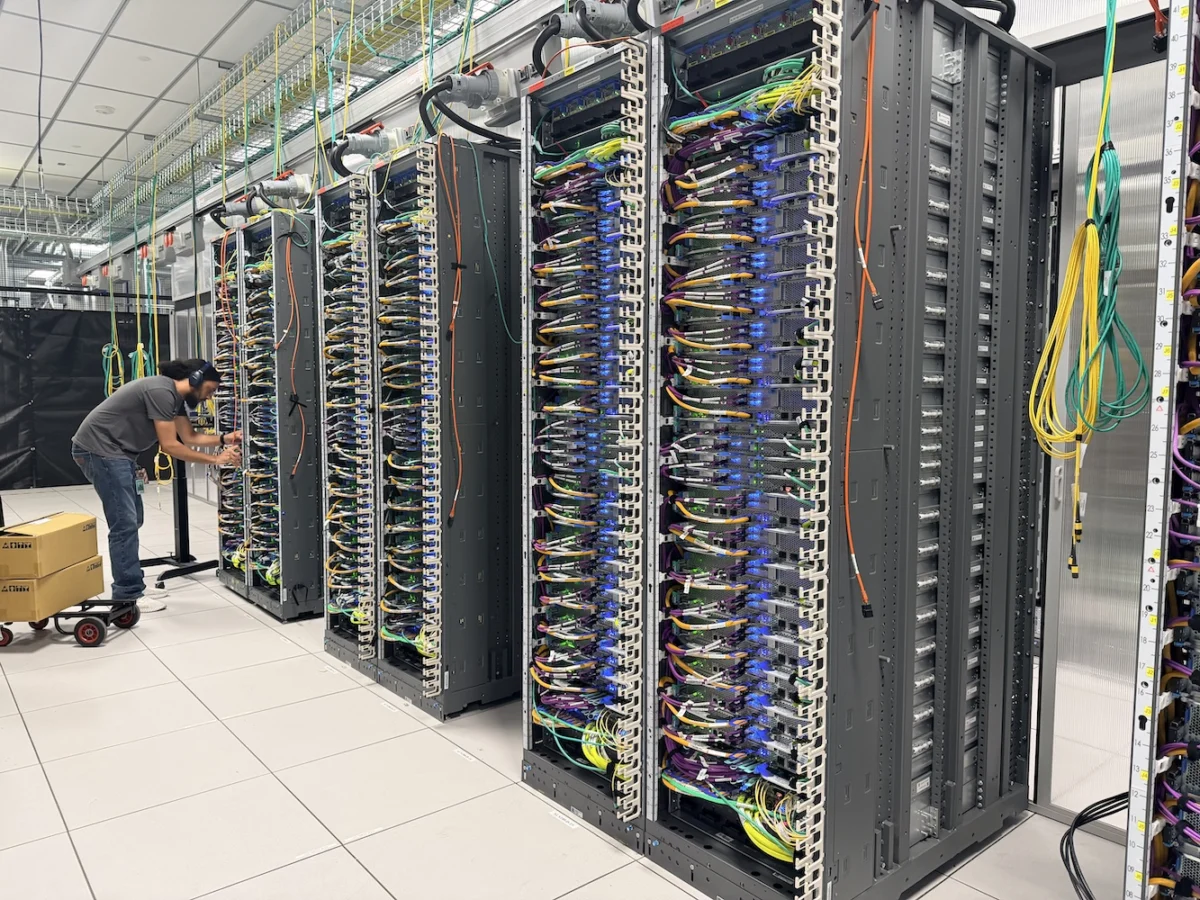
Stepping into the Austin facility, located in the upscale, tech-centric "Domain" district, one is immediately struck by the absence of the sterile, corporate atmosphere typical of Big Tech headquarters. Instead, the lab feels like a functional workshop. The air is filled with the mechanical hum of high-powered fans and the occasional smell of heated metal. Engineers in denim, rather than lab coats, navigate a labyrinth of shelving units packed with diagnostic equipment and custom-built testing rigs. This is the birthplace of Trainium3, a state-of-the-art 3-nanometer chip manufactured by TSMC, representing the cutting edge of semiconductor fabrication.

The technical specifications of Trainium3 are impressive, but its true value lies in its architectural philosophy. Unlike general-purpose GPUs, which were originally designed for graphics and later adapted for parallel processing, Trainium is purpose-built for the specific mathematical workloads of deep learning. The latest generation is deployed within specialty "Trn3 UltraServers," which AWS claims can reduce the cost of running AI models by up to 50% compared to traditional cloud instances. This cost efficiency is achieved through several key innovations, most notably the "Neuron" switch. These custom-designed switches allow every Trainium3 chip to communicate with every other chip in a high-bandwidth mesh configuration. This reduces the latency bottlenecks that often plague massive AI clusters, allowing for a more fluid distribution of data during the training of LLMs (Large Language Models).
Furthermore, the transition from air cooling to liquid cooling marks a significant milestone for the team. As chips become more powerful, they generate heat that traditional fans can no longer dissipate effectively. The Trainium3 "sleds"—the modular trays that house the accelerators and their supporting components—now feature a sophisticated closed-loop liquid cooling system. This not only allows for higher compute density within a single rack but also aligns with Amazon’s broader sustainability goals by significantly reducing the energy required for data center climate control.

The human element of this engineering feat is perhaps best captured in the "silicon bring-up" process. This is the high-stakes moment when a new chip design returns from the foundry and is powered on for the first time. It is an 18-month journey culminating in a 24/7 "lock-in" event. Kristopher King, the lab’s director, and Mark Carroll, the director of engineering, describe these sessions as a mix of intense pressure and camaraderie, fueled by pizza and the singular goal of debugging a piece of hardware that costs millions to develop. During the bring-up of the Trainium3 prototype, the team discovered a physical misalignment between the chip and its heat sink. Rather than waiting weeks for a redesigned part, engineers took a grinder to the metal in a nearby conference room, manually reshaping the hardware to ensure the project stayed on schedule. This "get it done" mentality is a hallmark of the Annapurna legacy that still defines the culture of the Austin lab.
The strategic implications of this hardware are already being felt across the industry. Anthropic, the creator of the Claude series of AI models, has been a cornerstone partner for AWS. Their "Project Rainier" cluster, which went live in late 2025, utilizes 500,000 Trainium chips, making it one of the largest AI compute clusters in existence. For Anthropic, the draw isn’t just the hardware performance; it’s the cost of inference. While the industry spent years obsessing over how fast a model could be trained, the focus has shifted to inference—the process of a model generating a response for an end-user. As AI applications scale to hundreds of millions of users, the cost per query becomes the life-or-death metric for AI startups. By running on Trainium, Anthropic can deliver Claude’s capabilities at a fraction of the cost of competitors tethered to expensive, power-hungry GPUs.

The OpenAI deal adds a new layer of complexity to this narrative. By securing 2 gigawatts of Trainium capacity, OpenAI is signaling that even the primary beneficiary of Microsoft’s Azure infrastructure needs to diversify its hardware dependencies. The deal reportedly grants AWS exclusivity for OpenAI’s "Frontier," a next-generation AI agent builder. This has created a friction point with Microsoft, which has historically enjoyed a "first-look" status with OpenAI’s technology. The move underscores a growing trend in Silicon Valley: the realization that software dominance is unsustainable without a corresponding "silicon sovereignty."
Even Apple, a company that prides itself on its own internal M-series and A-series silicon, has turned to AWS for its cloud-based AI needs. Apple’s public endorsement of the Graviton (Amazon’s ARM-based CPU) and Inferentia (a chip dedicated solely to inference) chips was a rare moment of transparency for the Cupertino giant. It served as a validation of Amazon’s "Amazon Playbook" applied to hardware: identify a high-demand commodity, build a cheaper and more efficient in-house version, and integrate it so deeply into the service layer that the switching costs for customers become negligible.

Historically, the biggest barrier to challenging Nvidia has been the software moat. Nvidia’s CUDA platform is the industry standard, and porting code to other hardware was once a nightmare of re-architecting and recompilation. Amazon is tackling this through native support for PyTorch, the most popular open-source framework for AI development. According to the engineering team, transitioning an existing model to run on Trainium now requires as little as a single line of code change. This lowering of the "software tax" is critical for Amazon’s ambition to make its Bedrock service—a platform that allows enterprises to build AI apps using various models—as ubiquitous as its EC2 compute cloud.
Looking ahead, the roadmap for the Austin lab shows no signs of slowing. As the team moves into the development of Trainium4, the focus is expanding beyond raw compute power to "agentic" AI—models that don’t just answer questions but take actions on behalf of the user. These workloads require a different kind of architectural flexibility, one that Amazon is uniquely positioned to provide through its integration of Nitro (its virtualization hardware) and custom networking stacks.

The global AI race is often framed as a battle of algorithms, but as the 2 gigawatts of power committed to OpenAI suggest, it is increasingly a battle of industrial capacity and electrical engineering. In the noisy, fan-cooled aisles of the Austin lab, the engineers are doing more than just testing chips; they are building the infrastructure for a post-GPU world. If Amazon succeeds in making Trainium the default engine for the next generation of AI agents, the $50 billion investment in OpenAI will look less like a gamble and more like the final piece of a decade-long plan to own the foundational layer of the intelligent age. The era of the general-purpose GPU monopoly is facing its most credible challenge yet, not from a traditional semiconductor rival, but from a cloud giant that decided it was tired of waiting for someone else to build the future.
