

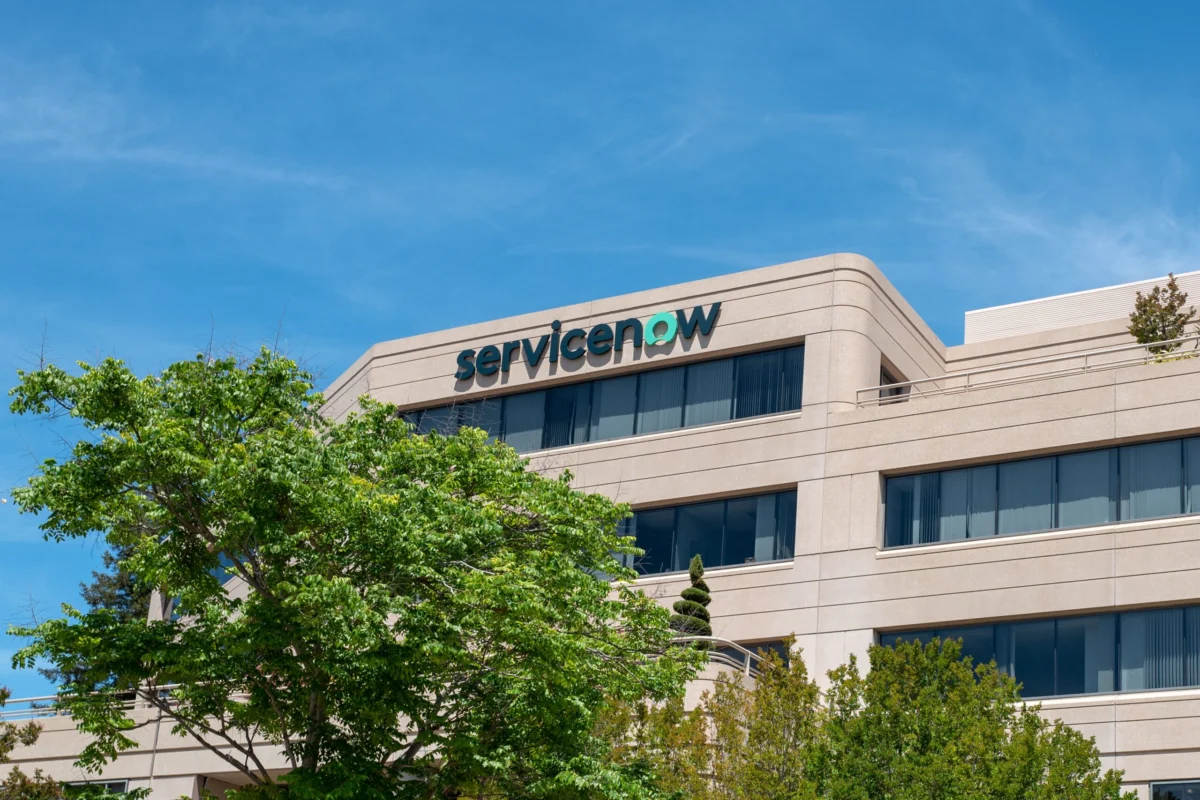
In a move that underscores the rapid convergence of enterprise workflow automation and specialized financial technology, U.S. enterprise software giant ServiceNow has taken a strategic minority stake in BusinessNext, an established Indian banking software platform. The $40 million investment values the Noida-headquartered company at $700 million, securing ServiceNow a roughly 5% equity position and establishing a co-selling alliance aimed at accelerating the deployment of artificial intelligence across global financial institutions.
The transaction highlights a broader strategic pivot occurring across the software-as-a-service (SaaS) landscape. As tier-one banks and financial institutions shift from initial generative AI experimentation to deep, operationalized automation, general-purpose software vendors are seeking domain-specific software partners to penetrate complex, highly regulated verticals. For BusinessNext, the deal provides direct access to ServiceNow’s vast global sales infrastructure, paving the way for accelerated international expansion across North America, Europe, and the Middle East.
Strategic Alignment: Fusing Customer-Facing Systems with Back-Office Engines
At the heart of the partnership is a complementary technological architecture. Historically, enterprise software deployments in financial services have suffered from fragmented operational layers. Front-office customer relationship management (CRM) software frequently operates in isolation from middle-office risk assessment modules and back-office transactional processing platforms.
BusinessNext, which rebranded from CRMNext in 2022 to reflect its evolution into an enterprise automation provider, specializes in customer-facing banking workflows. Its platform powers digital onboarding, relationship management, customer service, and cross-selling intelligence for more than 70 financial institutions worldwide. Conversely, ServiceNow’s enterprise platform has established itself as the digital thread across modern IT infrastructure, back-office administration, HR operations, and enterprise-wide process orchestration.
By linking BusinessNext’s customer-engagement mechanisms directly into ServiceNow’s workflow engine, the two companies plan to present a unified tech stack to global banks. This integrated offering allows financial institutions to trigger end-to-end automated workflows starting from a client interaction in the front office—such as a loan application, account dispute, or wealth advisory inquiry—and route it seamlessly through complex, multi-layered back-office processing without requiring manual intervention or customized middleware.
The collaborative approach directly addresses a persistent pain point for chief information officers (CIOs) in the financial sector: the cost and risk of managing sprawling vendor ecosystems. By pre-integrating these platforms, financial institutions can bypass complex software customization projects, reducing the time required to roll out new automated services.
Distribution at Scale: The Go-To-Market Mechanics
For high-growth software vendors scaling beyond regional markets, building a global corporate sales organization presents significant operational friction and capital intensity. By opting for a strategic corporate investment over traditional venture capital or private equity funding, BusinessNext effectively leverages ServiceNow’s existing enterprise footprint.
Under the agreement, BusinessNext gains the ability to sell jointly alongside ServiceNow’s global field organization. This enterprise distribution engine provides immediate access to legacy banking accounts in North America, Europe, and developed Asian markets where BusinessNext previously maintained limited brand presence or field resources.
From ServiceNow’s perspective, the deal provides a ready-made, vertically optimized software solution for its financial services division. Rather than spending years building bespoke banking modules from scratch or navigating the regulatory hurdles inherent in deep financial software, ServiceNow can market a battle-tested solution that already processes millions of daily financial transactions across critical banking networks.
Inside BusinessNext: Profitable Scaling and Global Ambitions
Founded in 2002, BusinessNext represents a distinct model within the technology landscape. Unlike many software startups that prioritize growth over unit economics, the company has maintained operational profitability while scaling its operations. In its latest financial year, BusinessNext generated approximately $32 million in revenue and grew its workforce to more than 1,300 employees.
The jump in valuation from $181 million during its 2021 funding round to $700 million today reflects both its persistent revenue expansion and its successful pivot toward deep artificial intelligence integration. Prior to ServiceNow’s entry, the company had raised roughly $60 million from prominent growth-equity and venture funds, including Avataar Ventures, Norwest Venture Partners, and Ascent Capital.
BusinessNext’s client roster includes some of the world’s most demanding public and private financial institutions. In India, the firm serves the central monetary authority, the Reserve Bank of India, as well as the country’s largest public lender, State Bank of India, and top private sector institutions such as HDFC Bank. Outside its home market, the company has established footholds across Southeast Asia, the Middle East, and the United States, with overseas clients now accounting for approximately 50 percent of its total top-line revenue.
Central to BusinessNext’s value proposition is its focus on what it terms "autonomous banking." Following its 2022 structural redesign, the company fundamentally re-architected its core software architecture to place autonomous AI agents at the center of banking workflows. Rather than simply layering conversational interfaces onto legacy software, BusinessNext built native machine-learning models capable of analyzing customer behavior, automating compliance verification, and routing operational tasks autonomously.
To satisfy strict global data protection laws and banking regulations, BusinessNext engineered its AI capabilities to run on private infrastructure and enterprise cloud environments. This ensures that sensitive customer information, financial histories, and proprietary transaction logs remain insulated from public foundation models, allowing risk-averse institutions to adopt automated tools without compromising data privacy or regulatory compliance.
The Broader Paradigm Shift in Enterprise SaaS
The investment comes at a pivotal moment for the broader enterprise software industry. Over the past decade, enterprise IT spending was dominated by point-solution software platforms that charged per-seat subscription fees. However, the rise of powerful generative models and autonomous agent frameworks has caused corporate buyers to re-evaluate their software portfolios.
Enterprise buyers are increasingly questioning the value of paying ongoing per-user subscription fees for software tools that merely act as passive record systems. Instead, corporate budgets are shifting toward intelligent systems that automate complex operational processes end-to-end. This shift toward "agentic AI"—where software actively carries out complex, multi-step workflows rather than merely presenting data for human review—is forcing software providers to deepen their specialized industry features.
Financial services represent one of the most demanding battlegrounds for this transformation. Modern banks operate under complex regulatory frameworks, stringent capital requirements, and real-time operational risk monitoring. Generic enterprise software tools often lack the specific workflows required to manage commercial lending, trade finance, customer onboarding, or anti-money laundering (AML) protocols natively.
By partnering with BusinessNext, ServiceNow reinforces its vertical software capability, demonstrating how horizontal workflow engines can combine with industry-specific applications. This strategy allows horizontal software vendors to defend their platform positions against emerging AI-native startups while continuing to expand their average contract sizes among major enterprise clients.
India’s Transition to Deep Vertical Enterprise Software
The deal also underscores an ongoing structural shift within India’s technology ecosystem. For decades, the Indian tech landscape was defined by IT service exporters and business process outsourcing firms that managed back-office services for Western corporations. Over the past decade, that foundation spurred a wave of consumer internet platforms and foundational SaaS providers.
Today, companies like BusinessNext represent a new wave of mature Indian software firms: domain-specific platforms that build proprietary software for mission-critical operations. These firms leverage deep regional engineering talent, cost-effective product development, and rigorous operational testing ground within India’s high-volume, highly digitalized financial sector.
India’s financial system has undergone a massive digital transformation over the last decade, driven by digital identity infrastructure, real-time retail payment networks, and open-banking protocols. Software platforms built to handle the operational scale and transaction throughput required by major Indian banks are uniquely positioned to serve international markets seeking to modernize their legacy systems.
Future Outlook and Operational Roadmaps
As the partnership takes effect, the focus turns to execution across product integration and field engagement. The immediate technical objective is deepening the interoperability between BusinessNext’s autonomous banking models and ServiceNow’s enterprise workflow hub, establishing standardized data connectors and joint security protocols.
From a commercial perspective, joint sales teams are expected to target tier-one and tier-two banking institutions in North America and Western Europe that are seeking to upgrade legacy core architectures. These institutions face rising regulatory compliance costs, changing consumer expectations, and increasing competition from digital-native fintech platforms.
If successful, the alliance could serve as a template for future enterprise software consolidation and strategic partnerships. Rather than attempting to acquire domain-specific platforms outright—a path often fraught with integration challenges and regulatory delays—horizontal software vendors may increasingly utilize strategic equity investments and deep go-to-market alliances to dominate vertical markets.
For the global financial sector, the movement toward integrated, AI-driven workflow engines marks a decisive shift away from manual processes. As autonomous software agents take on a larger share of middle- and back-office banking operations, institutions that successfully integrate front-office customer systems with back-office execution platforms will be positioned to operate with significantly higher efficiency, lower error rates, and enhanced customer satisfaction in an increasingly digital financial ecosystem.
