

The global technological landscape is undergoing a profound realignment, driven by a series of breakthroughs and controversies that span from the heights of generative artificial intelligence to the intimate realities of women’s health. As geopolitical rivals compete for algorithmic dominance, a parallel revolution is unfolding in biotechnology, space exploration, and regulatory antitrust enforcement. Together, these developments are redefining the boundaries of human capability, corporate power, and state sovereignty.
The Geopolitical Shift in Generative AI
For the past several years, the narrative surrounding the development of frontier artificial intelligence has been dominated by a handful of Silicon Valley giants. However, this American hegemony is facing its most significant challenge yet. A Chinese artificial intelligence startup has disrupted the market by releasing the world’s largest open-source AI model. This milestone marks a critical turning point in the technological cold war between Washington and Beijing, suggesting that the capability gap between US and Chinese AI systems is narrowing far more rapidly than Western policymakers had anticipated.
The newly released Chinese model does not merely compete on scale; it rivals the performance of premier proprietary systems developed by leading Western firms such as OpenAI and Anthropic. This release has sent shockwaves through the financial sector, triggering a notable sell-off in AI and semiconductor stocks. Investors are beginning to realize that the premium valuations of closed-source AI companies may be vulnerable to high-performing, freely accessible alternatives.
China’s strategic embrace of open-source software is not accidental. Facing stringent US export controls designed to restrict its access to cutting-edge semiconductor hardware, such as Nvidia’s advanced graphics processing units (GPUs), Chinese firms have turned to open-source collaboration as an asymmetric strategy. By distributing massive models openly, Chinese developers can leverage global developer communities to optimize software efficiency, reducing the raw computational power required to run advanced AI.
Simultaneously, domestic alternatives to Nvidia’s hardware are gaining significant traction within China. Local semiconductor designers are projecting massive sales increases as domestic demand for AI chips surges. This hardware transition, coupled with open-source software breakthroughs, suggests that US sanctions may have inadvertently accelerated China’s drive for technological self-reliance.
This domestic progress aligns with Beijing’s broader foreign policy objectives. At the World Artificial Intelligence Conference (WAIC) in Shanghai, Chinese leadership positioned the nation as a key AI partner for the developing world. The strategic message is clear: China does not intend to merely follow Western technological standards. Instead, it aims to establish an alternative ecosystem, offering both the infrastructure and the regulatory frameworks to lead the global community—particularly the Global South—into the AI era.
The Commercialization and Misinformation of Perimenopause
While the geopolitical stage focuses on algorithmic power, a different kind of technological revolution is occurring in the wellness and healthcare sectors. Perimenopause—the transitional phase leading up to menopause—has transitioned from a historically taboo subject into a highly lucrative commercial market. Driven by social media influencers, celebrity endorsements, and digital health platforms, conversations around midlife women’s health have entered the mainstream. However, this newfound openness has also opened the floodgates for widespread medical misinformation.
The commercial "femtech" market has rushed to capitalize on the anxieties of aging populations, often promoting products and diagnostic tools that lack clinical validity. A primary example is the marketing of diagnostic tests for perimenopause. From a clinical perspective, there is currently no single, definitive test—hormonal or otherwise—that can diagnose perimenopause. Because hormone levels fluctuate wildly during this transitional phase, a isolated blood or saliva test offers little diagnostic value.
Despite this biological reality, numerous companies market expensive at-home testing kits, promising personalized insights that science cannot yet deliver. This commercialization has led to a proliferation of unproven treatments, custom hormone formulations, and wellness supplements that lack rigorous clinical backing. Furthermore, the focus on hormonal fluctuations often leads to diagnostic overshadowing, where diverse physical and mental health symptoms occurring in midlife are erroneously attributed to hormones, potentially delaying the diagnosis of other treatable conditions.
The vulnerabilities associated with digital women’s health extend beyond misleading marketing into the realm of data privacy. Recent investigations into popular period-tracking and fertility applications have revealed systemic privacy failures. Many of these platforms quietly share highly sensitive user health data with third-party advertisers and data brokers. In a post-regulatory landscape where reproductive health data can be weaponized, the lack of robust privacy protections in wellness applications represents a significant risk to consumer safety, highlighting the urgent need for comprehensive digital privacy frameworks.

Antitrust and the Re-Regulation of Mobile Ecosystems
The tension between tech monopolies and public interest is also manifesting in a historic regulatory confrontation in Europe. The European Union has issued a sweeping directive to Google, ordering the tech giant to share its valuable search data with rival search providers and to open its Android mobile operating system to competing artificial intelligence bots.
This regulatory action represents a fundamental threat to Google’s mobile dominance. For over a decade, Android has served as a primary distribution vehicle for Google’s proprietary services, pre-installing its search engine and assistant as default options. By forcing Google to open Android’s core architecture to rival AI systems, the EU is attempting to prevent the monopolization of the emerging mobile AI assistant market. This move could pave the way for a more fragmented, competitive landscape where consumers can seamlessly choose their preferred AI engine at the system level.
Financializing Political Speech
In the United States, the intersection of technology, finance, and politics has yielded an unprecedented monetization strategy. Trump Media has developed a specialized application programming interface (API) designed to sell instant, high-frequency access to social media posts that have the potential to move financial markets.
In modern trading environments, where algorithmic systems execute trades in milliseconds based on keyword sentiment analysis, early access to statements from prominent political figures is highly valuable. By offering a paid, low-latency data feed of public statements, the platform is effectively financializing political discourse. This development raises novel ethical and regulatory questions regarding market manipulation, insider trading, and the direct monetization of political influence.
Frontiers in Applied Science and Biotechnology
Beyond software and regulation, experimental sciences are delivering breakthroughs that challenge our understanding of biology and the physical world.
-
Neurotechnology and Bidirectional Neural Interfaces: Researchers have achieved a major milestone in neuroprosthetics by developing a brain implant that has successfully restored both movement and sensation to a paralyzed individual’s hand. Unlike traditional brain-computer interfaces (BCIs) that only translate brain signals into motor actions, this system employs a neural bypass that feeds sensory information back to the brain. This bidirectional communication allowed the recipient to perform complex daily tasks, such as feeding himself and drinking from a cup. Remarkably, some level of motor recovery persisted even when the active stimulation was turned off, suggesting that targeted neurostimulation may encourage neural plasticity and long-term rehabilitation.
-
Astrobiology and Atmospheric Exoplanets: Astronomers have identified a nearby, Earth-sized exoplanet that possesses a detectable atmosphere. Located in a potentially habitable zone, this planet has become a primary target in the ongoing search for extraterrestrial biosignatures. Analyzing the chemical composition of this atmosphere using advanced space telescopes represents the next frontier in understanding whether life exists beyond our solar system.
-
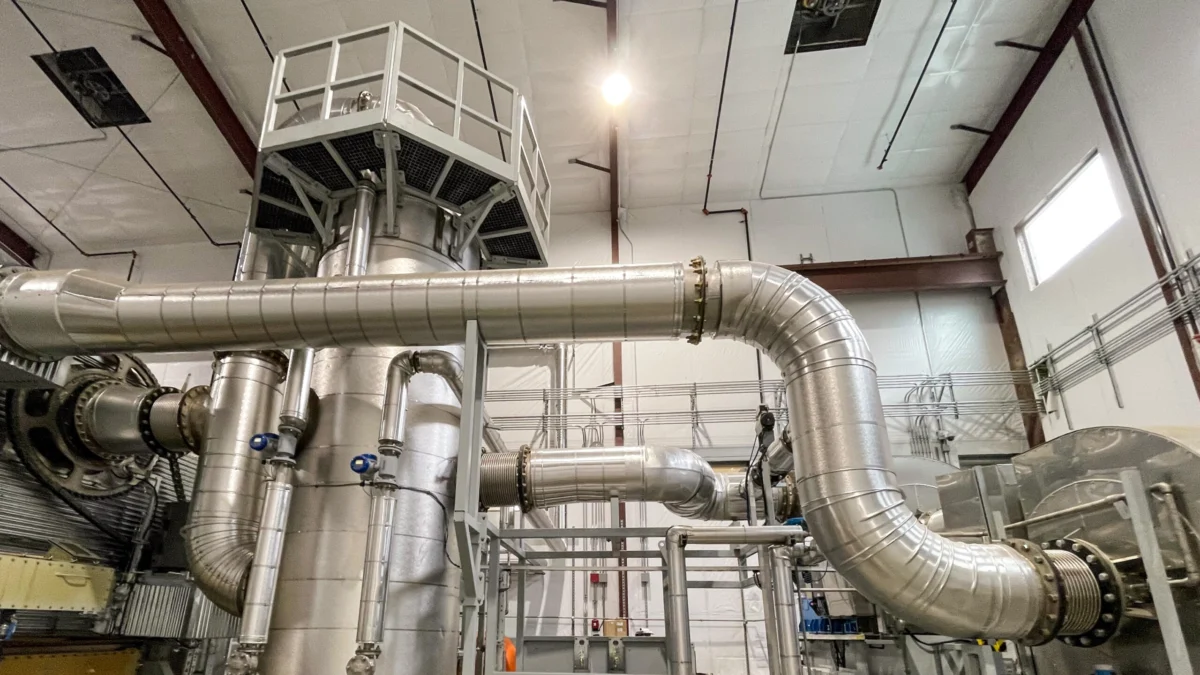
Agricultural Biotechnology and Circular Systems: In a bid to address global resource scarcity, innovative bio-refineries are reframing human and livestock waste as valuable agricultural inputs. A pioneering facility near Seattle has deployed energy-efficient thermal and chemical processing technologies to safely treat biowaste. Rather than incinerating or burying these materials, the facility extracts critical nutrients—such as phosphorus and nitrogen—which are in increasingly short supply across global agricultural systems. This circular economic approach offers a scalable template for reducing reliance on carbon-intensive synthetic fertilizers.
-
Adversarial Fashion and Surveillance Countermeasures: As public space is increasingly monitored by automated facial recognition networks, a novel counter-surveillance movement is emerging in the fashion industry. Designers are creating "adversarial clothing" featuring complex, algorithmically generated patterns. These designs are engineered to confuse computer vision models, either by overloading the system with false positives or rendering the wearer virtually invisible to detection algorithms. This intersection of fashion and cryptography highlights a growing public desire to reclaim personal privacy in an era of ubiquitous surveillance.
A Complex and Interconnected Future
The rapid evolution of these technologies demonstrates that scientific progress does not occur in a vacuum. The rise of sophisticated open-source AI in China, the regulatory battles over mobile ecosystems in Europe, the commercialization of sensitive health data, and the creation of physical countermeasures against surveillance are all interconnected facets of a modern digital society. Navigating this landscape requires not only technical innovation, but also robust scientific literacy, ethical commercial practices, and proactive regulatory frameworks capable of protecting individual rights without stifling progress.
