

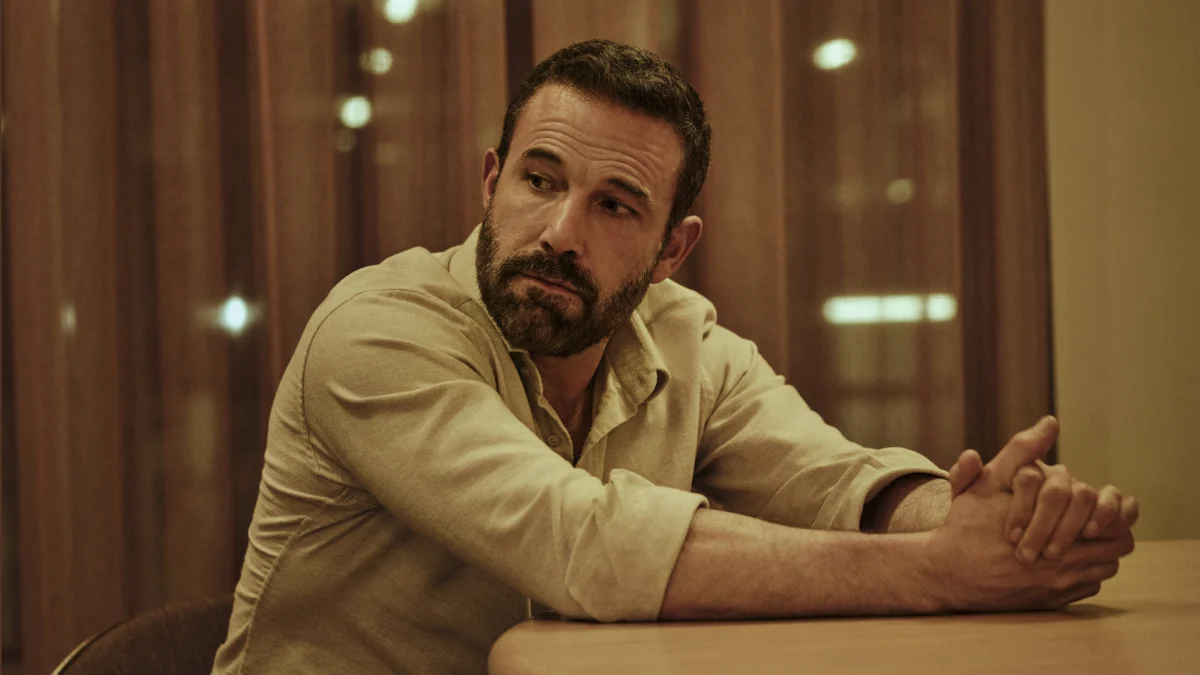
In a move that cements the irreversible convergence of Silicon Valley engineering and Hollywood filmmaking, Netflix has officially disclosed the financial scale of its latest technological play. According to recent regulatory filings submitted to the Securities and Exchange Commission (SEC), the streaming titan paid $587 million in cash to acquire InterPositive, an artificial intelligence startup co-founded by Oscar-winning filmmaker and actor Ben Affleck. This revelation not only resolves months of intense industry speculation regarding the price tag of the March transaction but also underscores a massive, systemic shift in how the world’s largest entertainment platform intends to produce, refine, and scale its massive library of original content.
The cash-only transaction highlights Netflix’s determination to secure proprietary technological advantages in an increasingly competitive streaming landscape. When the acquisition was first announced in March, financial terms were strictly guarded, leaving industry analysts to estimate the deal’s value. Early projections, including reports from financial media outlets, floated figures close to $600 million. The finalized $587 million cash outlay confirms that Netflix viewed InterPositive not merely as an experimental venture, but as a core pillar of its future production infrastructure. Under the terms of the acquisition, the startup’s entire engineering and creative team has integrated into Netflix’s technology division, with Affleck himself stepping into a strategic role as a senior advisor.
The Genesis of InterPositive: Solving the Physical Realities of Production
To understand why Netflix was willing to commit over half a billion dollars in liquid capital to a nascent startup, one must examine the specific pain points InterPositive set out to solve. Founded by Affleck alongside a cohort of computational imaging experts and industry veterans, the company was built to address the highly unpredictable, labor-intensive, and costly realities of physical filmmaking.
In traditional cinema, principal photography is often a race against the clock, governed by shifting weather, limited actor availability, and unpredictable environmental factors. When a shot is missed, a background is rendered unusable due to licensing issues, or a scene is plagued by inconsistent lighting, the traditional solutions are notoriously expensive. Studios must either authorize costly physical reshoots—requiring the re-mobilization of cast, crew, and equipment—or rely on labor-intensive post-production visual effects (VFX) work, where artists manually adjust pixels, rotoscope characters, and composite elements frame by frame.
InterPositive’s proprietary generative AI suite targets these exact bottlenecks. Rather than attempting to generate entire films from text prompts—a prospect that remains highly controversial and artistically unproven—the startup’s tools function as an advanced corrective layer for existing footage. The software uses sophisticated machine learning models to analyze the geometry, depth, and lighting of a shot, allowing editors to seamlessly insert missing visual elements, replace backgrounds with perfect perspective matching, and dynamically alter lighting grids long after the cameras have stopped rolling.
By focusing on these corrective, utility-driven applications, InterPositive positioned itself as an indispensable tool for maximizing the efficiency of the post-production pipeline. For a company like Netflix, which coordinates hundreds of active productions simultaneously across the globe, the ability to fix a multi-million-dollar lighting mistake or background error digitally, without scheduling a single reshoot, represents a massive operational victory.
The Philosophy of "Augmentative" AI in a Post-Strike Hollywood
The acquisition comes at a highly sensitive time for the entertainment industry. Following historic labor strikes by the Writers Guild of America (WGA) and the Screen Actors Guild (SAG-AFTRA), the ethical boundaries of artificial intelligence in filmmaking have become a battleground. Creative professionals have expressed deep anxieties regarding job displacement, intellectual property theft, and the potential for digital likenesses to replace human actors.
Recognizing these anxieties, Affleck has consistently framed InterPositive’s mission not as a replacement for human artistry, but as a shield for it. Upon the announcement of the acquisition, Affleck emphasized a desire to "protect the power of human creativity." In his view, the technology acts as an enabler, freeing directors and cinematographers from the rigid constraints of logistical disasters and allowing them to preserve their original creative vision even when physical production conditions fail them.
By bringing a respected, mainstream Hollywood figure like Affleck into the fold as a senior advisor, Netflix is executing a dual strategy. On one hand, it is acquiring world-class technical assets; on the other, it is securing a vital bridge to the creative community. Having an established director and actor advocate for the practical, non-threatening utility of these tools helps mitigate the industry backlash that often accompanies major tech-driven disruptions in Hollywood.
Scaling the Technology: Netflix’s Industrial-Grade AI Deployment
While the acquisition of InterPositive represents a major milestone, Netflix’s integration of machine learning into its creative pipeline is already well underway. In its most recent quarterly earnings report, the company revealed a startling statistic: approximately 300 of its titles have already utilized generative AI tools during their production or post-production phases.
This metric indicates that generative AI has transitioned from an experimental novelty to an industrialized standard within Netflix’s production ecosystem. The applications of these tools are vast and varied. Beyond the corrective visual adjustments pioneered by InterPositive, Netflix has leveraged machine learning for a wide array of tasks, including:
- Automated Localization: Aligning the lip movements of actors in foreign-language dubs to match the audio of different languages, dramatically improving the viewing experience for international audiences.
- Dynamic Color Grading: Utilizing AI models to analyze the emotional tone of a scene and automatically apply complex color palettes, reducing the time colorists spend on initial passes.
- Pre-Visualization and Storyboarding: Allowing directors to quickly generate complex, three-dimensional scene layouts during pre-production, streamlining the transition from script to set.
- Virtual Set Extensions: Integrating real-time generative backgrounds with physical sets, reducing the reliance on massive green screens and allowing actors to interact with more immersive environments.
With over 260 million subscribers worldwide, Netflix’s business model relies on the continuous, rapid delivery of high-quality, localized content across diverse regions. The integration of InterPositive’s toolset into this existing workflow will allow the company to further accelerate its production cycles, lower the average cost per title, and maintain a high standard of visual fidelity across its massive slate of global releases.
The Economic Equation: Calculating the Return on a $587 Million Investment
To the outside observer, spending nearly $600 million in cash on an AI startup might seem like an expensive gamble. However, from a corporate finance perspective, the math behind the acquisition is highly compelling.
The traditional VFX pipeline is currently facing an acute global bottleneck. High demand from streaming platforms and theatrical studios has left major visual effects houses backlogged, driving up costs and causing frequent release delays. By bringing proprietary, AI-driven post-production capabilities entirely in-house, Netflix effectively bypasses this bottleneck for a significant portion of its corrective VFX needs.
Consider the economics of a typical mid-to-high-budget Netflix production. A single day of reshoots for a major drama or action series can easily cost upwards of $250,000 to $1 million when accounting for cast contracts, location rentals, crew union rates, and equipment. If InterPositive’s technology can successfully avert even a fraction of these reshoots across Netflix’s vast portfolio, the savings quickly compound.
Furthermore, by automating tedious post-production tasks—such as manual rotoscoping, wire removal, and basic compositing—Netflix can redirect its human VFX budgets toward high-value creative work, such as character design and complex digital world-building. In essence, the $587 million acquisition is an investment in structural cost reduction, designed to pay dividends over years of future content creation.
The Road Ahead: The Future of AI-Native Filmmaking
Netflix’s bold acquisition of InterPositive is likely to trigger a competitive arms race among rival streaming services and traditional legacy studios. As platforms like Disney+, Amazon Prime Video, and Apple TV+ look to optimize their own production budgets, the demand for proprietary, ethically sourced, and filmmaker-friendly AI tools will skyrocket.
The future of cinema will not be defined by fully synthetic, prompt-to-video algorithms that bypass human creators. Instead, it will be shaped by hybrid workflows—what many in the industry are beginning to call "AI-native filmmaking." In this paradigm, artificial intelligence acts as an invisible, highly sophisticated assistant that operates entirely within the boundaries of a human-directed project.
As InterPositive’s engineering team begins its work deep within Netflix’s research and development divisions, the industry will watch closely to see how these tools influence the platform’s upcoming blockbuster releases. What is already clear, however, is that the cutting room has changed forever. The boundary between what was captured on set and what can be seamlessly generated in post-production has dissolved, ushering in an era where the only limit to cinematic storytelling is the imagination of the creator—and the sophistication of the algorithm supporting them.
