

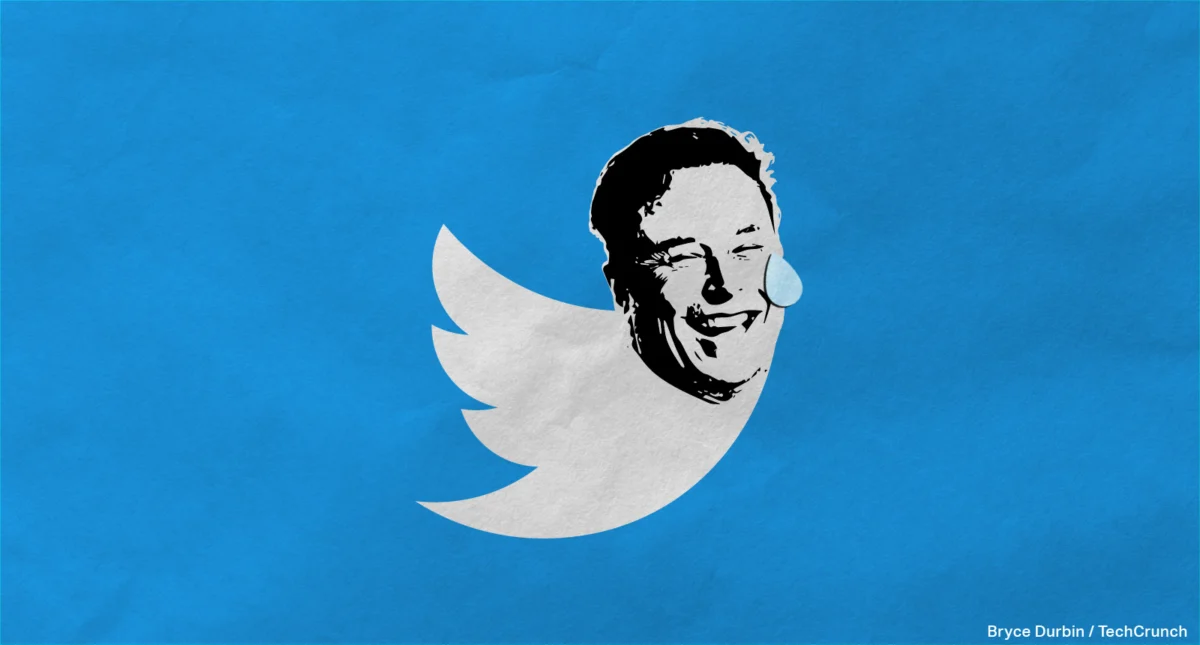
A civil jury in California has delivered a landmark verdict that reverberates through the corridors of Silicon Valley and Wall Street, ruling that Elon Musk intentionally misled investors during the tumultuous period leading up to his $44 billion acquisition of Twitter. The decision marks a significant legal setback for the world’s wealthiest individual, concluding that his public statements regarding the platform’s "bot" problem were not merely expressions of concern, but calculated efforts to manipulate the market and create a pretext for withdrawing from a legally binding merger agreement.
The case, which centered on the volatile months of mid-2022, highlights the increasingly blurred lines between personal social media commentary and official corporate disclosures. At the heart of the litigation was a specific tweet posted by Musk on May 13, 2022, in which he announced that the deal was "temporarily on hold" pending verification that spam and fake accounts represented less than 5% of the platform’s user base. This single post sent shockwaves through the financial markets, causing Twitter’s share price to plummet by 8% almost immediately, erasing billions in market capitalization and leaving investors in a state of high-stakes uncertainty.
The plaintiff in the class-action suit, Giuseppe Pampena, represented a group of former Twitter shareholders who sold their positions between the date of that fateful tweet and the eventual closing of the deal on October 4, 2022. Their legal team argued successfully that Musk’s public vacillation was a strategic maneuver designed to drive down the stock price, potentially to provide leverage for a price renegotiation or to provide an exit ramp from a deal that many analysts believed he had overpaid for as the broader tech market began to cool.
While Musk’s defense team maintained that the billionaire was expressing earnest, legitimate concerns regarding the integrity of Twitter’s user metrics, the jury found the plaintiff’s narrative more compelling. The verdict suggests that the jury viewed the "bot" narrative as a manufactured crisis—a form of buyer’s remorse disguised as due diligence. Under securities law, individuals in the process of acquiring a public company are held to strict standards regarding the accuracy and intent of their public communications, as these statements have the power to move markets and impact the financial well-being of thousands of retail and institutional investors.
The financial ramifications of this ruling are potentially staggering. While the exact figure for damages has yet to be finalized by the court, legal experts and plaintiff attorneys suggest the liability could reach as high as $2.6 billion. For most defendants, such a sum would be catastrophic. However, within the context of Musk’s expansive financial empire, the impact is more symbolic than existential. With a net worth currently estimated by Bloomberg at over $660 billion, a multi-billion dollar fine represents a fraction of his total wealth. Nevertheless, the ruling serves as a stern warning from the judicial system that even the most powerful figures in global finance are subject to the rules of market transparency.
This is far from Musk’s first encounter with the legal complexities of securities fraud. The California verdict stands in stark contrast to his 2023 victory in a similar lawsuit regarding his 2018 "funding secured" tweet. In that instance, Musk had claimed he had the capital necessary to take Tesla private at $420 per share. Despite the Securities and Exchange Commission (SEC) charging him with fraud and the subsequent volatility in Tesla’s stock, a jury eventually found him not liable for shareholder losses. The discrepancy between these two outcomes may signal a shift in how juries perceive Musk’s digital persona—moving from viewing him as an eccentric visionary to seeing him as a sophisticated actor whose public statements carry specific legal obligations.
The broader implications for the technology industry and corporate governance are profound. For decades, the SEC and the judicial system have relied on traditional forms of communication—press releases, quarterly filings, and formal interviews—to monitor market manipulation. The rise of "influencer CEOs" who communicate directly with millions of followers in real-time has disrupted this regulatory framework. This verdict reinforces the precedent that a tweet is legally equivalent to a formal disclosure when it concerns material facts about a public company’s valuation or acquisition status.
Furthermore, the case sheds light on the internal culture of the platform now known as X. Following the forced completion of the acquisition—necessitated by a separate lawsuit filed by Twitter’s board—Musk embarked on a radical restructuring of the company. This included massive layoffs, a complete rebranding, and a shift in the platform’s content moderation philosophy. However, the legal shadows of the acquisition process continue to haunt the enterprise. The jury’s finding that the "bot" concerns were misleading complicates Musk’s ongoing narrative that he "saved" the platform from a hidden plague of automation.
Beyond the courtroom, Musk’s strategic vision for his various ventures has entered a new phase of consolidation. Since the 2022 acquisition, X has been integrated into a broader ecosystem that includes xAI, his artificial intelligence startup, and SpaceX, his aerospace powerhouse. Recently, Musk merged xAI with X, claiming a combined valuation for the new entity of approximately $113 billion. This was followed by a stunning move in early 2026, where SpaceX acquired the merged xAI/X entity.
The rationale behind this massive corporate consolidation, according to Musk, is the pursuit of a futuristic infrastructure: space-based data centers. By leveraging SpaceX’s Starlink satellite constellation and xAI’s computational models, Musk aims to create a decentralized, orbital computing network that operates beyond the reach of terrestrial regulatory and environmental constraints. Critics, however, view these mergers as a way to shield the struggling social media platform’s financials behind the massive valuation and government contracts of SpaceX.
The jury’s decision in the Pampena case adds a layer of complexity to this grand strategy. As Musk attempts to build an "everything app" and an interplanetary data network, his history of market-moving rhetoric remains a point of contention for regulators and investors alike. The $2.6 billion potential penalty is a reminder that the path to the future is paved with the legal debris of the past.
Expert analysis suggests that this ruling may embolden the SEC to take a more aggressive stance on "Regulation Fair Disclosure" (Reg FD) violations. If a private individual’s tweets can be deemed intentionally misleading by a jury of their peers, it sets a high bar for other executives who might be tempted to use social media as a tool for corporate warfare or price manipulation. The tech industry is now on notice: the era of the "unfiltered CEO" is being met with the cold reality of the "accountable executive."
Looking ahead, the legal battle is likely to enter a protracted appeals process. Musk’s legal team will almost certainly challenge the jury’s interpretation of "intent" and the calculation of damages. They will likely argue that the 8% drop in Twitter’s stock was a result of broader market volatility rather than a single social media post. However, the initial victory for shareholders represents a significant moral and legal win for those who argue that the democratization of information through social media should not come at the cost of market integrity.
As the dust settles on this specific trial, the tech world remains focused on the evolution of X and its role within Musk’s burgeoning conglomerate. The transition from a public social media company to a private arm of a space-faring AI empire is perhaps the most ambitious corporate pivot in history. Yet, as this verdict proves, the ghost of the 2022 acquisition continues to exert a powerful influence. For the investors who lost money during those months of uncertainty, the jury’s decision offers a form of delayed justice, affirming that in the eyes of the law, the power to tweet carries the heavy burden of the truth.
