

The smartphone industry stands on the precipice of continuous evolution, yet few milestones capture the public imagination quite like a major anniversary release from Cupertino. While the immediate horizon for Apple features monumental shifts—including the anticipated debut of the tech giant’s inaugural foldable device during an upcoming autumn showcase—the longer-term strategic roadmap points directly toward 2027. This specific year marks two decades since the original iPhone fundamentally altered modern communication in 2007. As supply chain whispers and concept leaks begin to trickle into the public sphere, early depictions of a potential commemorative device suggest that Apple might be willing to borrow heavily from rival design languages traditionally championed by Android manufacturers.
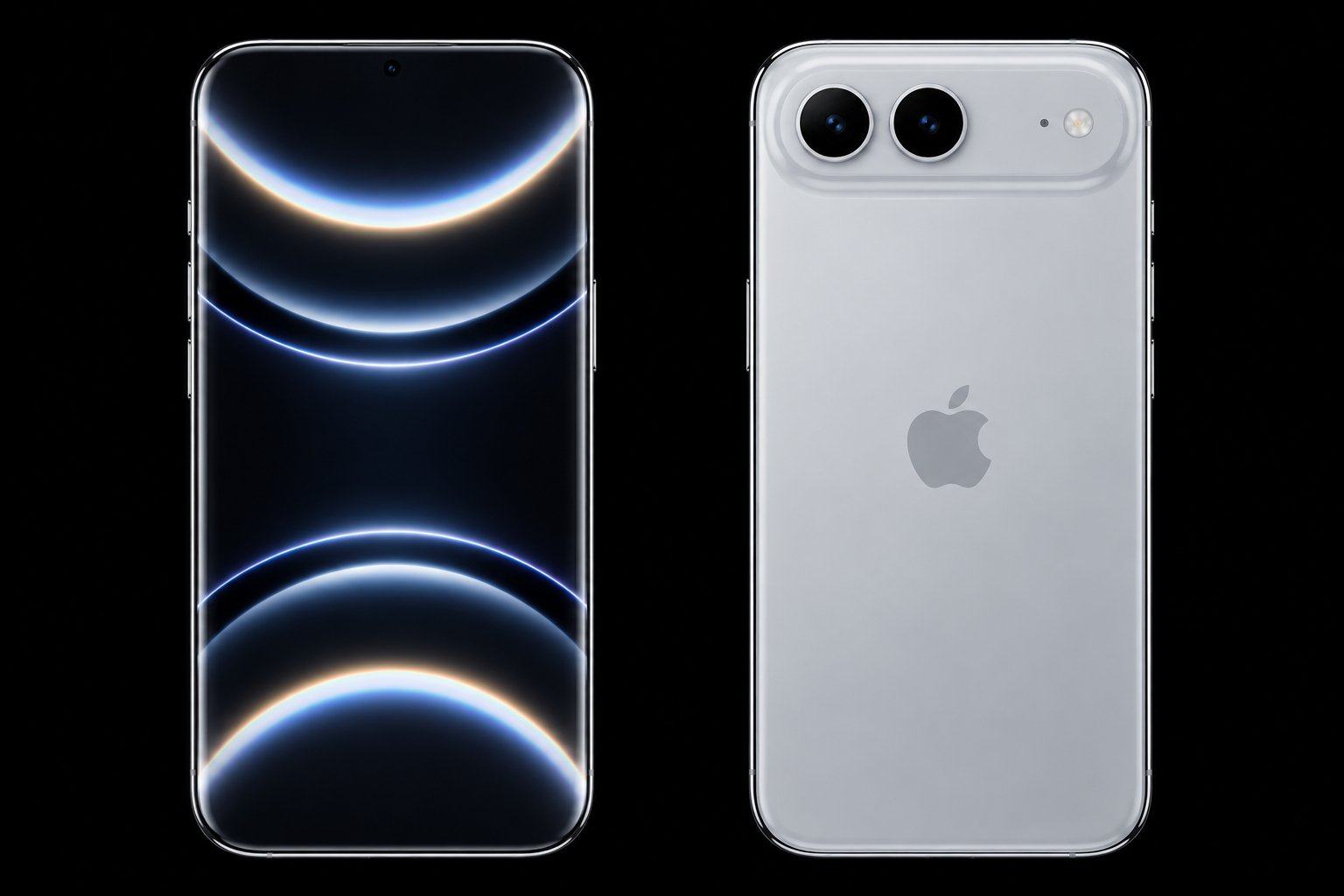
Recent conceptual leaks shared across digital platforms have reignited intense speculation regarding the aesthetic trajectory of the 20th-anniversary iPhone. These preliminary renders showcase a device featuring a sophisticated quad-curved display on the front face, complemented by symmetrically curved glass panels along the rear chassis. Furthermore, the leaked imagery highlights a horizontal dual-camera array, diverging sharply from the vertical alignments popularized in recent device generations. However, examining these early design artifacts requires a balanced dose of professional skepticism, as various structural anomalies within the imagery point toward the possible involvement of generative artificial intelligence synthesizing basic supply chain descriptions rather than offering a finalized engineering blueprint.
Closer inspection of these speculative renders reveals several notable hardware discrepancies that puzzle industry analysts. Most prominently, the physical configuration lacks the specialized Camera Control button introduced on recent flagship iterations, a capacitive mechanism usually situated below the power key on the right profile. Additionally, alternative angles depict unconventional button placements on the left-hand side while entirely omitting standardized hardware staples like the volume rocker and the customizable Action button. These inconsistencies strongly indicate that the circulated illustrations serve more as conceptual visualizations of rumored specifications rather than authenticated factory CAD files.
Despite the questionable provenance of these specific images, the underlying design choices they highlight reflect a broader, ongoing conversation about the future of mobile form factors. One of the most striking proposals embedded within these renders is the abandonment of the signature Dynamic Island in favor of a conventional hole-punch selfie camera cutout. For years, the Dynamic Island has served as a cornerstone of Apple’s front-facing hardware identity, merging notification management with aesthetic hardware masking. Shifting away from this solution to adopt a minimalist hole-punch camera would represent a significant aesthetic departure, aligning Apple’s hardware philosophy with design choices that have defined the Android ecosystem for many years.
Integrating a hole-punch camera architecture naturally raises complex engineering questions regarding the proprietary Face ID biometric suite. Apple’s facial recognition technology relies on a dense array of infrared sensors, dot projectors, and flood illuminators housed within the display housing. Compressing this intricate hardware stack into a discrete circular cutout without sacrificing security or user authentication speed remains a formidable technical challenge. If Cupertino successfully navigates this engineering hurdle by the time the anniversary milestone arrives, it would signal a profound shift in how the company prioritizes screen-to-body ratios and uninterrupted display landscapes, territory long explored by Android flagship competitors.
The history of landmark Apple product launches offers a valuable precedent for how the company approaches significant chronological anniversaries. Back in 2017, the organization bypassed conventional numerical naming conventions to release the iPhone X, commemorating ten years of smartphone dominance alongside the more traditional iPhone 8 lineup. Industry insiders suggest a similar nomenclature strategy might unfold for the 20th anniversary, with reports indicating that Apple could bypass the expected numerical sequence entirely to introduce an XX or similarly branded celebratory flagship. Such a move would reinforce the device’s status as a generational leap rather than a standard iterative upgrade.
As the tech sector looks ahead, the immediate product pipeline continues to demand consumer and journalistic attention. Upcoming autumn hardware events are slated to showcase revolutionary form factors, including the much-discussed foldable iPhone Ultra, which positions Apple to directly challenge established foldable giants in the high-end market segment. These near-term developments serve as vital stepping stones, testing consumer appetite for radical physical redesigns and paving the way for the innovations that may eventually debut during the 20th-anniversary celebration.
Ultimately, whether the speculative renders accurately predict the final hardware or merely reflect wishful thinking from the design community, they underscore a fascinating dynamic in contemporary mobile technology. The boundary lines separating competing operating systems and hardware ecosystems continue to soften as both Android manufacturers and Apple converge on optimal solutions for ergonomics, display immersion, and aesthetic minimalism. As the industry marches toward 2027, the anticipation surrounding Apple’s milestone device guarantees that every leak, patent filing, and supply chain rumor will be scrutinized for clues about the next great leap in personal computing.
