

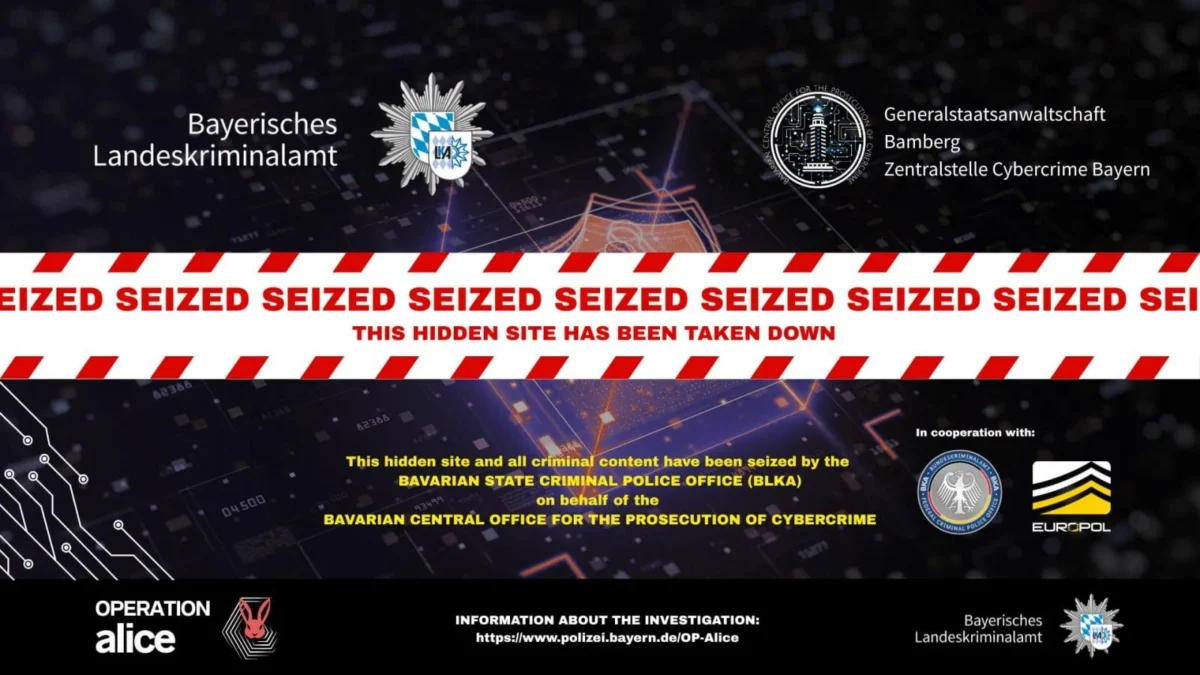
A sweeping international law enforcement initiative, codenamed Operation Alice, has culminated in the takedown of a staggering network comprising over 373,000 dark web sites. These digital storefronts were not engaged in the actual distribution of child sexual abuse material (CSAM) as advertised, but rather operated as sophisticated phishing and fraud operations masquerading as illicit marketplaces. The operation, spearheaded by German authorities with crucial coordination support from Europol, represents a significant strike against criminal enterprises exploiting the darkest corners of the internet for financial gain and the facilitation of deeply harmful intent.
The genesis of Operation Alice can be traced back to mid-2021, when investigative focus zeroed in on a particularly persistent and extensive platform known by the moniker “Alice with Violence CP.” This sprawling network was allegedly orchestrated by a 35-year-old individual believed to be operating from mainland China. The sheer scale of the operation was revealed not just through the number of defunct sites, but also by the breadth of criminal activities advertised. Beyond the primary lure of fake CSAM packages, these compromised digital spaces also marketed a range of cybercrime-as-a-service offerings, including the sale of databases containing stolen credit card information and unauthorized access credentials for compromised corporate and personal systems. This dual focus highlights a troubling convergence in the dark web ecosystem: leveraging the most heinous illegal markets to finance and execute broader cybercriminal endeavors.
Europol’s post-operation assessment detailed the mechanics of the deception. Users navigating these dark web portals were presented with tantalizing—and horrifying—previews of purported CSAM "packages." To access these promised materials, victims were coerced into submitting their email addresses and completing monetary transactions. The preferred currency for these illicit exchanges was Bitcoin, with prices for the non-existent goods ranging from approximately EUR 17 up to EUR 250. The deception lay in the payload: users paid substantial amounts, often expecting terabytes of illegal data, only to receive nothing whatsoever. As Europol explicitly stated, these were "purely fraudulent sites where CSAM was advertised and previewed but never delivered."
This scheme successfully duped an estimated 10,000 individuals globally, netting the operator close to $400,000 USD in cryptocurrency transfers. While the primary objective of the takedown was to disrupt infrastructure that actively solicited engagement with CSAM, the secondary, and arguably equally critical, aspect of the investigation involves identifying and prosecuting the individuals who attempted to purchase this material. Authorities have managed to trace and identify 440 of these users across 23 different nations. Of this cohort, 100 individuals are currently undergoing active investigation.
This element of the investigation raises complex ethical and legal questions regarding criminal intent versus successful execution. Even though these users never ultimately acquired the prohibited material, their deliberate attempt to purchase CSAM constitutes a serious criminal act in numerous jurisdictions worldwide. Their financial transactions, executed in cryptocurrency, represented direct financial support for the ecosystem that traffics in child exploitation, regardless of whether the specific vendor was a scammer. Law enforcement agencies are treating this as evidence of criminal culpability, underscoring the zero-tolerance approach to demand-side enforcement in the fight against child abuse material.
The physical and virtual infrastructure underpinning the "Alice with Violence CP" network was substantial. At the zenith of its operation, the network relied on 287 distinct servers distributed across the globe to host and manage its numerous fraudulent front-ends. A significant concentration of this infrastructure—105 servers—was physically located within Germany, providing the initial jurisdiction for the intensive investigation that led to the subsequent global action. All identified servers forming this scam network have been successfully seized by German authorities. Concurrently, an international arrest warrant has been formally issued for the alleged Chinese operator, signaling an ongoing commitment to apprehending the orchestrator of this widespread digital deception.
Operation Alice, while focused on fraud disguised as CSAM distribution, must be viewed within the broader, continuous efforts by international bodies like Europol to combat the production, distribution, and consumption of child abuse imagery. The success of this operation underscores the efficacy of cross-border digital forensics and intelligence sharing, particularly when tackling decentralized dark web operations.

Industry Implications and the Blurring Lines of Cybercrime
The structure of the "Alice with Violence CP" network offers critical insights into the evolving tactics of cybercriminal syndicates. The platform served as a multi-faceted criminal hub, blending the highly specialized, morally repugnant market of CSAM with general cybercrime services like credit card fraud and access sales.
From an industry perspective, this demonstrates the financial symbiosis between different criminal sectors. Dark web forums and marketplaces often host vendors who moonlight across various illicit trade verticals. Utilizing the lure of high-demand, high-risk content like CSAM—even if fraudulent—provides high traffic volume, which can then be monetized through secondary offerings such as stolen data lists. For cybersecurity firms and threat intelligence analysts, this confirms the necessity of monitoring seemingly disparate criminal ecosystems, as indicators of compromise or operational methodology often cross-contaminate between fraud, malware distribution, and exploitation material markets.
Furthermore, the reliance on Bitcoin highlights the persistent, albeit evolving, role of cryptocurrency in enabling cross-border criminal finance. While blockchain analysis continues to improve, the use of established, privacy-focused coins remains a primary tool for obfuscating financial trails. The seizure of cryptocurrency funds, or at least the tracing of the wallets used, represents a significant victory, disrupting the operator’s ability to profit from the scheme.
Expert Analysis: The Psychology of Dark Web Scams
Experts analyzing dark web economies note that scams like Operation Alice exploit a specific psychological vulnerability: the perceived anonymity and low risk associated with dark web transactions, coupled with the high perceived value of the illicit goods being sought.
Dr. Anya Sharma, a specialist in digital forensics and cyber psychology, suggests that the success of such a scheme relies on the criminal’s understanding of the target audience’s risk assessment. "Individuals frequenting these areas are already operating outside the bounds of law. The barrier to entry—making a small Bitcoin payment—is lower than the perceived risk of detection, especially when the transaction is conducted using privacy tools. The operator banked on the victims prioritizing acquisition over security or ethics," Dr. Sharma notes.
The sheer volume of sites (373,000) suggests a highly automated deployment mechanism. This points towards the use of "bulletproof hosting" services or compromised server infrastructure leased specifically for high-volume, short-term deployments designed to evade immediate takedown. The presence of 105 servers in Germany suggests that the operator may have leveraged bulletproof hosting providers operating within that jurisdiction, underscoring the critical need for international legal frameworks to compel cooperation from hosting providers globally.
Broader Context: Europol’s Continued Commitment to Child Protection
The successful execution of Operation Alice aligns with Europol’s strategic emphasis on proactive digital safeguarding, particularly concerning child protection initiatives. Europol recognizes that tackling the demand side and dismantling the digital infrastructure supporting abuse are as vital as rescuing victims.
The agency’s portfolio of related initiatives demonstrates a multi-pronged approach. For instance, the Help4U support platform, launched in November 2025, serves as a vital lifeline, providing confidential assistance and resources for young people confronting online sexual abuse or exploitation. This addresses the preventative and supportive aspects of the problem.
.jpg)
Equally innovative is the “Stop Child Abuse – Trace an Object” initiative. This crowdsourced forensic effort encourages the public to analyze imagery associated with known CSAM to identify unique environmental markers—such as specific posters, furniture, or background details—that can lead investigators to the location of the abuse and, critically, the identity of the perpetrator. This initiative transforms passive viewing into active intelligence gathering, demonstrating how public engagement can be weaponized against abusers. Operation Alice complements these efforts by removing the financial incentive and operational capacity of those who profit from the market surrounding this abuse, whether real or simulated.
Future Impact and Emerging Trends
The takedown of this massive fraudulent network carries several implications for the future trajectory of cybercrime enforcement:
-
Increased Focus on Demand-Side Fraud: The successful identification and investigation of the 440 attempted purchasers signal a growing international commitment to prosecuting the demand for CSAM, regardless of whether the material was actually supplied. This legal pressure is expected to increase, potentially chilling the market further.
-
Decentralization and Automation: The scale of 373,000 sites points to highly sophisticated, automated infrastructure deployment. Future criminal operations will likely rely even more heavily on self-propagating malware or botnets to spin up temporary sites rapidly, making rapid, synchronized international takedowns even more challenging but ultimately more necessary.
-
Cryptocurrency Traceability Validation: The ability of law enforcement to trace transactions made in Bitcoin, leading to the identification of potential purchasers, validates the increasing sophistication of blockchain tracing capabilities. This may force future operators to adopt even more complex laundering techniques, such as mixers or privacy coins, thereby driving the next evolution of financial investigation techniques.
In conclusion, Operation Alice is more than just a server seizure; it is a complex victory against the monetization of abhorrent criminal markets. By dismantling a massive fraudulent operation that exploited the darkest corners of the internet, international law enforcement has simultaneously disrupted a significant source of cybercrime revenue and initiated accountability measures for those who sought to finance child abuse, marking a critical juncture in the ongoing global fight for online safety.
