

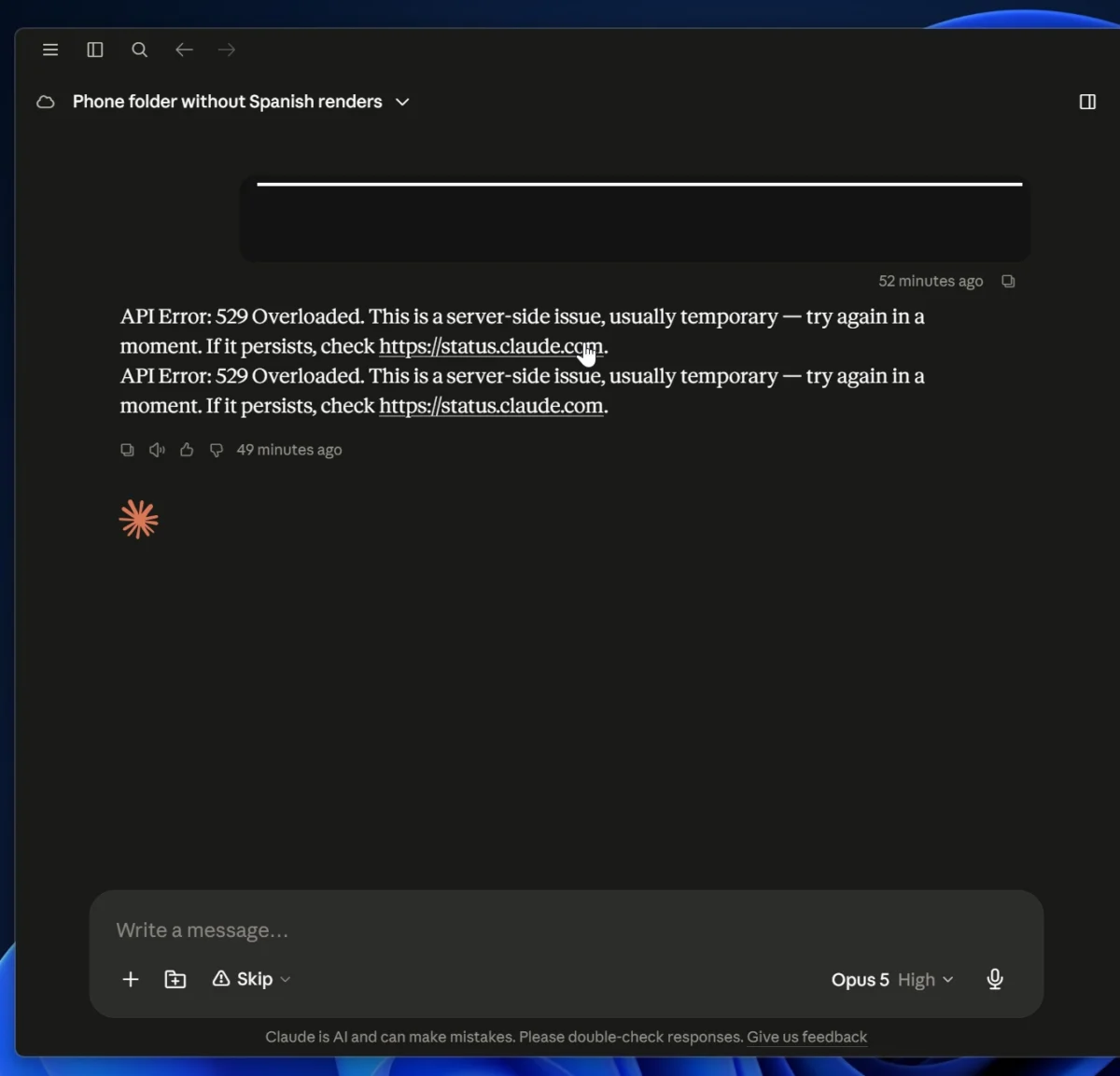
The fragile nature of modern artificial intelligence infrastructure came under intense global scrutiny as Anthropic, one of the foremost pioneers in generative AI development, experienced a widespread, crippling outage affecting its flagship product line. Millions of enterprise users, software developers, and everyday consumers relying on the Claude ecosystem found themselves locked out of their workspaces as connection requests violently derailed. The sudden disruption manifested across multiple AI models, leaving an invisible digital vacuum in corporate workflows, automated software pipelines, and creative projects worldwide.
The epicenter of the incident traced back to an abrupt spike in server-side rejections, characterized primarily by the dreaded “529 Overloaded” HTTP status message. This specific error code—signaling a severe imbalance between computational demand and available backend capacity—echoed across thousands of terminal screens, browser windows, and integrated development environments. For third-party applications deeply tethered to Anthropic’s application programming interfaces (APIs), the downtime translated into cascading system failures, broken customer service bots, and halted data processing tasks.

According to preliminary incident telemetry, Anthropic’s engineering and network operations teams formally initiated an internal investigation at 7:49 p.m. UTC on July 29, identifying erratic traffic patterns and sharply elevated error rates. Less than an hour later, at 8:33 p.m. UTC, corporate representatives confirmed that the root cause had been successfully localized, though executive leadership and technical leads initially withheld specific details regarding the exact mechanical failure or a definitive restoration timeline.
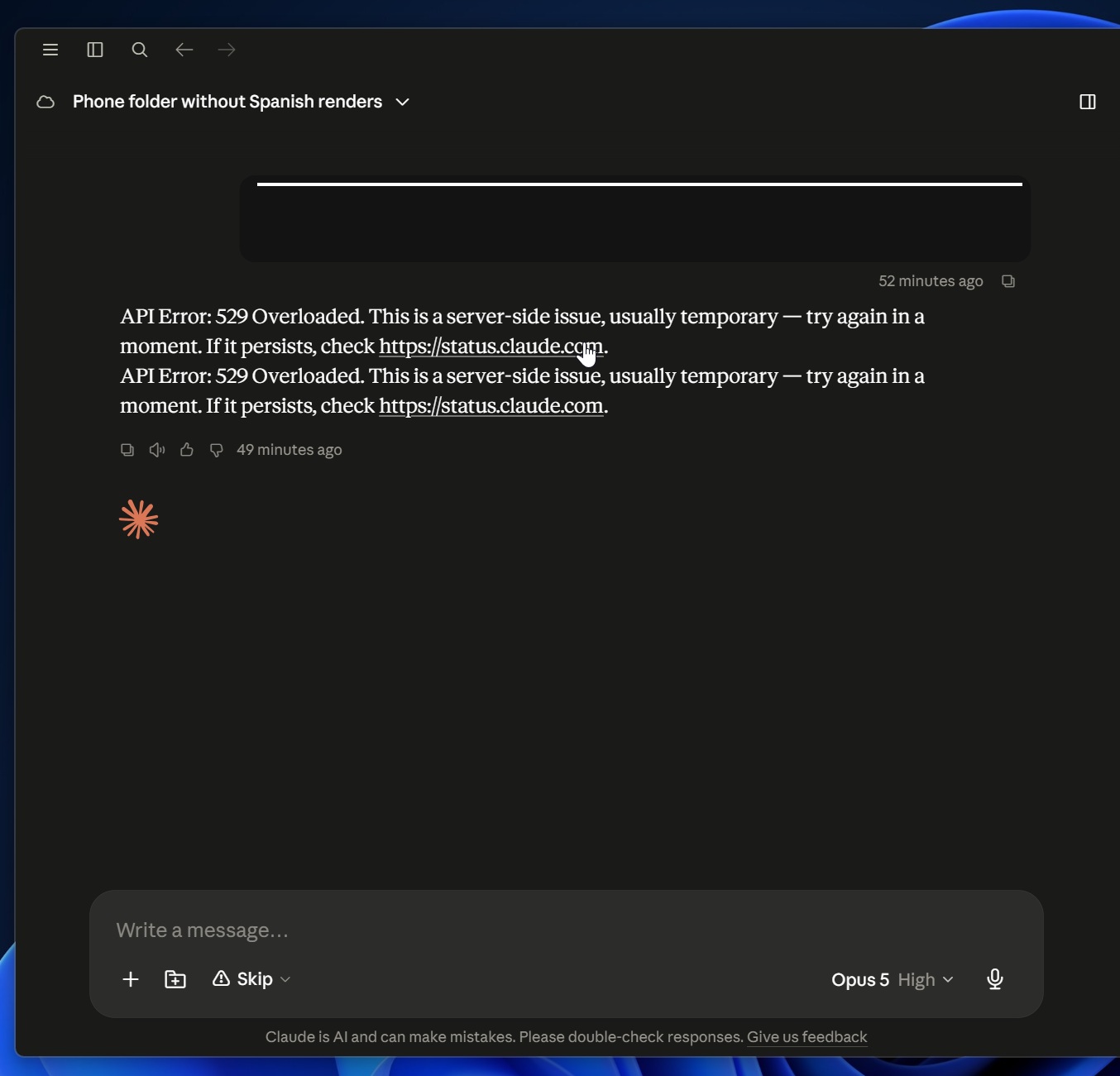
Throughout the peak of the disruption, users attempting to interface with the conversational web application or execute programmatic queries encountered the standard system notification: “API Error: 529 Overloaded. This is a server-side issue, usually temporary — try again in a moment.” While the error text attempts to offer reassurance regarding the transient nature of the glitch, the reality for enterprise operations was far more disruptive. In the high-stakes world of production-grade software engineering, even a brief, unannounced degradation of foundational LLM (Large Language Model) infrastructure can derail critical business logic, interrupt live customer interactions, and throw automated data analysis loops into disarray.
By late afternoon, specifically at 17:30 EDT, corporate communications provided a measured update, noting that remediation efforts were bearing fruit. Anthropic confirmed that systematic recovery patterns were visible across the majority of its hosted models, though elevated latency and residual error spikes continued to plague a subset of global endpoints while engineers worked to achieve full operational parity.

To contextualize this event, one must look closely at the architectural realities governing contemporary frontier AI systems. Training, deploying, and maintaining massive neural networks requires an unprecedented concentration of specialized silicon—predominantly enterprise-grade graphics processing units (GPUs) and custom tensor processing units (TPUs). These hardware clusters consume staggering amounts of electrical power and generate intense thermal loads. When user demand surges unpredictably, or when a localized hardware cluster experiences an unexpected node failure, the remaining infrastructure must instantly shoulder the computational burden. If the incoming traffic volume exceeds the safety margins designed into the cluster’s load-balancing framework, systems initiate protective throttling, leading directly to the type of systemic overload errors witnessed during the Claude incident.
The commercial implications of such outages extend far beyond a temporary inconvenience for individual chat users. As artificial intelligence transitions decisively from a novel consumer novelty into the foundational operating system of the modern digital economy, enterprise dependency on these platforms has deepened exponentially. Financial institutions use LLMs for automated sentiment analysis and fraud detection; healthcare platforms leverage natural language parsing for clinical documentation summarization; and software enterprises rely on AI-assisted coding models to accelerate product delivery cycles. When a central provider like Anthropic stumbles, it creates a ripple effect of business continuity challenges across thousands of downstream corporations that have integrated external intelligence engines into their core operational pathways.
This reliance highlights a pressing strategic dilemma for Chief Technology Officers and enterprise architects: the vulnerability of centralized, cloud-hosted AI dependencies. Unlike traditional software-as-a-service (SaaS) applications, where downtime typically affects data retrieval or document editing, an outage of a cognitive infrastructure provider strips organizations of their real-time reasoning engines. This dynamic forces a serious re-evaluation of redundancy strategies. Industry analysts predict a sharp acceleration in demand for multi-model deployment strategies, where enterprise software dynamically routes queries across competing providers—such as OpenAI, Google, and open-weight alternatives—to prevent a single point of failure from halting business operations.
Furthermore, the incident underscores the severe macroeconomic pressures currently bearing down on AI hyperscalers. The race to capture market share has incentivized providers to onboard millions of concurrent users and enterprise accounts at an unprecedented velocity. However, the physical supply chain constraints surrounding advanced semiconductor manufacturing, combined with global grid capacity limitations, mean that infrastructure expansion cannot always keep pace with surging consumer adoption. Building out data centers capable of handling massive, unforeseen traffic spikes requires capital expenditures running into the tens of billions of dollars, alongside complex negotiations for clean energy and liquid-cooling facilities.
As the dust settles on this latest global disruption, the technical community is left parsing broader questions about resilience, transparency, and operational readiness. While Anthropic’s rapid identification and mitigation of the underlying server strain averted a protracted multi-day disaster, the episode serves as a sobering reminder of the digital tightrope walk defining the current generative AI boom. Moving forward, the market will likely demand stricter service level agreements (SLAs), more granular predictive scaling capabilities, and absolute transparency regarding infrastructure health from every major player in the artificial intelligence landscape. The era of frictionless, uninterrupted artificial intelligence is still a work in progress, and as this disruption proves, the underlying machinery remains thoroughly vulnerable to the brute-force realities of global scale.
