

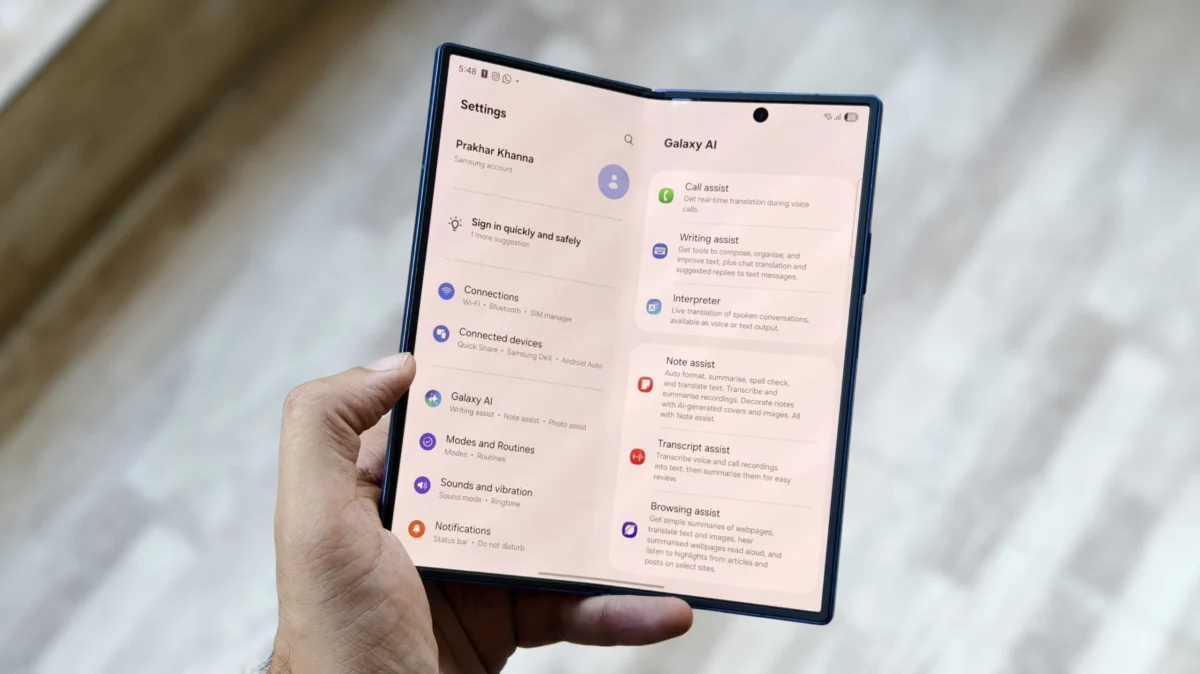
The iterative development process for Samsung’s flagship foldable line continues to accelerate, evidenced by the initial deployment of the One UI 8.5 beta software to the Galaxy Z Fold 7 hardware. This rollout signifies a critical juncture in the device’s software lifecycle, moving it from final hardware validation toward a stable public release, likely timed to coincide with the next generation of Galaxy hardware introductions or shortly thereafter. While the expansion of the One UI 8.5 beta program has recently encompassed a broader spectrum of devices—including the contemporary Galaxy S24 series, the Z Fold 6, and the Z Flip 6—the early inclusion and subsequent beta testing cycle for the Z Fold 7 underscore Samsung’s commitment to rapid firmware refinement for its premium, high-stakes form factors.
This specific build, designated as One UI 8.5 Beta 2, has been initially observed rolling out in the Indian market, a common initial testing ground for Samsung’s global software initiatives. The phased rollout strategy suggests meticulous quality assurance, ensuring that the complex, dual-screen architecture of the Fold series is fully optimized for the new operating system foundation before wider international distribution.
Deep Dive into Beta 2 Patch Notes and Immediate Fixes
The initial reports detailing the contents of this specific beta build point toward targeted refinements rather than sweeping feature overhauls, which is typical for a second beta iteration. The patch notes, as surfaced through community reporting, highlight necessary adjustments to user experience elements crucial for a device like the Z Fold 7, which relies on seamless continuity between its cover and main displays.
One notable fix addresses a "readability issue" impacting the "Now Brief" feature specifically on the device’s external cover screen. This is a subtle yet significant detail. The cover screen, serving as the primary interface for quick interactions, demands impeccable legibility. Any degradation in text rendering or layout compromises the core utility of the foldable’s secondary display. Furthermore, the update resolves specific incompatibilities within the Sound Assistant module, noting functional errors when paired with the Galaxy Buds 3 Pro. This indicates active development in optimizing the holistic Samsung ecosystem—ensuring that software updates maintain feature parity and stability across connected peripherals, a growing area of focus in the modern smartphone landscape.
Contextualizing the One UI 8.5 Trajectory
To fully appreciate the significance of this beta deployment, one must consider the preceding software cadence. One UI 8.5 is fundamentally built upon the Android 16 operating system core. Stable releases of this version have already graced the Galaxy S26 series earlier this year, establishing a baseline for performance and feature integration. The current beta testing structure suggests a mature development pipeline for Android 16 integration across Samsung’s portfolio.
Contrast this with the older flagship lines, such as the Galaxy S25 series, which is reportedly deep into its own One UI 8.5 testing—already churning through its eighth beta build. This disparity in beta maturity highlights Samsung’s prioritization strategy: newer hardware receives more focused attention in the initial phase to ensure day-one readiness, while previous generations undergo more extended refinement cycles as development stabilizes across diverse hardware profiles. The Z Fold 7, being a newer model targeting the next wave of product launches, benefits from this streamlined, high-priority pathway.
The core enhancements introduced in One UI 8.5, built upon the Android 16 foundation, center heavily on expanded customization—particularly within the quick settings panels—and, critically, deeper integration of Samsung’s proprietary Galaxy AI suite. For a device like the Z Fold 7, which offers vast screen real estate, these AI features are poised to be particularly transformative, enabling more complex, multi-window processing and context-aware multitasking that smaller, slab-style phones cannot effectively manage.
Industry Implications: The Foldable Software Race
The speed at which Samsung is pushing firmware updates to its foldables is not merely an internal metric; it reflects the escalating competitive intensity in the premium mobile market. Competitors, notably those from Chinese manufacturers who have aggressively entered the global foldable space, are vying for parity in both hardware innovation and software polish. A smooth, feature-rich software experience is now as crucial as hinge durability or display brightness.
The dedicated focus on iterative bug fixes within the Z Fold 7 beta suggests Samsung understands that the foldable category is still navigating niche usability challenges. Early adopters are demanding perfection, especially concerning software continuity—the transition of an application state when the device is opened, closed, or partially folded (Flex Mode). Any stutter or visual glitch in these transitions breaks the perceived high-end experience. By pushing out Beta 2 quickly, Samsung is mitigating the risk of shipping a device plagued by known, fixable software inconsistencies.
Moreover, the emphasis on Galaxy AI integration within One UI 8.5 sets a high bar. As generative AI capabilities move from novelties to essential utilities (e.g., real-time translation, advanced photo editing, and intelligent summarization), the optimization of these models for large, flexible displays becomes paramount. The Z Fold 7 is designed to be the ultimate mobile workstation, and its software must facilitate this by presenting AI tools in ways that leverage the expansive canvas. The current beta phase is where these complex AI-hardware interactions are stress-tested under real-world conditions before the public launch.
Expert Analysis: The Evolution Beyond Android 16
While One UI 8.5 based on Android 16 is the current focus, industry observers are already looking ahead. The rapid progression through the current beta cycle hints at an organizational structure prepared for the next major leap: One UI 9, which will be anchored by the forthcoming Android 17 release.
Early leaks concerning One UI 9 suggest a more pronounced visual overhaul compared to the incremental shifts seen between previous iterations. Reports point toward significant redesigns for core user interface elements, including Samsung’s proprietary widgets and the introduction of the "Now Bar"—a potential evolution of the notification or quick access panel designed to streamline interaction further.
For the Z Fold 7, the transition to One UI 9 will be the defining moment for its long-term relevance. The Android 17 framework is anticipated to bring deeper system-level support for dynamic aspect ratios and enhanced multi-tasking APIs. If Samsung successfully translates these underlying OS capabilities into intuitive, high-fidelity software experiences via One UI 9, the Z Fold 7 could solidify its position as the benchmark for mobile productivity hardware. The current One UI 8.5 testing, therefore, acts as the essential, stable bridge ensuring the Z Fold 7’s initial success before the major visual and functional refresh of One UI 9 arrives.
The development path for the Z Fold 7 is characterized by precision engineering in software. It’s less about introducing entirely new concepts during these early beta stages and more about hardening the foundation laid by the preceding S26 series. The ability to quickly address issues like cover-screen readability and peripheral compatibility demonstrates a mature, responsive development ecosystem designed to support the specialized demands of foldable technology. This rigorous pre-launch refinement is crucial, as foldable devices occupy a premium price tier where user tolerance for software instability is significantly lower than in the mainstream market segment.
Future Impact: Software as the Differentiator in Foldables
The trajectory of Samsung’s foldable software strategy suggests that future competitive advantage will not solely rest on incremental hardware improvements—thinner bezels, stronger hinges, or brighter displays. Instead, the differentiator will be the operating system’s ability to harness the unique form factor intelligently.
The Galaxy Z Fold 7, running on this refined One UI 8.5 base and eventually inheriting One UI 9, is positioned to showcase software that makes the folding mechanism feel indispensable rather than merely novel. This involves perfecting subtle interactions: how quickly an app switches orientation, the efficiency of drag-and-drop operations between three open applications, and the contextual relevance of AI suggestions that utilize the large inner screen for complex data synthesis.
Furthermore, the early beta activity suggests Samsung is aiming for a longer, more robust support window for this generation of hardware. As Android updates become more complex due to integrated AI and security demands, pushing early, stable betas ensures that the Z Fold 7’s lifespan is maximized with timely security patches and feature upgrades aligned with the core Android roadmap. This commitment to prolonged software support is a direct response to consumer demand for sustainability and value in high-cost devices. The journey of the Z Fold 7 through the One UI 8.5 beta is therefore a clear signal: Samsung views its foldables not just as premium handsets, but as long-term computing platforms requiring disciplined, proactive software stewardship. The rapid identification and resolution of issues like the Sound Assistant bug confirm that this stewardship extends deeply into the ecosystem connectivity that defines modern flagship experiences. This focused iteration solidifies the platform before the next wave of platform evolution arrives with Android 17.
