

The stability of the modern industrial ecosystem rests on a fragile foundation of interconnected hardware that was never originally intended to be exposed to the public internet. Recent intelligence reports have underscored a chilling reality: thousands of Programmable Logic Controllers (PLCs) produced by Rockwell Automation are currently accessible to threat actors, providing a direct gateway into the heart of American critical infrastructure. This exposure has become a focal point for state-sponsored cyber operations, particularly those linked to Iranian-affiliated Advanced Persistent Threat (APT) groups.
As geopolitical tensions continue to oscillate in the Middle East, the cyber domain has increasingly mirrored physical hostilities. The latest advisory from U.S. federal authorities signals a marked escalation in targeting campaigns, specifically directed at the Allen-Bradley brand of industrial controllers. Since March 2026, malicious actors have demonstrated a sophisticated understanding of Operational Technology (OT) environments, successfully extracting proprietary project files and manipulating Human-Machine Interface (HMI) and Supervisory Control and Data Acquisition (SCADA) displays. These actions are not merely data breaches; they are clear provocations designed to induce operational disruptions, degrade trust in public utility services, and inflict tangible financial damage on organizations already struggling to secure aging infrastructure.
The Scale of the Digital Blind Spot
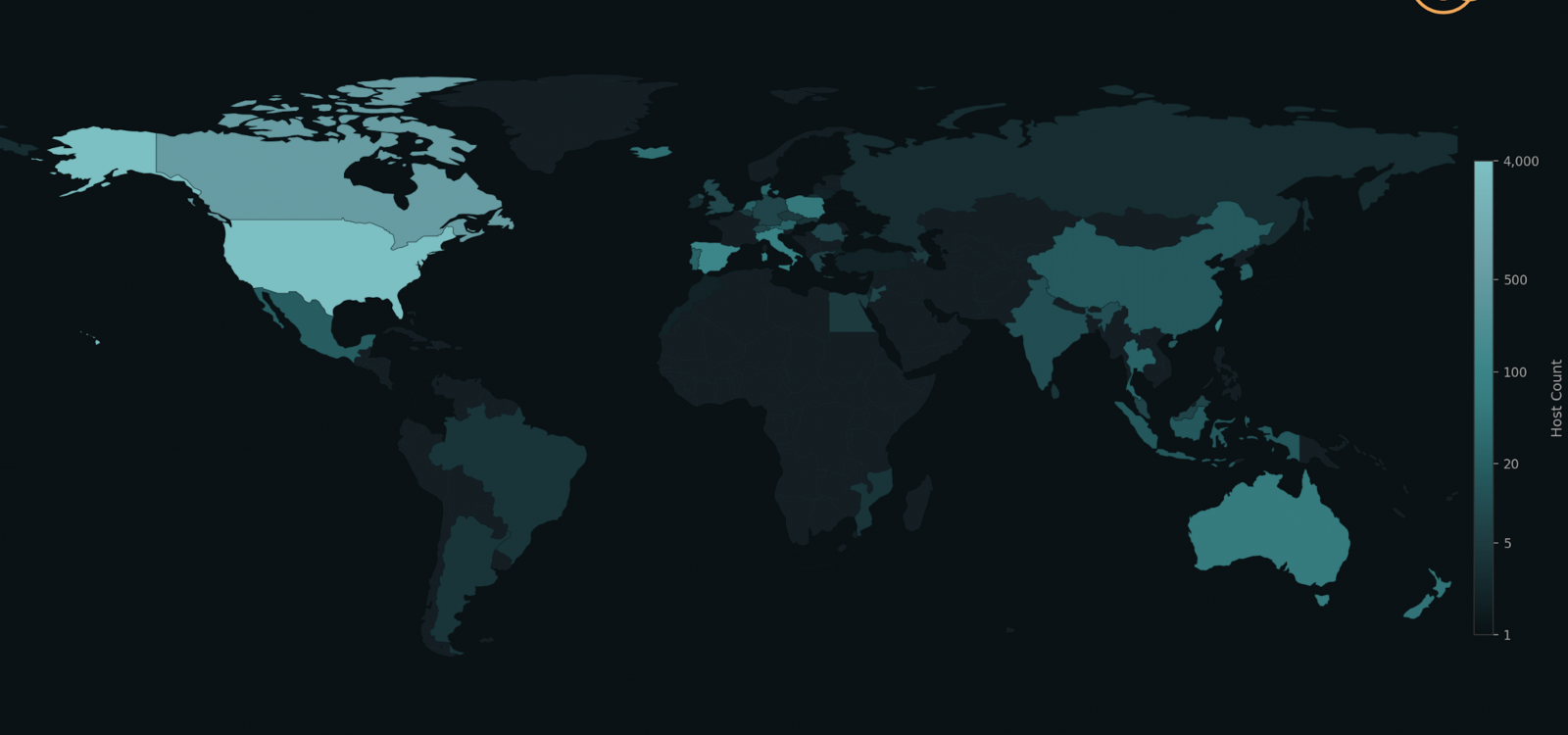
Cybersecurity researchers at Censys have provided a quantitative look at the depth of this crisis. Their telemetry reveals a global footprint of over 5,200 industrial hosts that respond to the EtherNet/IP (EIP) protocol—a standard communication mechanism for industrial automation—and identify themselves as Rockwell/Allen-Bradley hardware. A staggering 74.6% of these vulnerable nodes are located within the United States, totaling nearly 3,900 devices.
Of particular concern to security architects is the prevalence of these devices on cellular carrier Autonomous System Numbers (ASNs). This indicates that many of these controllers are deployed in remote field environments, managed via cellular modems. These field devices often lack the robust security posture of centrally located industrial hardware, acting as "low-hanging fruit" for sophisticated actors capable of scanning the internet for specific device fingerprints. The combination of remote deployment and direct internet exposure creates a massive, unmanaged attack surface that provides a persistent entry point for intruders to pivot into wider enterprise networks.
Geopolitical Context and the Evolution of OT Attacks
This recent wave of activity is not an isolated incident but rather the latest chapter in a broader, multi-year campaign by state-linked entities to destabilize critical sectors. History provides a roadmap for this escalation. In late 2023 and early 2024, the group known as CyberAv3ngers, which possesses strong ties to the Islamic Revolutionary Guard Corps (IRGC), launched a series of calculated attacks against Unitronics PLCs. Those operations focused heavily on the water and wastewater sectors, highlighting a strategic intent to target the very systems that sustain daily human life.
The tactical shift from targeting niche water-treatment controllers to the more ubiquitous Rockwell/Allen-Bradley ecosystem represents a significant broadening of the threat actor’s ambition. Furthermore, the broader Iranian cyber apparatus has demonstrated an increasing willingness to engage in disruptive, "scorched-earth" tactics. The recent campaign attributed to the Handala hacktivist group, which resulted in the wiping of roughly 80,000 devices at medical giant Stryker, illustrates a move away from quiet espionage toward overt sabotage. Whether it involves the mass-deletion of data or the manipulation of industrial setpoints, the objective is consistent: the disruption of societal function and the exertion of psychological pressure through digital means.
Industry Implications and the Security Debt
The current situation is a stark reminder of "security debt"—a condition where organizations have prioritized operational uptime and cost-efficiency over the fundamental hardening of their systems. For decades, the air-gapping of industrial networks was considered sufficient protection. However, the push toward Industry 4.0, which emphasizes connectivity and data analytics, has forced these devices onto the public web, often without the necessary compensating controls.

The implications for the manufacturing, energy, and water sectors are profound. When a PLC is exposed, an attacker does not need to bypass a corporate firewall or navigate a complex internal network. They can communicate directly with the device, potentially modifying the logic that controls physical processes. If an attacker gains the ability to manipulate the HMI display while simultaneously altering the process logic, they can effectively blind operators, making it appear that a system is functioning normally while a dangerous or damaging event occurs in the background. This "man-in-the-middle" capability within the OT environment is the ultimate nightmare for safety-critical operations.
Defensive Imperatives in a Hostile Environment
Addressing this systemic risk requires a fundamental shift in how organizations perceive their industrial assets. The primary directive for any entity utilizing these controllers must be immediate isolation. If a device does not absolutely require external communication, it should be disconnected from the internet. For those that must remain connected for legitimate operational reasons, the deployment of industrial-grade firewalls with deep packet inspection (DPI) is no longer optional.
Network defenders must move beyond perimeter security and adopt a "Zero Trust" mindset within the OT environment. This includes:
- Rigorous Segmentation: Ensuring that OT networks are strictly isolated from IT corporate networks to prevent lateral movement.
- Multifactor Authentication (MFA): Implementing stringent access controls for any remote management interfaces. Many legacy industrial systems lack native MFA, necessitating the use of secure jump servers or VPNs as a secondary layer of defense.
- Continuous Monitoring: Actively scanning for suspicious traffic patterns, particularly those originating from international hosting providers or known proxy services.
- Lifecycle Management: Disabling unused services, deprecated authentication protocols, and default vendor credentials, which are often the first targets for automated scanning scripts.
- Log Analysis: Maintaining a centralized logging system that alerts security teams to unauthorized configuration changes or attempts to read/write to the PLC memory.
Future Impact and Long-term Trends
Looking ahead, the intersection of AI-powered reconnaissance and traditional industrial espionage suggests that the frequency and sophistication of these attacks will only increase. Threat actors are increasingly using machine learning to map out network topologies and identify vulnerabilities in real-time, allowing them to execute attacks with surgical precision.
Moreover, the line between "hacktivism" and state-directed warfare is blurring. Groups like Handala may operate with a level of independence, yet they often serve the strategic interests of their state sponsors, providing a layer of deniability for governments while still achieving the desired destructive outcomes. For the United States, this means that the security of critical infrastructure can no longer be viewed as a purely technical challenge; it is a national security imperative.
The resilience of the U.S. industrial base will depend on the willingness of private industry to collaborate with federal intelligence and cybersecurity agencies. The current advisory serves as a warning that the status quo is insufficient. As the digital and physical worlds continue to merge, the protection of the PLCs that drive our economy must be treated with the same level of scrutiny as the defense of our borders. The era of assuming that industrial networks are inherently secure because they are "too obscure to target" has officially come to an end. Organizations that fail to address these exposures are not just risking their own intellectual property or operational capacity—they are providing the leverage that foreign adversaries need to undermine the stability of the entire nation.
