

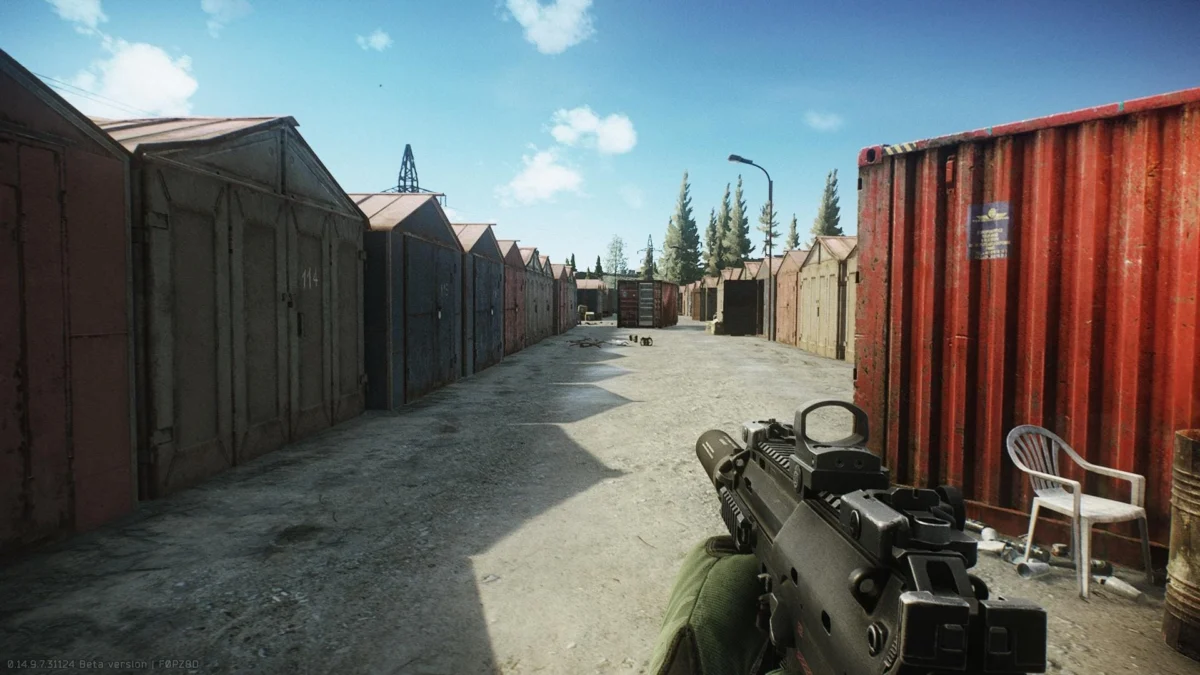
The landscape of the extraction shooter genre has never been more crowded, yet Battlestate Games (BSG) appears determined to maintain its dominance through a rigorous and technically demanding roadmap for the remainder of 2026. In a series of high-stakes announcements, the Saint Petersburg-based developer has outlined a vision that transcends simple content additions, aiming instead for a fundamental architectural overhaul of the Escape From Tarkov experience. With five major updates slated for the final quadrimester of the year, the studio is signaling a commitment to both technical modernization and the expansion of the game’s increasingly complex lore.
This roadmap arrives at a critical juncture for the title. After years of being the undisputed king of high-stakes tactical shooters, Escape From Tarkov now faces stiff competition from a new wave of "Tarkov-likes" and tactical simulators. To answer this challenge, BSG is not merely adding weapons and equipment; they are migrating the entire project to a new engine version and refining the player experience for both the hardcore PvP veteran and the growing PvE audience.
The sequence of updates begins in September with the deployment of version 1.1.5.0. While mid-season patches are often relegated to bug fixes and balance adjustments, this update is poised to be a significant content milestone. The centerpiece of 1.1.5.0 is the comprehensive rework of the Lighthouse map. Since its introduction, Lighthouse has been a polarizing environment, criticized by some for its performance bottlenecks and its "choke-point" heavy geography that favored long-range snipers to the detriment of other playstyles. The rework aims to address these flow issues, likely introducing new traversal routes and optimized assets to ensure the map runs as smoothly as more established locales like Customs or Woods.
Furthermore, update 1.1.5.0 will see the expansion of the Lightkeeper task chain. Lightkeeper, the game’s first in-raid trader, represents BSG’s ambition to blend traditional RPG questing with the high-tension extraction loop. By deepening this narrative thread, the developers are rewarding high-level players with more than just currency; they are offering exclusive access to the deeper mysteries of the Norvinsk region. This focus on "end-game" content is vital for player retention, providing a reason to continue raiding long after the initial thrill of the "wipe" has faded.
As the calendar turns toward October, the focus shifts toward the burgeoning PvE community with update 1.2.0.0. The decision to formalize a persistent PvE mode was one of the most significant pivots in the game’s history, and BSG is doubling down on its support. This update targets the most frequent criticisms of the PvE experience: bot behavior and spawn logic. The "deadness" of a raid can often break immersion, so the promised updates to AI behavior and the spawn system are intended to make the world feel reactive and lived-in, even without human opponents.
Perhaps more interestingly, update 1.2.0.0 introduces a "prestige" system for PvE players. This suggests a long-term progression path that allows players to reset their progress in exchange for permanent rewards or cosmetic honors, mirroring systems found in other persistent shooters but adapted for the Tarkov economy. Alongside these features, a much-needed improvement to the raid reconnection system is scheduled. In a game where a single disconnect can result in the loss of hours of progress and millions in virtual currency, technical stability is not just a luxury—it is a core gameplay requirement.
The most technically significant milestone of the year is scheduled for mid-October: the migration to Unity 6. For years, Escape From Tarkov has been tethered to older iterations of the Unity engine, which many analysts believe has limited the game’s ability to utilize modern hardware effectively. The jump to Unity 6 (formerly known as Unity 2023) is a gargantuan task that involves refactoring massive portions of the game’s codebase.

From a technical perspective, this engine upgrade is expected to bring a host of improvements to the game’s rendering pipeline. Players can expect more sophisticated lighting, more realistic vegetation rendering, and, most importantly, improved multi-threaded performance. Tarkov has historically been a CPU-bound game, often struggling to maintain high frame rates even on top-tier GPUs. Unity 6’s improved optimization tools could finally bridge the gap between the game’s high-fidelity assets and its actual performance in-game. The "updated vegetation" mentioned in the roadmap is more than a cosmetic tweak; it likely refers to the implementation of more efficient LOD (Level of Detail) systems that will allow for dense forests without the crippling performance hits currently seen on maps like Shoreline.
Following the engine upgrade, the atmosphere in Tarkov will take a darker turn with a dedicated Halloween event. BSG has a history of using seasonal events to experiment with radical gameplay mechanics, and the 2026 roadmap hints at a biohazard theme. Speculation within the community is rife that this could signal the return of the "zombie" infected or similar supernatural threats that have appeared in previous limited-time modes. These events serve as a pressure valve for the community, offering a break from the grueling realism of standard raids and allowing BSG to test server load and AI pathfinding in chaotic, high-density scenarios.
The year culminates in December with the massive 1.4.0.0 update, which marks the beginning of Season 2. This update represents the traditional "winter wipe," a seasonal reset that levels the playing field and brings the community back to the "zero-to-hero" struggle that defines the Tarkov experience. The headline feature of 1.4.0.0 is a new location titled "End of the Line." The name itself is evocative, suggesting a finality that aligns with the game’s overarching narrative of trying to find an exit from the quarantined city.
"End of the Line" will also introduce a new boss, Povodyr. In the Russian language, "Povodyr" translates to "The Guide" or "The Leader of the Blind." This naming convention follows the trend of Tarkov bosses being more than just bullet sponges; they are characters with distinct tactical identities and lore significance. Whether Povodyr acts as a gatekeeper to the final extraction or a master of the new map’s unique mechanics, his inclusion adds another layer of threat to the December update.
Analyzing these developments from an industry standpoint, it is clear that Battlestate Games is attempting to professionalize and stabilize its development cycle. The move to a seasonal structure (Season 2) suggests a shift toward a more predictable live-service model, which is essential for maintaining a player base in the face of competitors like Arena Breakout: Infinite or Delta Force. These competitors often boast smoother "out-of-the-box" experiences and more modern engines, making BSG’s Unity 6 migration a defensive necessity as much as a forward-looking upgrade.
The emphasis on PvE content also reflects a broader trend in the gaming industry where players are increasingly seeking high-stakes tactical experiences without the toxicity or "sweatiness" often found in purely competitive PvP environments. By catering to this demographic, BSG is expanding its total addressable market, ensuring that Tarkov remains relevant even to those who may have been pushed away by the game’s legendary difficulty and steep learning curve.
However, the ambition of this roadmap is not without risk. Engine migrations are notoriously difficult and are often accompanied by a temporary surge in bugs and stability issues. Moving a game as complex as Tarkov to Unity 6 while simultaneously launching new maps, bosses, and seasonal events is a logistical tightrope walk. The community, while excited, remains cautiously optimistic, knowing that BSG’s "Soon™" trademark often implies that quality takes precedence over strict adherence to dates.
Looking ahead to 2027, the success of this 2026 roadmap will likely determine the "endgame" for Escape From Tarkov’s development. If the Unity 6 transition is successful and the new content is well-received, the game will be in its strongest technical position since its inception. This could pave the way for the long-promised "open world" connection of all maps and the eventual 1.0 release. For now, the message from Battlestate Games is clear: they are not content to rest on their laurels. They are rebuilding the foundations of their world even as they expand its borders, ensuring that the road out of Tarkov remains as challenging, immersive, and technically impressive as ever.
