

In the heart of Seattle, within a sprawling 50,000-square-foot industrial facility that still echoes with the vastness of its own potential, Blake Resnick is mapping out the future of American public safety. The space is currently cavernous and largely under-furnished, a skeletal framework of a company in a state of rapid metamorphosis. By the end of the year, this facility will serve as the nerve center for Brinc, a drone startup that has moved beyond the "proof of concept" stage to become a formidable player in the domestic aerospace sector. Resnick, the founder and CEO, isn’t just looking to build a better quadcopter; he is aiming to dismantle the century-old reliance on manned police helicopters, replacing them with a decentralized fleet of autonomous, satellite-linked responders.
Brinc’s trajectory is a classic study in the "hard tech" startup ecosystem. Resnick, a former Thiel Fellow—a program famously designed by Peter Thiel to encourage elite students to bypass traditional higher education in favor of building disruptive companies—founded the venture in 2017. His vision quickly caught the attention of Silicon Valley’s most influential kingmakers, including OpenAI’s Sam Altman, who participated as an early seed investor. Today, following several successful funding rounds, Brinc commands a valuation approaching half a billion dollars. The company’s growth mirrors a broader shift in the technology landscape: a move away from pure software toward physical infrastructure that addresses critical national security and public safety needs.
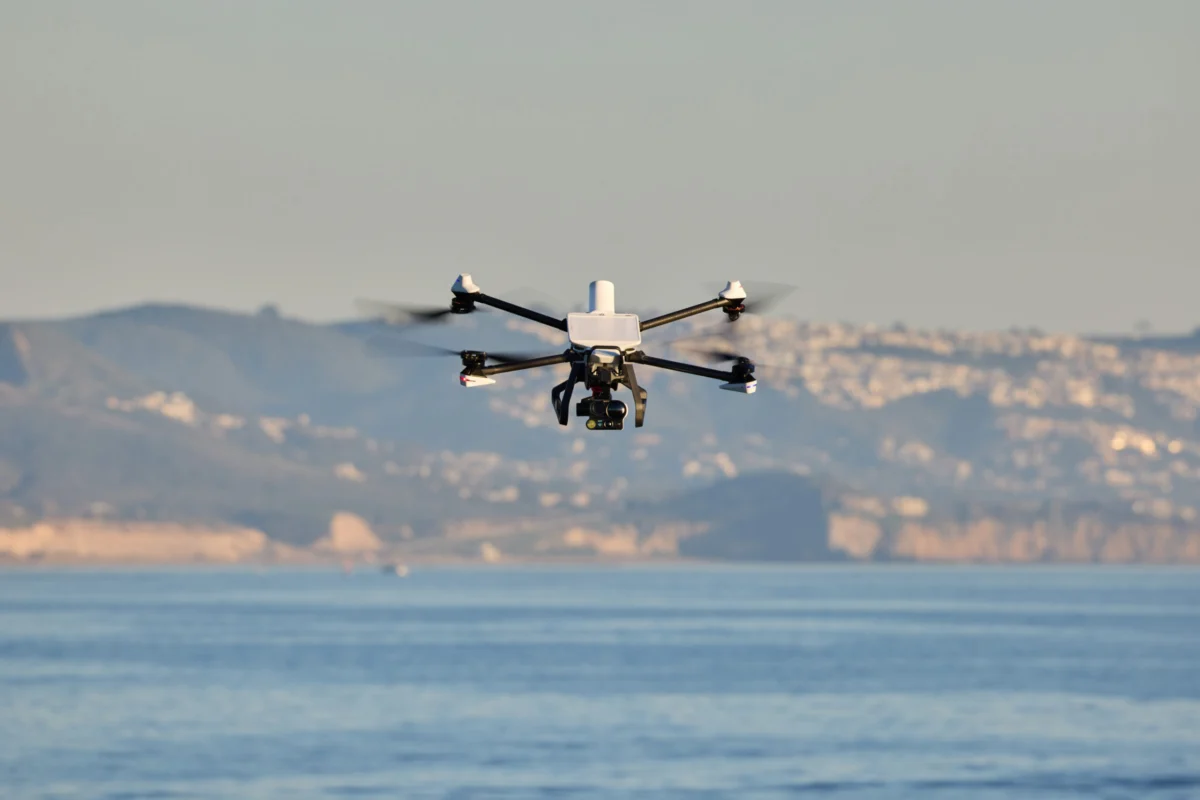
The centerpiece of this ambition is the newly unveiled "Guardian," a drone that Resnick describes as the most significant technological leap in the history of the industry. The Guardian is not merely an incremental update to previous models; it is a specialized airframe designed to fulfill the roles traditionally reserved for multimillion-dollar Bell or Eurocopter aircraft. In the world of emergency response, the "Golden Hour"—the period immediately following a traumatic event where medical intervention is most effective—is the metric that matters most. Brinc argues that by the time a police helicopter is cleared for takeoff, fueled, and piloted to a scene, a Guardian drone could have already arrived, assessed the situation, and delivered life-saving equipment.
The technical specifications of the Guardian are designed to silence skeptics of the "Drone as First Responder" (DFR) model. The aircraft boasts a top speed of 60 mph and an endurance of 62 minutes, a significant figure for a quadcopter of its class. However, its true power lies in its sensory and connectivity suite. Equipped with a high-resolution thermal imaging system and dual 4K cameras with advanced optical zoom, the Guardian allows operators to identify license plate numbers or monitor suspicious activity from altitudes that make the drone nearly invisible and inaudible to those on the ground.
Perhaps the most revolutionary feature of the Guardian is its integration with Starlink, the satellite internet constellation operated by SpaceX. By embedding a Starlink panel directly into the drone’s chassis, Brinc has effectively eliminated the "leash" of traditional radio frequencies. Most commercial drones are limited by line-of-sight or the range of a ground station. The Guardian, however, possesses what Resnick calls "unlimited range," capable of being operated from a command center thousands of miles away via satellite. This global connectivity ensures that the drone can function in remote rural areas, disaster zones where cellular towers have been toppled, or dense urban canyons where signal interference usually plagues unmanned aerial vehicles (UAVs).
Beyond the airframe itself, Brinc is introducing a holistic ecosystem known as the "Charging Nest." This automated docking station is the key to the company’s vision of a decentralized, autonomous air force. The Nest handles battery swapping without human intervention, ensuring that a drone is always at peak readiness. More importantly, these stations serve as localized caches for emergency supplies. A Guardian can be remotely commanded to pick up and drop off a defibrillator (AED), flotation devices for water rescues, or Narcan for opioid overdose reversals. In a scenario where every second counts, the ability to fly a dose of Narcan to a sidewalk minutes before an ambulance can navigate through traffic represents a paradigm shift in municipal health services.
The market opportunity for this technology is staggering. Resnick estimates the potential market at between $6 billion and $8 billion, covering the United States and allied international markets. With approximately 20,000 police departments and 30,000 fire departments in the U.S. alone, the demand for affordable, rapid aerial oversight is nearly universal. Most of these agencies cannot afford the $5 million to $10 million initial cost—and the $2,000-per-hour operating cost—of a traditional helicopter. A network of Guardian drones, by contrast, offers a fraction of that cost with higher deployment frequency and lower risk to human life.
This expansion is being bolstered by a strategic partnership with the National League of Cities. By working directly with municipal leaders, Brinc is helping to craft the regulatory and operational frameworks necessary to scale DFR programs across the country. This isn’t just about selling hardware; it’s about integrating autonomous flight into the very fabric of 911 dispatch. In the future envisioned by Resnick, a 911 call will automatically trigger a drone launch from a nearby rooftop "Nest," providing a live video feed to dispatchers before the first patrol car even leaves the station.
The timing of Brinc’s rise is also deeply tied to the shifting geopolitical landscape. For the better part of a decade, the global drone market has been dominated by DJI, a Chinese manufacturer based in Shenzhen. While DJI’s products are widely praised for their technical prowess, they have become a flashpoint in the ongoing "tech cold war" between Washington and Beijing. Concerns over data privacy, surveillance, and the potential for "backdoor" access by foreign intelligence services have led to a series of restrictive measures. The Trump administration’s ban on foreign-made drones for federal use, and subsequent legislative efforts to extend those bans to state and local agencies, have created a massive vacuum in the market.
Resnick is positioned to fill that void, styling Brinc as the "DJI of the West." This positioning is as much about national security as it is about commerce. By ensuring that the hardware, software, and data storage of public safety drones are entirely domestic, Brinc is appealing to a growing desire for "sovereign technology." For a police chief in a major American city, the peace of mind that comes with a secure, American-made supply chain is becoming a prerequisite for any major technology procurement.
However, the rise of such powerful surveillance technology is not without its critics. Civil liberties advocates have long raised alarms about the "militarization" of local police departments and the potential for persistent, automated surveillance. The Guardian’s ability to read license plates from high altitudes and its integrated loudspeaker systems suggest a level of oversight that could be perceived as intrusive. Brinc’s challenge will be to balance the undeniable life-saving potential of its drones with the need for transparent, community-led policies on how, when, and where these "eyes in the sky" are utilized.
As Brinc prepares to fully occupy its new Seattle headquarters, the company stands at the intersection of several defining trends: the autonomy revolution, the decentralization of aerospace, and the resurgence of American manufacturing. The Guardian is a signal that the era of the expensive, fossil-fuel-burning police helicopter may be drawing to a close. In its place comes a quieter, faster, and more intelligent alternative—one that lives on a rooftop, thinks in the cloud, and responds at the speed of a satellite link. For Blake Resnick, the goal is clear: to build a company that is not just a participant in the drone industry, but the very definition of it for the Western world. If the Guardian delivers on its promises, the skyline of the modern city is about to become a much busier, and perhaps a much safer, place.
