

The modern cyber threat landscape has long been characterized by an adversarial arms race, where malicious operators continually pioneer innovative techniques to bypass enterprise and consumer defenses. For years, the prevailing cybersecurity narrative positioned Apple’s macOS as a relatively insulated operating system, heavily fortified by built-in security features like Gatekeeper, Notarization, and the tightly controlled sandboxing of the App Store. However, the relentless commercialization of malware-as-a-service (MaaS) and the rising demand for illicitly harvested digital identities have fundamentally shifted this paradigm. Threat actors are no longer targeting Windows exclusively; instead, they are investing heavily in advanced, modular toolsets engineered specifically for Apple hardware.
At the center of this concerning evolution is MacSync, an aggressive and rapidly adapting information-stealing malware family that first surfaced in April 2025. Originally sharing genetic lineage with the notorious AMOS (Atomic macOS Stealer) family, MacSync has quickly broken away from its predecessors to establish its own terrifying identity. Cybersecurity analysts tracking the campaign have uncovered a sophisticated new iteration of the malware that eschews traditional command-and-control (C2) communication infrastructure in favor of a startlingly benign vector: public iCloud calendar events. By weaponizing legitimate cloud services, the operators behind MacSync have demonstrated a high degree of technical ingenuity, successfully blurring the line between authorized cloud traffic and malicious data exfiltration.

The architectural progression of MacSync highlights a broader shift in how cybercriminals design macOS-targeting malware. Written primarily in Swift—a modern, high-performance programming language native to Apple’s development ecosystem—MacSync blends seamlessly into the standard software development lifecycle of the platform. This native approach not only optimizes execution speed but also minimizes behavioral anomalies that traditional endpoint detection and response (EDR) solutions might flag when encountering foreign binaries. Early campaigns primarily relied on classic social engineering tactics, deploying the stealer through deceptive ClickFix vectors that manipulated users into running malicious scripts under the guise of repairing broken applications. Common disguises included popular developer utilities like Homebrew or essential system maintenance tools, such as macOS disk space analyzers.
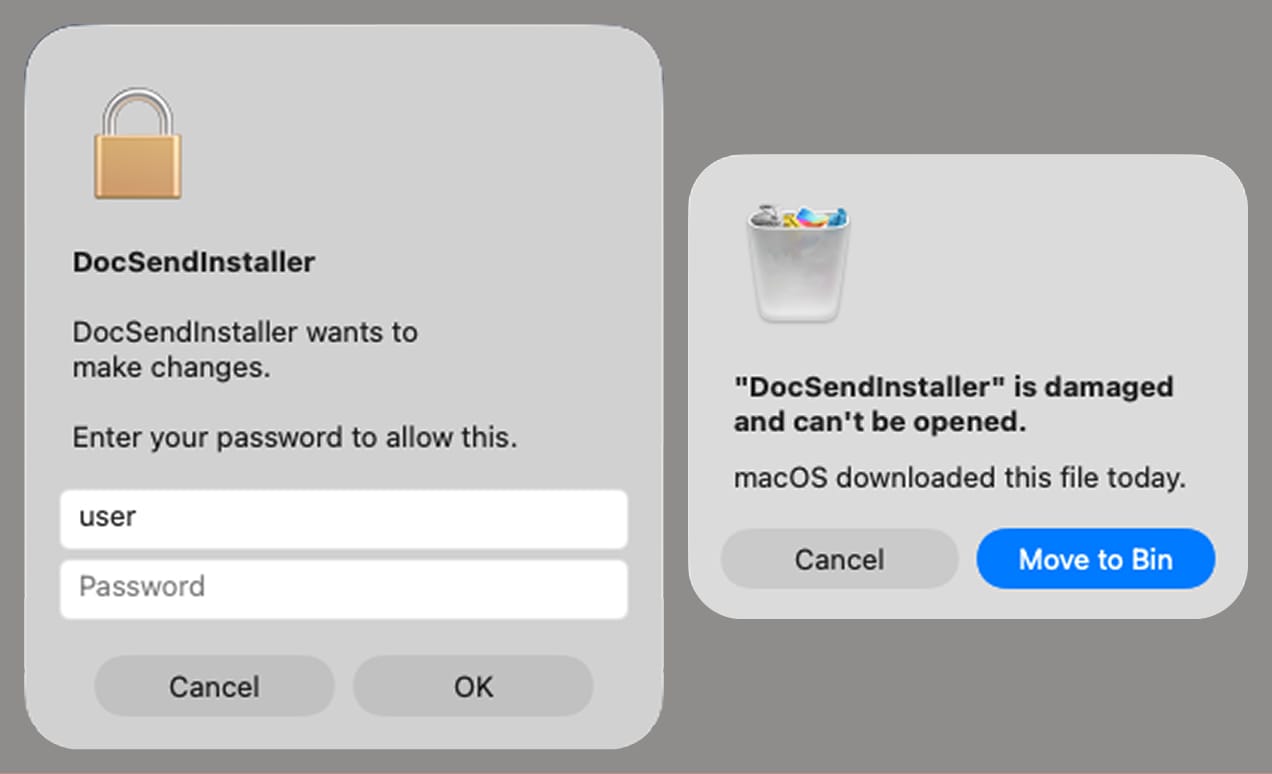
Yet, as security researchers dissected these early encounters, it became abundantly clear that MacSync was merely an initial proof-of-concept for a far more ambitious threat. The most recent campaign analysis reveals an infection vector of staggering operational complexity. Threat actors have expanded their reach by packaging the malware within elaborate social engineering facades, most notably a fictitious cryptocurrency wallet application dubbed "Toria." Complete with a polished, professional website and coordinated promotional campaigns across various social media networks, the Toria lure was designed to attract high-value targets operating within the Web3 and financial technology sectors. Once a victim downloaded the compromised software package, the underlying infection chain executed a meticulously orchestrated sequence designed to evade scrutiny at every turn.
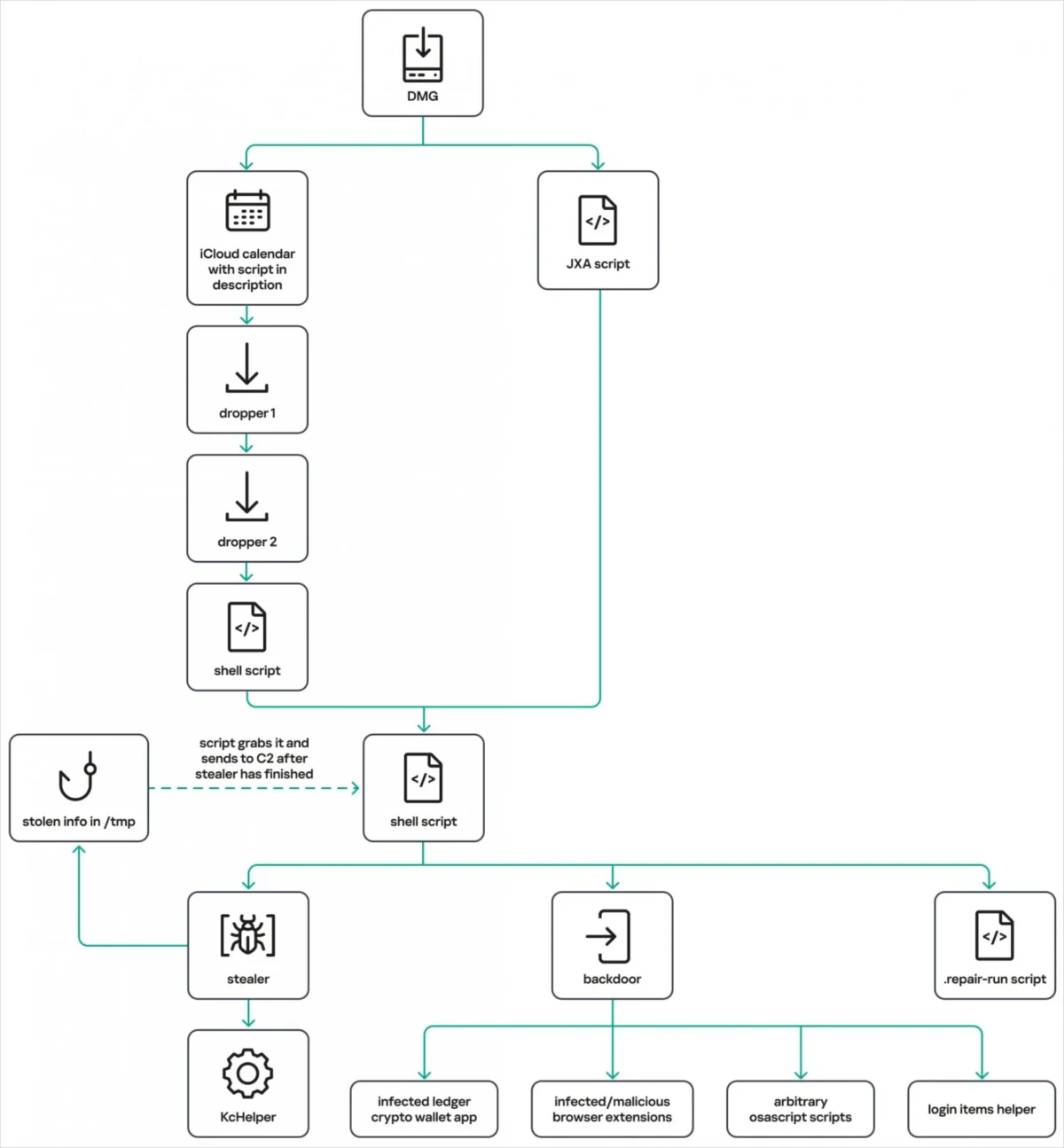
What sets this latest MacSync variant apart is its multi-tiered delivery mechanism, particularly the advanced deployment method that integrates iCloud calendar infrastructure. In this complex infection scenario, the primary downloader script queries a public iCloud calendar event to retrieve operational instructions and payloads hidden directly within the event’s metadata descriptions. The mechanism leverages the native macOS zsh shell to process the retrieved calendar data. While the vast majority of the calendar text inherently generates syntax errors during shell parsing, the threat actors strategically append malicious commands immediately following the structural DESCRIPTION: line of the event. Once executed, these commands quietly fetch a compressed archive housing the next-stage components of the intrusion.
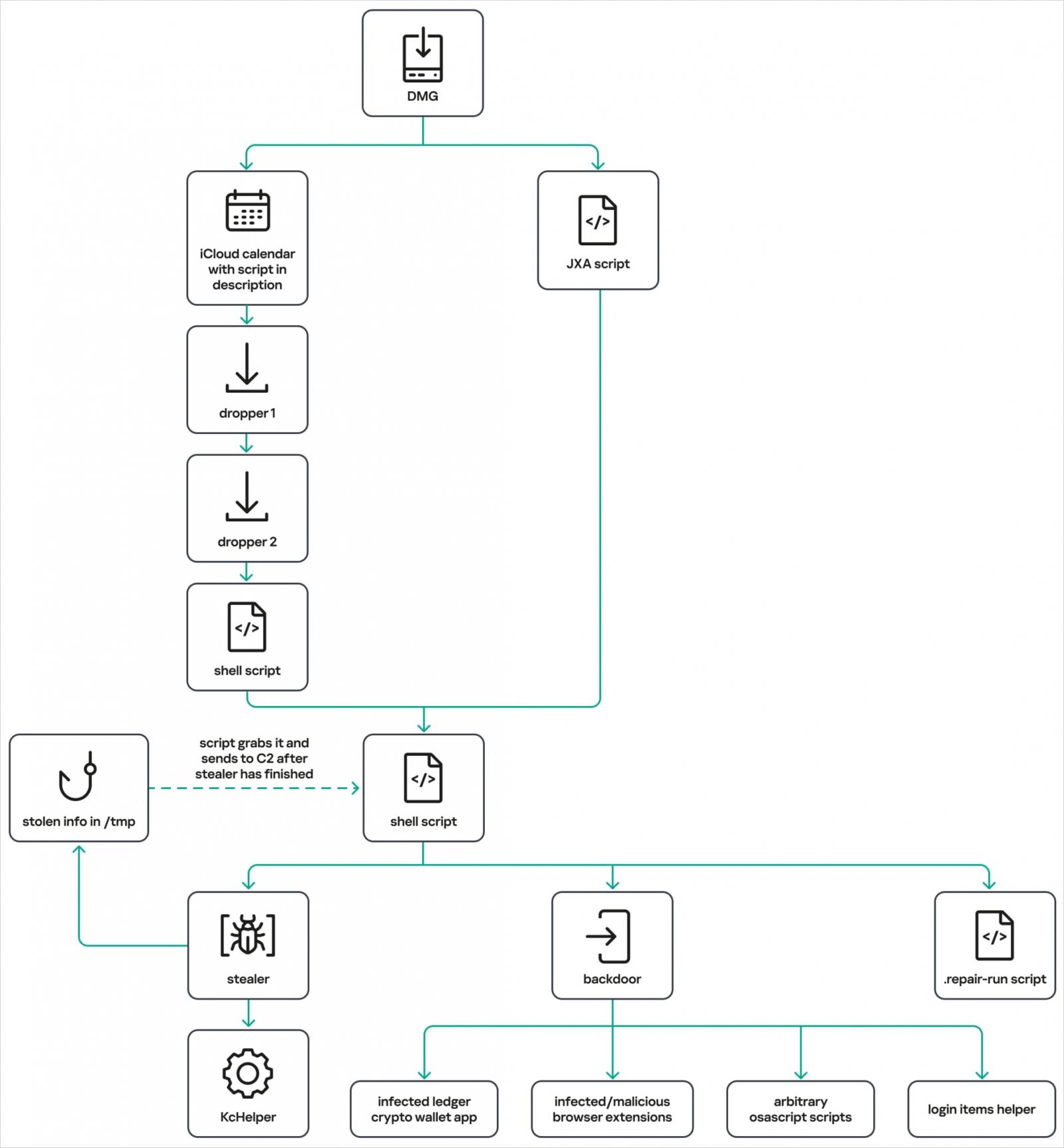
This retrieved archive deploys an application bundle functioning as a dynamic dropper, initiating subsequent execution stages that ultimately orchestrate the delivery and activation of the MacSync core. By routing initial operational commands through legitimate cloud services, the attackers achieve a formidable layer of stealth. Security analysts point out that network traffic directed toward Apple’s official iCloud infrastructure rarely triggers standard perimeter alerts or network monitoring anomalies, as blocking or restricting such traffic would simultaneously cripple essential user productivity and synchronization features. This abuse of trusted cloud infrastructure exemplifies a growing trend in modern cybercrime: living off the cloud.
Beyond its innovative delivery channels, the payload itself remains a comprehensive digital scavenger. The infostealer module within MacSync has been meticulously engineered to vacuum up a staggering array of sensitive user data. Once active, the malware targets comprehensive browser histories, stored session cookies, and saved login credentials across multiple browsers. Furthermore, it aggressively hunts for cryptocurrency wallet extension data, local application caches, Telegram messaging archives, and the macOS system Keychain file. For technical and development-focused targets, the malware casts an even wider net, harvesting SSH keys, AWS credentials, Kubernetes configurations, Git repositories, and various shell configuration files. This exhaustive harvesting capability ensures that a single successful infection can compromise a developer’s entire professional and personal digital footprint.
Compounding the threat is the introduction of a brand-new, highly intrusive Objective-C backdoor module. Unlike the ephemeral nature of standard info-stealers that grab data and vanish, this backdoor establishes long-term, persistent access to the victim’s machine. Disguising itself meticulously as Finder—the fundamental file manager central to the macOS graphical user interface—the backdoor operates in plain sight, subverting user trust. Its installer establishes persistent execution through a combination of LaunchAgents, targeted modifications to user profile files such as .zshrc, and the implementation of global Git hooks that monitor and intercept version-control activities. To ensure the user remains completely oblivious to the ongoing compromise, the backdoor systematically terminates native macOS notification processes, effectively silencing system alerts and preventing security warnings from ever reaching the desktop.
While deep-dive analyses into the backdoor’s operational scope are ongoing, researchers have uncovered concerning capabilities. Due to the modular nature of the deployment and the absence of specific AppleScript execution scripts during lab analysis, researchers have had to infer the exact operational scope of several backdoor commands based solely on their programmatic nomenclature and internal status messages. Among these is a mysterious command designated as live_browser, which dynamically downloads and executes an entirely separate binary component known as sn_relay. While the ultimate functional objective of sn_relay remains undetermined, its very presence underscores the modular flexibility of the MacSync framework, allowing operators to dynamically push new capabilities to infected endpoints on demand.
The emergence of MacSync and its exploitation of cloud calendars signal a profound shift in the threat landscape facing macOS users and enterprise security teams alike. For years, the Mac community has fostered a degree of complacency, historically shielded by security through obscurity and Apple’s stringent platform controls. However, as macOS continues to secure significant market share within enterprise environments, software development houses, and executive suites, it has inevitably transformed into a lucrative target for financially motivated cybercriminal syndicates. The ability of malware authors to continuously adapt their delivery mechanisms—shifting from traditional web-based drops to the abuse of trusted cloud services—highlights the urgent need for a paradigm shift in endpoint defense strategies.
Mitigating threats of this caliber requires a departure from outdated reliance on perimeter defenses and basic signature-based antivirus solutions. Cybersecurity experts emphasize that users must exercise extreme vigilance, particularly when interacting with unsolicited software downloads, navigating promotional campaigns for niche applications, or executing terminal commands sourced from online forums and social media. Furthermore, enterprise security teams must implement robust behavioral monitoring tools capable of detecting anomalous process execution chains—such as a shell environment parsing untrusted text data from calendar feeds. As MacSync and similar modular threats continue to mature, the defense of the modern macOS ecosystem will depend entirely on proactive threat hunting, strict application control, and an acute awareness of the subtle ways trusted platforms can be subverted against their users.
