


Abbott Laboratories, a global titan in medical technology and diagnostics, has officially confirmed it is currently managing the fallout from two distinct cybersecurity intrusions. The incidents, which involve claims of sensitive data theft and unauthorized system access, have placed the healthcare giant at the center of a complex extortion scenario. While the company maintains that core business operations remain insulated, the dual-pronged nature of these attacks underscores the increasing vulnerability of large-scale medical infrastructure to sophisticated digital threat actors.
The Anatomy of the Cancer Diagnostics Infiltration
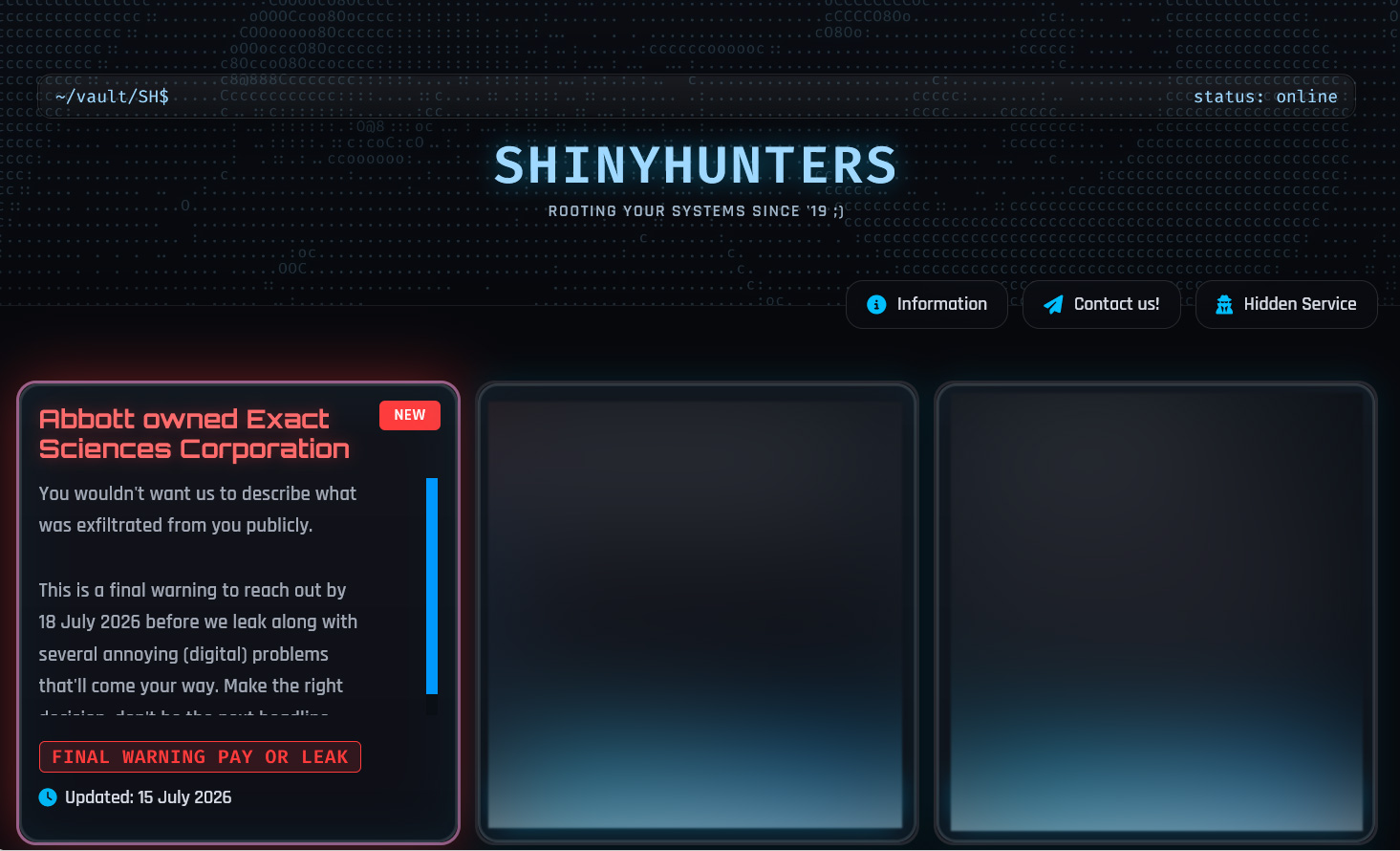
The first, and arguably more severe, incident centers on the company’s Cancer Diagnostics business unit. The intrusion became public knowledge after the notorious extortion collective known as ShinyHunters claimed responsibility, publicly listing Abbott on their data leak portal. The group initially set a mid-July deadline for the company to enter into negotiations, failing which they threatened to release a cache of allegedly exfiltrated internal records. This deadline was subsequently extended, a common tactic used by extortionists to heighten psychological pressure on corporate targets.
According to preliminary reports, the breach originated from a targeted social engineering campaign. The threat actors allegedly employed "vishing"—voice-based phishing—to manipulate Abbott personnel in mid-June. By successfully compromising a Microsoft Entra single sign-on (SSO) credential, the attackers bypassed traditional authentication layers to gain a foothold within internal systems. This methodology is emblematic of the current threat landscape, where human elements are consistently leveraged to compromise robust cloud-based authentication frameworks.
Abbott’s official response has been measured, emphasizing that the breach was confined to legacy systems associated with its Cancer Diagnostics operations. The company stated that no current business operations, patient-facing services, or manufacturing capabilities were compromised. Despite these assurances, the claims made by ShinyHunters are staggering in their alleged scope. The group asserts that the exfiltrated data encompasses millions of rows of personally identifiable information (PII), including sensitive medical orders, doctor-patient correspondence, and Social Security numbers. While these claims remain unverified by third-party security researchers, the potential implications of such a data leak—should it be confirmed—would represent a significant regulatory and ethical challenge for the organization.

The LabCentral Portal Vulnerability
Simultaneously, a second group identified as ShadowByt3$ has emerged with claims of a separate intrusion. This incident reportedly targeted the LabCentral portal, a customer-facing interface used by Abbott’s Core Laboratory diagnostics division. Unlike the high-pressure extortion tactics employed by ShinyHunters, ShadowByt3$ characterizes their intrusion as a methodical, low-and-slow data exfiltration operation that allegedly began on July 4, 2026.
The attackers claim to have identified a structural "weak point" in the portal, allowing them to leverage compromised credentials to access API endpoints. By siphoning files through these interfaces, the group claims to have acquired a vast repository of technical documentation, including manufacturing certificates, regulatory filings, and proprietary product requirement archives.
Abbott has acknowledged the incident but has pushed back against the narrative of a catastrophic intellectual property loss. In a statement provided to industry observers, the company characterized the LabCentral environment as an externally hosted repository designed specifically for public-facing technical references. According to the company, the data contained therein consists of operating manuals and product specifications rather than sensitive proprietary information or customer records. This disparity between the attacker’s claims and the company’s assessment remains a critical point of investigation as forensic teams continue to analyze the logs.
Industry Implications: The MedTech Target Profile
The targeting of Abbott Laboratories is not an isolated event but rather part of a broader, systemic trend of cyberattacks against the global medtech sector. Over the past twenty-four months, companies like Medtronic, iRhythm, and Stryker have faced similar operational disruptions and data extortion attempts.
From an expert perspective, the medtech industry is uniquely attractive to threat actors for several reasons. First, the industry manages an intersection of high-value intellectual property and deeply sensitive patient health data. Second, the reliance on complex supply chains and interconnected diagnostic hardware creates a broad attack surface that is difficult to secure. When attackers successfully breach these environments, they leverage the critical nature of the services—such as patient diagnostics or life-sustaining equipment—to maximize the urgency of their extortion demands.
The use of SSO-based attacks, as seen in the ShinyHunters incident, highlights a critical security gap: the "identity perimeter." As corporations transition to hybrid cloud environments, the security of the SSO account has become the single most important defense mechanism. Once an identity is compromised, the attacker can move laterally through integrated SaaS applications like Salesforce, Slack, and Microsoft 365, effectively masquerading as a legitimate employee.
The Shifting Landscape of Corporate Extortion
The tactics displayed by these groups signal a shift in how cybercriminals operate. Rather than relying on simple ransomware—which locks files and disrupts operations—these actors are increasingly pivoting toward "extortion-only" models. By stealing data and threatening to leak it, attackers can exert immense pressure on a company’s stock price, reputation, and regulatory standing without needing to trigger a catastrophic system shutdown. This model is often more lucrative and easier to execute, as it avoids the technical complexities of deploying and managing ransomware payloads across an entire enterprise.
Furthermore, the rise of specialized groups like ShinyHunters demonstrates an advanced level of operational maturity. These groups often function as decentralized syndicates, utilizing automated tools to scrape data from exposed API endpoints and cloud configurations. They are adept at public relations, managing leak sites that mimic legitimate news outlets to force transparency upon the companies they target.

Future Trends and Defensive Imperatives
As organizations like Abbott grapple with these dual incidents, the broader healthcare sector is being forced to reconsider its security posture. The "trust but verify" model of internal access is being rapidly replaced by "Zero Trust" architectures. In a Zero Trust environment, no user or device is trusted by default, regardless of their location relative to the corporate perimeter. Every request for access must be authenticated, authorized, and continuously validated.
Industry analysts suggest that moving forward, we will see a greater emphasis on:
- Behavioral Analytics: Implementing AI-driven monitoring that detects anomalous patterns in how employees interact with SSO accounts and APIs, potentially flagging vishing-based compromises in real-time.
- API Hardening: Given the ShadowByt3$ incident, companies must treat API endpoints as critical entry points, subjecting them to the same rigorous penetration testing and authentication requirements as core database servers.
- Data Minimization: There is a growing regulatory push to mandate that corporations retain only the data strictly necessary for business operations. Massive data lakes containing millions of PII rows act as "honeypots" that incentivize attackers to target specific firms.
The investigation into the Abbott incidents is ongoing. While the company has taken immediate steps to activate incident response protocols and engage with law enforcement, the long-term impact of these breaches will be measured by the veracity of the attackers’ claims and the effectiveness of the containment strategies employed.
For the healthcare industry, these events serve as a sobering reminder that the transition to digital-first diagnostic services brings with it a persistent and evolving threat. As technology continues to integrate more deeply into patient care, the mandate for robust, proactive, and resilient cybersecurity infrastructure has never been more critical. The ability of major firms to adapt to these challenges will ultimately define the safety and security of the global medical ecosystem in the years to come.
