

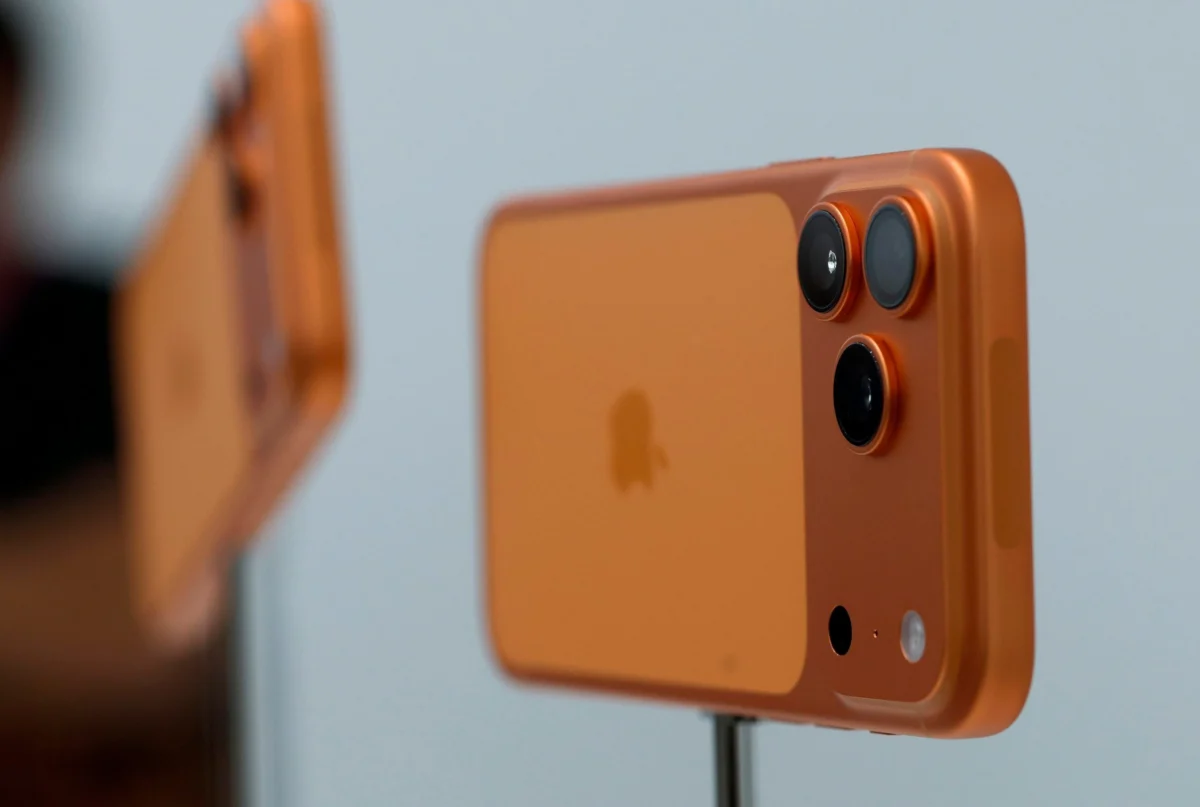
The technological landscape is bracing for what may be the most significant shift in Apple’s corporate history, a moment that transcends the annual hardware cycle to signal a fundamental change in leadership and product philosophy. As the industry moves toward the final days of August, the Cupertino giant is preparing to lift the curtain on a sequence of events that will culminate in the release of the iPhone 18 Pro, the iPhone 18 Pro Max, and the most anticipated hardware deviation in a decade: Apple’s inaugural foldable smartphone. This transition is framed by a seismic shift in the C-suite, as John Ternus prepares to take the mantle of Chief Executive Officer from Tim Cook, marking the end of an era and the beginning of a new chapter for the world’s most valuable technology company.
The choreography of an Apple launch is rarely accidental, and the timeline for this September’s "Special Event" is tightening. Industry observers and supply chain analysts point toward Wednesday, August 26, as the pivotal date when Apple will officially issue its digital invitations. Traditionally dispatched at approximately 10:00 a.m. Pacific Time, these invitations do more than merely confirm a date; they often contain cryptic visual metaphors that hint at the event’s theme. For 2026, the expectations are weighted heavily toward "flexibility" and "evolution," reflecting both the new form factor of the hardware and the changing of the guard in the boardroom.
The keynote itself is projected to take place on Wednesday, September 9, a date that aligns with Apple’s preference for mid-week reveals that allow for a full week of media coverage before pre-orders begin. The venue, as always, will be the Steve Jobs Theater at Apple Park. However, this year the atmosphere will be palpably different. On September 1, just eight days prior to the keynote, John Ternus will officially become Apple’s CEO, while Tim Cook transitions to the role of Executive Chairman. This keynote will serve as Ternus’s public coronation, a high-stakes debut where he must balance the steady, operational excellence of the Cook era with the visionary product-first focus that characterized his own tenure as Senior Vice President of Hardware Engineering.
While the leadership transition provides the narrative backdrop, the hardware remains the primary catalyst for consumer excitement. The iPhone 18 Pro and Pro Max are expected to push the boundaries of mobile silicon, likely utilizing an advanced 2-nanometer process that promises unprecedented efficiency and thermal management. Yet, the true "One More Thing" of the 2026 cycle is the foldable iPhone. Whether Apple settles on the branding of "iPhone Fold," "iPhone Ultra," or perhaps a entirely new nomenclature, the device represents the company’s definitive answer to a market segment currently dominated by Samsung’s Galaxy Z Fold series and Google’s Pixel Fold.
Apple’s entry into the foldable market has been a long-gestating project, characterized by the company’s trademark "wait-and-perfect" strategy. While competitors have grappled with hinge durability, screen creases, and software optimization for varying aspect ratios, Apple has spent years filing patents for self-healing displays and complex friction-hinge mechanisms. The 2026 foldable is expected to be more than just a phone that bends; it is rumored to be a hybrid device that bridges the gap between the iPhone and the iPad mini, utilizing a sophisticated version of iOS—perhaps a "FoldableOS" variant—that leverages the multitasking capabilities seen in iPadOS.
The implications for the smartphone industry at large cannot be overstated. When Apple enters a category, it typically validates that category for the mass market. An Apple-branded foldable will likely trigger a massive shift in app development, as developers rush to optimize software for the expanding canvas of a foldable display. This move also signals a shift in Apple’s premium tiering. By introducing a foldable alongside the iPhone 18 Pro, Apple is creating a "Super-Premium" category that could push average selling prices to new heights, testing the ceiling of consumer spend in an increasingly saturated mobile market.

Beyond the flagship handsets, the September 9 event is expected to be a comprehensive showcase of the broader Apple ecosystem. Two new iterations of the Apple Watch are slated for reveal, likely focusing on enhanced health-sensing capabilities, such as non-invasive glucose monitoring or advanced sleep apnea detection—features that have been in the R&D pipeline for several years. Interestingly, Apple has already cleared the decks for these announcements by surprising the market on August 25 with an early update to its Mac lineup. The release of new Mac mini and Mac Studio models, powered by the M6 and M5 Ultra chips respectively, suggests that Apple wants the September keynote to remain laser-focused on mobile and wearable technology, preventing the desktop hardware from diluting the impact of the iPhone 18 and the new foldable.
The choice of John Ternus as CEO is a strategic signal to investors. Ternus has been the face of many of Apple’s most successful hardware transitions, including the migration to Apple Silicon and the redesign of the iMac and MacBook Pro. His deep engineering background suggests a return to a "product-first" culture. While Tim Cook’s legacy is defined by supply chain mastery and the massive expansion of the Services division, Ternus is expected to steer the company toward the next frontier of spatial computing and flexible form factors. The September 9 keynote will likely feature a blend of the high-production-quality filmed segments that became the standard during the pandemic and a return to more live, on-stage demonstrations. This hybrid format allows Ternus to display his command of the stage while maintaining the cinematic polish that Apple’s global audience expects.
From an expert-level analysis perspective, the iPhone 18 Pro line represents the apex of the "slate" smartphone. We are seeing a convergence of professional-grade photography, desktop-class processing power, and AI-driven software. The integration of "Apple Intelligence"—the company’s proprietary generative AI suite—will likely be a cornerstone of the iPhone 18’s value proposition. With the M6-series architecture trickling down into the A-series chips, the iPhone 18 Pro will likely be capable of running complex large language models (LLMs) locally, ensuring user privacy while providing a level of predictive assistance that was previously impossible.
However, the future impact of the foldable iPhone extends beyond mere hardware. It represents a challenge to the iPad. If a user can carry a device that fits in a pocket but expands to an 8-inch tablet, the necessity of a dedicated iPad mini or even a standard iPad begins to diminish. This internal cannibalization is a risk Apple has historically been willing to take—much as the iPhone once cannibalized the iPod—in order to stay ahead of market trends.
The retail schedule following the keynote is expected to follow Apple’s disciplined cadence. Following the September 9 reveal, pre-orders are anticipated to open on Friday, September 11. The global on-sale date, when the iPhone 18 Pro and the foldable model will officially hit store shelves, is projected for Friday, September 18. This timing allows Apple to capture nearly two full weeks of sales within its fourth fiscal quarter, providing a significant boost to its end-of-year financial reporting.
As we look toward the future, the 2026 launch will be remembered as the moment the smartphone began its transition from a static glass slab to a dynamic, modular tool. It is a gamble that the world is ready for a new way to interact with technology, and that Apple is ready to lead that charge under new management. The stakes are immense; the foldable market is no longer a niche curiosity, but the frontline of the battle for the premium consumer. With the iPhone 18 Pro, Apple is perfecting the present; with its first foldable, it is attempting to claim the future.
In the coming days, as the world awaits the digital "ping" of an invitation from Cupertino, the tech industry is not just looking for a new phone. It is looking for a sign that Apple, even in a post-Cook era, retains the ability to surprise, to innovate, and to redefine the devices that have become the remote controls for our lives. The journey to September 18 is about to begin, and for the first time in fifteen years, the man standing in the center of the stage will be a new face, carrying the weight of a trillion-dollar legacy into an unfolded future.
