

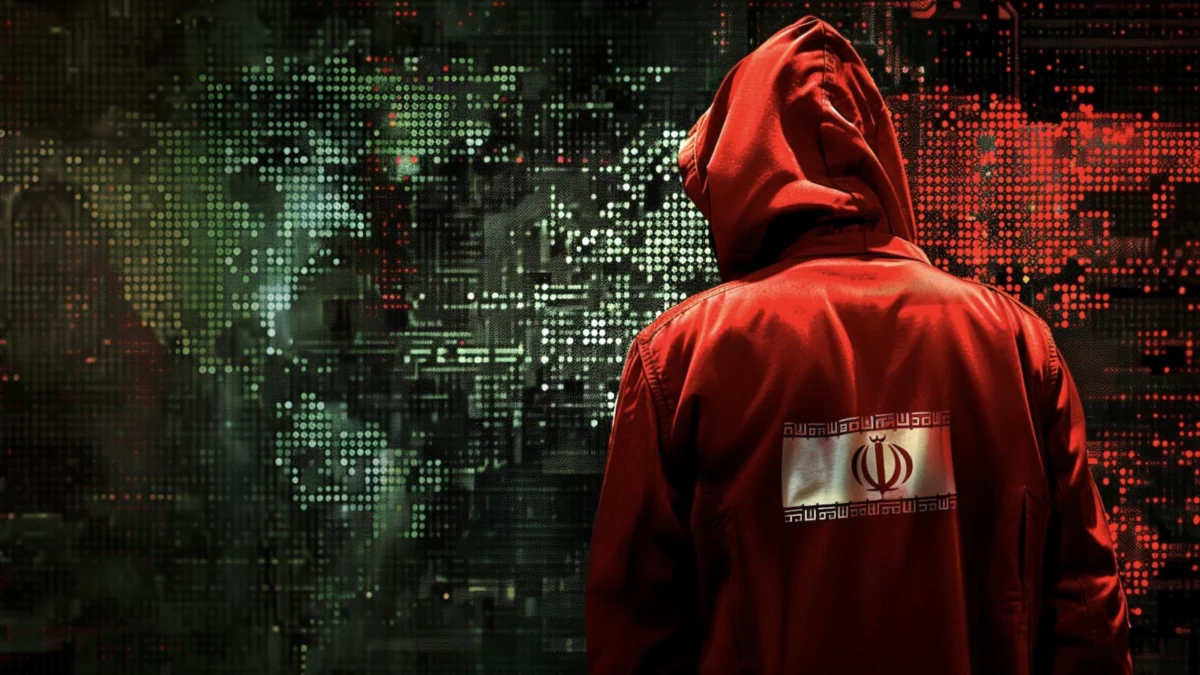
The boundaries separating traditional geopolitical conflict from critical infrastructure cyber warfare have dissolved further following an official attribution from the French government. Paris has formally accused state-sponsored hackers operating under the umbrella of the Islamic Republic of Iran of orchestrating a sweeping, highly destructive cyber offensive last October. The digital assault crippled industrial refrigeration networks across hundreds of commercial grocery locations, triggered multiple structural fires, and inflicted tens of millions of euros in devastating agricultural and commercial food waste.
In an assertive diplomatic and security declaration issued by the Ministry for Europe and Foreign Affairs, the French government did not mince words, condemning the intrusions as an unacceptable violation of national sovereignty and a direct assault on vital domestic interests. According to comprehensive forensic assessments compiled by the French Cyber Crisis Coordination Center (C4)—a specialized task force integrating the national cybersecurity agency ANSSI, military cyber commands, and premier intelligence services—the operation was masterminded by Shahid Kaveh. This cyber-offensive proxy unit is deeply integrated into the electronic and cyber warfare apparatus of Iran’s Islamic Revolutionary Guard Corps (IRGC).
Anatomy of an Industrial Sabotage Campaign
The sophisticated cyber attack unfolded during the overnight hours of October 11 to 12, catching facility operators entirely off guard. Rather than deploying traditional ransomware to encrypt corporate databases or exfiltrating sensitive consumer PII, the threat actors executed a physically destructive operational technology (OT) maneuver. Gaining unauthorized remote access to programmable industrial refrigeration controllers, the malicious operators systematically manipulated system defrost parameters, driving temperatures upward to dangerous extremes.
While initial industry estimates pointed toward roughly 250 to 350 supermarkets suffering immediate operational paralysis, subsequent exhaustive forensic investigations revealed a far larger scope. French authorities confirmed that approximately 700 retail establishments were targeted simultaneously. The resulting thermal anomalies did not merely spoil massive inventories of fresh produce, dairy, and frozen goods; they pushed mechanical hardware past safety thresholds, igniting at least 15 physical fires inside commercial premises.
Detailed technical findings published by CERT-FR, the French national computer emergency response team, underscored the widespread nature of the disruption. Major national and multinational retail heavyweights—including Carrefour, Casino, Leclerc, Intermarché, Coopérative U, and Metro—were severely impacted. Beyond mainstream supermarkets, the malicious campaign rippled deep into regional supply chains, touching local butcher shops, specialized slaughterhouses, and cooperative food-processing plants. Total commercial losses skyrocketed into tens of millions of euros, heavily straining regional distribution networks.
Compounding concerns regarding the breadth of the threat actor’s operational focus, investigators uncovered parallel digital intrusions targeting Schneider Electric industrial control equipment installed at decentralized small hydroelectric generation sites across France. Although these secondary utility intrusions resulted in only moderate functional interference, they underscored a worrying pattern of reconnaissance and targeting directed squarely at foundational European industrial control systems (ICS).
The Evolving Threat Matrix and International Blowback
The devastating October supermarket operation was far from an isolated incident, fitting instead into an expanding, continent-wide campaign of physical and digital harassment. In the weeks following the French disclosures, a secondary wave of analogous refrigeration disruptions rippled across more than 115 retail locations spanning six distinct European countries. Concurrently, France’s national blood preservation infrastructure faced a chilling near-miss when unauthorized actors tampered with temperature and defrost configurations across three specialized facilities dedicated to storing vital blood products.
These compounding threats have triggered widespread international alarm. Cybersecurity authorities across the globe, most notably the United States Cybersecurity and Infrastructure Security Agency (CISA) alongside the Federal Bureau of Investigation (FBI), recently issued urgent joint advisories warning critical infrastructure operators worldwide about ongoing, highly targeted campaigns directed at industrial refrigeration and cold-chain monitoring architectures.
In response to the unprecedented physical damage on French soil, the Ministry for Europe and Foreign Affairs announced decisive diplomatic countermeasures. Paris intends to formally summon the Iranian ambassador to register a rigorous condemnation of the cyber operations. Furthermore, French diplomats are actively spearheading initiatives within the European Union to draft and implement expansive new sanctions packages targeting specific Iranian individuals, military divisions, and corporate fronts tied directly to malicious state-sponsored cyber warfare.
Unmasking Shahid Kaveh and the Hacktivist Facade
The attribution of the October operation to Shahid Kaveh sheds critical light on the evolving operational doctrine of state-backed IRGC cyber units. According to intelligence compiled by CERT-FR and allied agencies, Shahid Kaveh frequently utilizes a network of online proxy personas and pseudo-hacktivist fronts to obscure the direct involvement of the Iranian state. Monikers such as CyberAveng3rs, Soldiers of Solomon, Mr. Soul, and Cyber Isnaad Front have historically been deployed to claim responsibility for high-profile sabotage operations, providing Tehran with plausible deniability.
However, digital forensics dismantled this facade quickly. French cybersecurity analysts identified explicit operational overlaps, noting that propaganda channels linked directly to Shahid Kaveh—specifically an outlet designated as CyberbanNews—publicly disseminated detailed claims and technical insights regarding the supermarket controller sabotage as early as October 13.
Investigators also tracked historical telemetry indicating that the same unit had spent the spring months actively mapping and conducting large-scale digital reconnaissance against Schneider Electric industrial control architecture globally, including specific operational nodes located inside France. Furthermore, intelligence reports connect Shahid Kaveh to a broader regional sabotage campaign executed in March and April, during which similar industrial control system (ICS) and refrigeration attacks were launched against targets in Israel and the United States.
Broader Industry Implications for Critical Infrastructure Security
The French supermarket incidents mark a watershed moment in the evolution of modern cyber threats, transitioning the cybersecurity discourse firmly away from purely financial extortion toward kinetic, physical destruction. For decades, corporate cybersecurity strategies prioritized the defense of enterprise IT networks, customer databases, and intellectual property. The weaponization of operational technology—specifically mundane components like refrigeration controllers and HVAC units—exposes a critical blind spot in how modern societies defend their physical realities.
Industrial refrigeration systems represent a classic archetype of convergent IT and OT environments. Historically managed as isolated, proprietary mechanical systems, these networks have increasingly been connected to cloud-based monitoring platforms, remote diagnostics dashboards, and enterprise management software to optimize energy consumption and reduce operational overhead. While these digital integrations deliver undeniable economic efficiencies, they simultaneously introduce vast attack surfaces accessible via global internet protocols.
Security analysts emphasize that traditional perimeter defense architectures are wholly inadequate for protecting distributed cold-chain systems. Because grocery stores, blood banks, and food processing plants often rely on third-party vendors and local contractors for maintenance, threat actors frequently exploit lax supply-chain security credentials or default administrative passwords to pierce internal network boundaries. Once inside, pivoting from an enterprise network to an industrial controller requires minimal technical sophistication if segmentation policies are weak or nonexistent.
The emergence of state-sponsored actors targeting the foundational supply chain of sustenance introduces severe socio-economic vulnerabilities. Unlike a temporary website outage or a locked corporate database, the degradation of cold-chain integrity strikes directly at public health, food security, and consumer safety. The physical fires sparked by overridden defrost cycles in French supermarkets demonstrate that poorly secured industrial machinery can be manipulated to create genuine life-safety hazards.
The Road Ahead: Hardening the Global Cold Chain
As geopolitical tensions continue to manifest across digital vectors, Western governments and regulatory bodies face an urgent mandate to elevate the security posture of decentralized critical infrastructure. The events in France serve as an unmistakable warning to industrial operators across all sectors: cyberspace is no longer an isolated theater of espionage, but an active front line where software code can melt food supplies, rupture supply chains, and ignite physical flames.
Securing the future will require a fundamental paradigm shift across industrial engineering and enterprise risk management. Manufacturers of OT hardware must bake security-by-design principles directly into firmware, eliminating hardcoded credentials, mandating robust multi-factor authentication for remote access, and implementing rigid cryptographic verification for all firmware updates and configuration changes. Simultaneously, facility operators must enforce rigorous network micro-segmentation, ensuring that enterprise business networks remain entirely walled off from the physical operational machinery that keeps vital infrastructure functioning.
As the European Union evaluates new sanctions against the perpetrators behind Shahid Kaveh, the broader commercial sector must treat these diplomatic actions as a call to immediate defensive action. The convergence of statecraft and sabotage means that no sector—regardless of how mundane its day-to-day operations appear—can afford to treat industrial control security as an afterthought.
