


The modern threat landscape is characterized by constant innovation in evasion techniques, forcing cybersecurity professionals to continually adapt their defenses. A striking example of this adversarial ingenuity has recently emerged through a sprawling campaign that repurposes thousands of unsuspecting small-business websites to distribute sophisticated malware. Rather than relying on traditional, easily monitored command-and-control infrastructure or vulnerable web hosting servers, the operators behind this campaign have turned to distributed ledger technology. By leveraging smart contracts deployed on the BNB Smart Chain, these cybercriminals have engineered a resilient, decentralized delivery mechanism that is exceptionally difficult for traditional security measures to neutralize or dismantle.
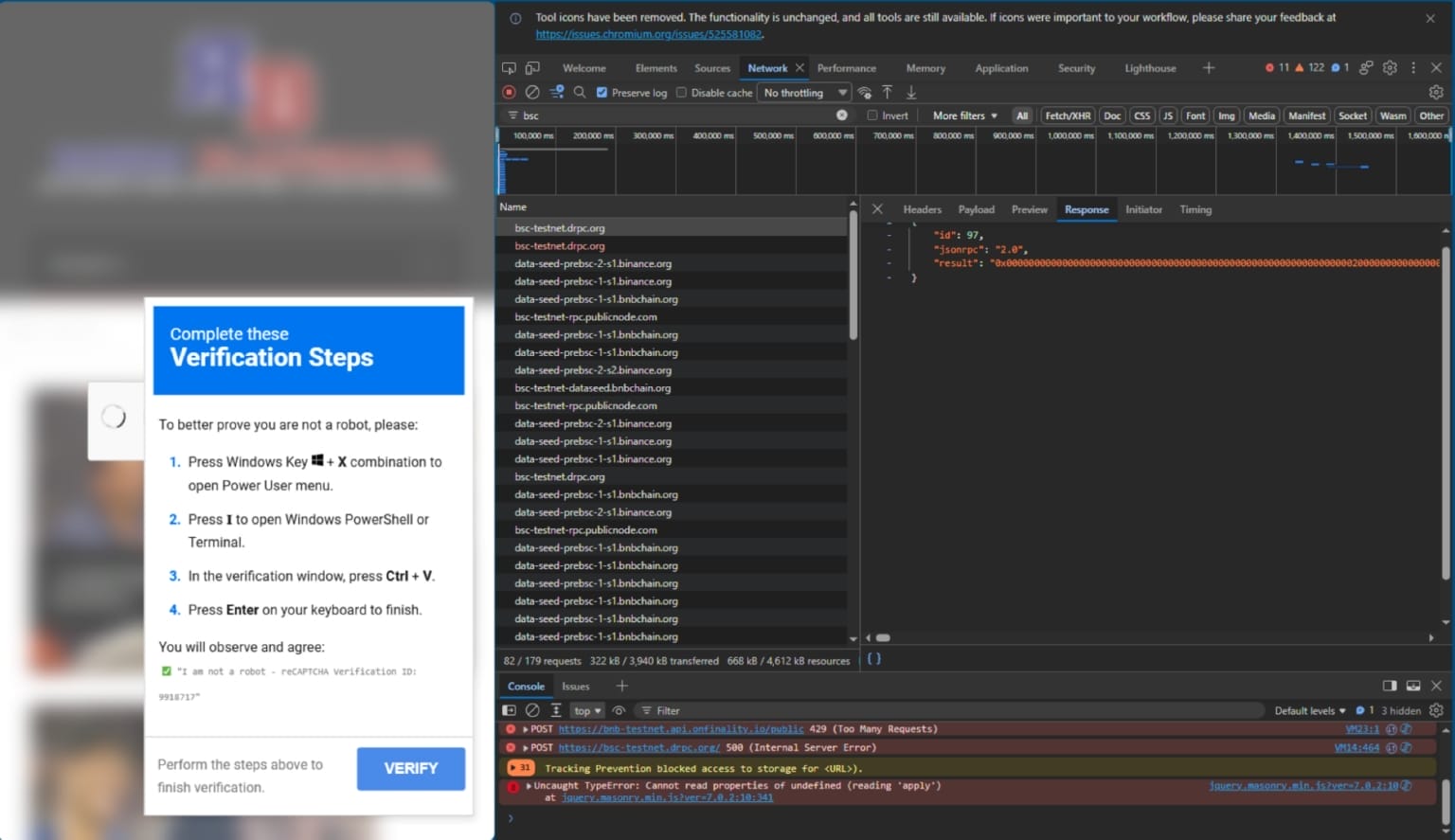
Recent telemetry and threat intelligence findings paint a concerning picture of this ongoing operation. Over the past several months, cybersecurity investigators have cataloged more than 5,400 compromised web properties, the vast majority of which are powered by popular content management systems such as WordPress and PrestaShop. While the precise vector utilized for the initial compromise of these small-business domains remains elusive, the subsequent infection routine is meticulously structured. Each breached site is injected with a persistent script designed to fetch its next-stage operational instructions and payloads directly from smart contracts hosted on the BNB Smart Chain Testnet endpoint—a sophisticated evasion strategy widely known in the security community as "EtherHiding."

To fully comprehend the operational mechanics of this campaign, one must examine why threat actors are gravitating toward blockchain environments. The BNB Smart Chain Testnet is an infrastructure explicitly built for developers, mirroring the behavior and capabilities of the main production blockchain while offering a cost-free environment. By embedding malicious configuration parameters, redirection scripts, or executable payloads inside smart contracts, threat actors decouple their operations from traditional web hosting providers. When law enforcement agencies, hosting providers, or security vendors attempt to take down a traditional command-and-control server, they can typically issue takedown notices or seize domains. In stark contrast, a smart contract residing on a distributed network cannot be easily altered, deleted, or censored by a single entity. This provides threat actors with a permanent, highly available repository for their malicious tooling, ensuring operational continuity even if individual injected websites are cleaned or blacklisted.
In the initial phases of this campaign observed by cloud security researchers, the injected scripts leveraged a deceptive social engineering tactic commonly referred to as "ClickFix." Visitors navigating to these compromised web properties were greeted with a fabricated CAPTCHA verification prompt designed to look authentic. The prompt would instruct the user to execute a sequence of actions ostensibly required to prove human interaction—specifically, prompting them to open the Windows Run dialog box, paste a pre-copied PowerShell command, and press enter.
Executing this command unwittingly triggered the download and execution of the final malware payload directly onto the victim’s local machine. Because the underlying delivery script fetches its instructions from an immutable smart contract, the operators retained the flexibility to modify the payload dynamically at any given moment without altering the code injected into the thousands of compromised websites. This dynamic flexibility allows threat actors to pivot their operational objectives rapidly, transitioning from simple credential harvesters or infostealers to more complex espionage or persistence frameworks.
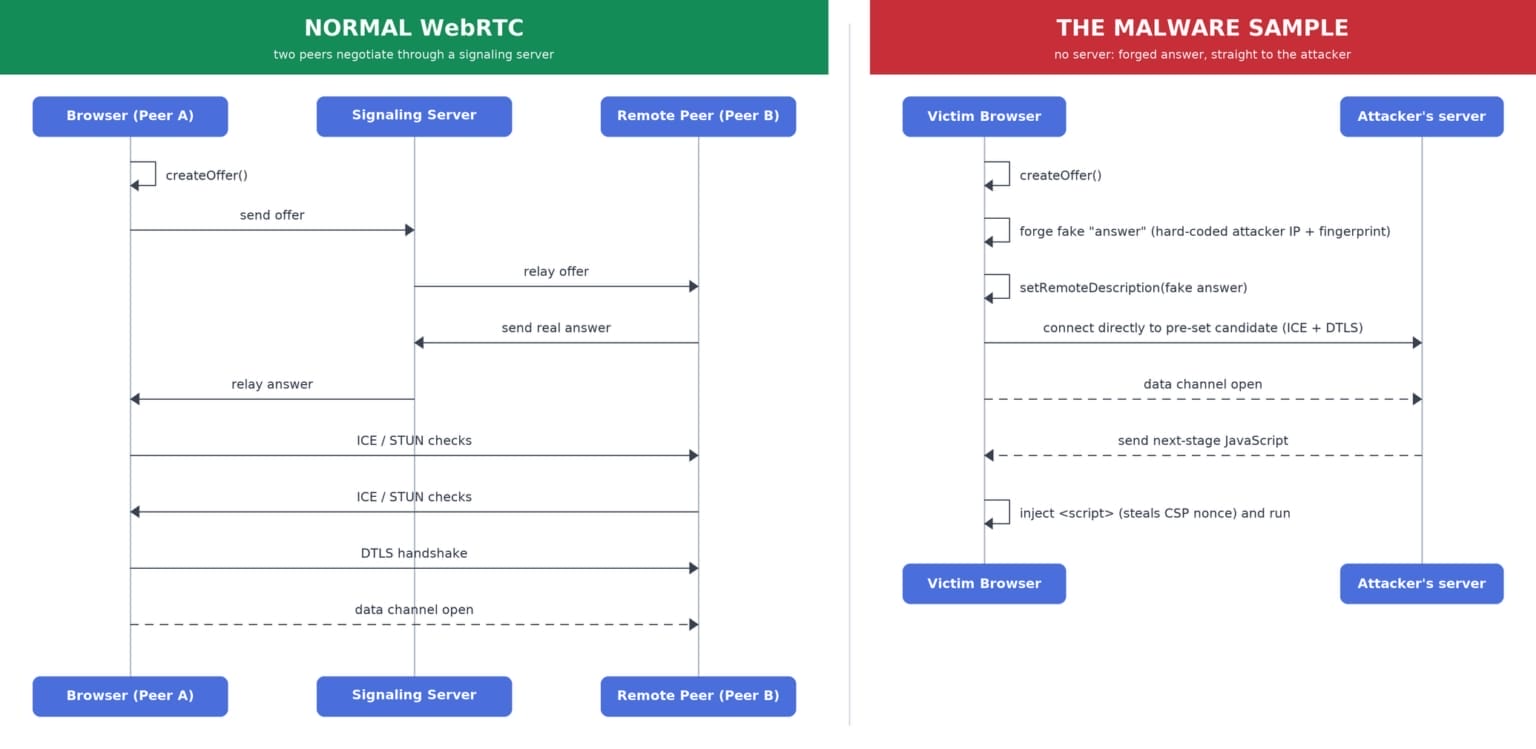
As security telemetry adapted to detect and block these initial ClickFix lures, the threat actors demonstrated their operational agility by evolving the campaign’s technical architecture. Researchers noted that the operators subsequently replaced the ClickFix payload within the smart contract framework with an advanced WebRTC data-channel stager. This pivot represents a significant elevation in sophistication, moving away from explicit user interaction toward automated, covert communication channels.
In this newer variant, the payload establishes a covert, encrypted communication channel directly with the attacker, bypassing traditional network monitoring controls that typically focus on HTTP or HTTPS traffic. According to technical analysis, the script initializes a peer connection and a data channel, generating the necessary session description offer just as a standard WebRTC handshake would unfold. However, instead of transmitting this offer across the network and waiting for a legitimate remote response, the script autonomously hand-writes the corresponding answer and feeds it directly back into its own connection loop. Consequently, no external handshake occurs over the broader network, yet a fully functional, encrypted data channel to the cybercriminal infrastructure is successfully established.
Once this clandestine data channel is active, the stager begins receiving raw JavaScript code from a hardcoded command-and-control address. This data is buffered securely and executed either when the data channel gracefully closes or after a strict ten-second timeout threshold. Crucially, the incoming code is assembled entirely within the volatile memory of the victim’s browser and executed dynamically. By injecting the script directly into the head of the Document Object Model (DOM), the malware avoids writing any malicious artifacts to the local disk, thereby successfully evading file-based antivirus scanners and endpoint detection solutions configured to inspect persistent file system modifications.
The scale of this automated operation is vast. Analysts have observed that the infrastructure actively interacts with upwards of 300 infected domains on a daily basis. Throughout the spring and summer months, telemetry indicated a steady upward trajectory in the volume of compromised sites querying the BNB Smart Chain Testnet RPC endpoints. By August, daily interactions consistently hovered near 400 unique websites, eventually surging to an all-time peak of 536 active calls per day. This consistent utilization underscores the automated nature of the campaign, where thousands of dormant or neglected small-business websites are continuously leveraged as unwitting distribution nodes.
Defending against decentralized threats of this caliber requires a fundamental shift in traditional enterprise and perimeter security strategies. Because the payloads are retrieved from public blockchain infrastructure rather than known malicious domains or IP addresses, conventional domain reputation lists and URL-filtering solutions often fail to flag the initial network requests. Furthermore, the reliance on browser-based, in-memory execution and encrypted WebRTC channels blinds standard endpoint security tools that rely heavily on static file signatures and traditional web traffic inspection.
To effectively mitigate the risks posed by this ongoing campaign, security architects and network administrators must implement targeted defensive measures. Experts strongly recommend blocking the entire pool of BNB Smart Chain testnet RPC endpoints across corporate firewalls and secure web gateways to disrupt the retrieval pipeline. Additionally, organizations should enhance their network monitoring capabilities to inspect and flag anomalous, non-web UDP traffic patterns associated with unauthorized WebRTC usage. Proactive monitoring of internal web traffic for unusual interactions with blockchain RPC endpoints can provide early warning indicators, allowing security teams to identify and neutralize potential infection attempts before payloads can be assembled and executed within the browser environment.
