

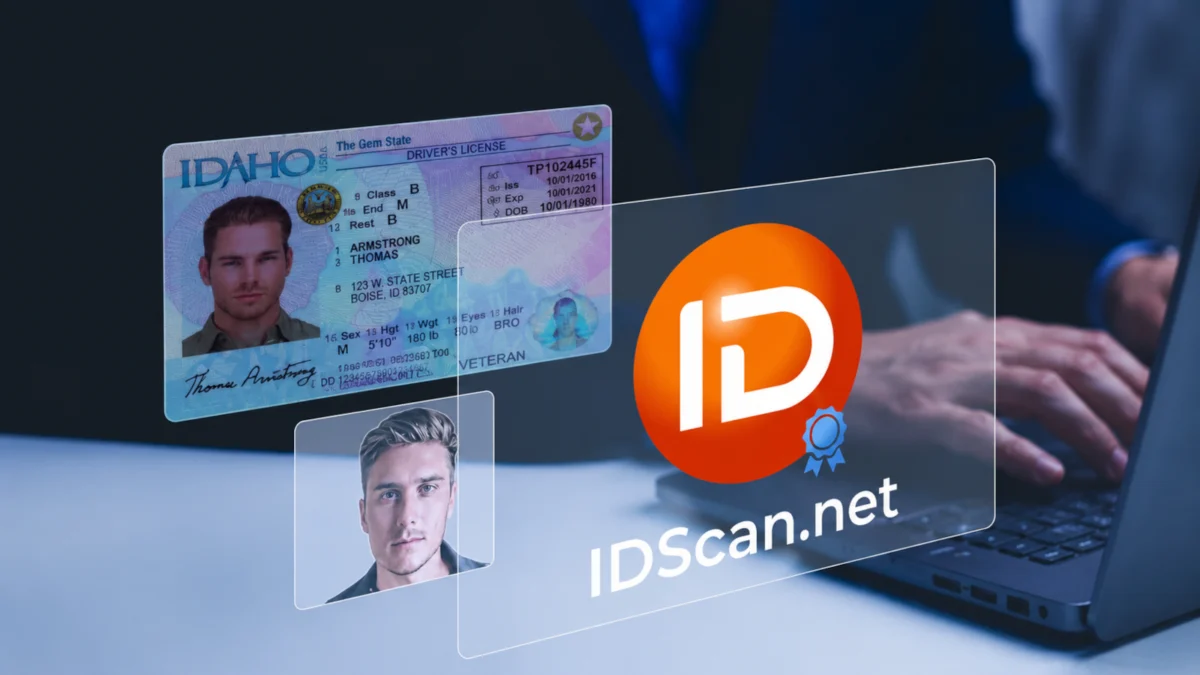
The landscape of digital privacy and corporate accountability faces a monumental reckoning following a catastrophic security failure centered on Louisiana-based identity verification provider IDScan. A wave of class-action lawsuits has begun crashing against the organization after malicious actors allegedly penetrated its architecture, unearthing an unprecedented trove of sensitive personal information. The breach, which came to light through investigative journalism and subsequent law enforcement disclosures, has exposed over 153 million driver’s licenses belonging to residents across the United States and Canada. This staggering figure represents one of the most expansive compromises of state-issued credentials in modern digital history, placing hundreds of millions of citizens at an elevated, prolonged risk of sophisticated identity theft, financial fraud, and targeted social engineering schemes.
The genesis of this public disclosure can be traced back to independent cyber intelligence reporting by veteran security journalist Brian Krebs, who uncovered a clandestine dark-web marketplace operation operating under the moniker "Nexus." This illicit platform functioned as an automated clearinghouse for stolen personal data, boldly advertising wholesale access to an astronomical volume of identification assets. Beyond the headline-grabbing tally of more than 153 million driver’s license scans, the compromised repository reportedly contained approximately 10 million distinct identification cards, 3 million specialized travel documents, and roughly 579,000 sensitive medical cards. To substantiate the legitimacy of these alarming claims, researchers conducted independent forensic sampling, verifying the authenticity of records by querying the underground database with consented personal metadata. The trail of evidentiary breadcrumbs quickly led back to IDScan’s infrastructure, prompting immediate alarm throughout the cybersecurity community.
Operating quietly in the background of everyday commerce, IDScan occupies a critical, yet largely invisible, niche within the modern verification economy. The enterprise engineers both specialized hardware peripherals and sophisticated software suites designed to allow commercial entities to rapidly scan, authenticate, and ingest metadata from government-issued identity documents. Across the United States, these technological solutions are deeply embedded in the operational workflows of numerous high-traffic sectors. From global car rental agencies and mainstream retail chains to licensed firearms dealers, financial institutions, regulated cannabis dispensaries, and hospitality giants, businesses rely heavily on IDScan’s ecosystem to vet customers at the point of interaction. Consequently, when the company’s ecosystem suffers an integrity failure, the shockwaves reverberate across an immense spectrum of consumer touchpoints.
Despite the mounting gravity of the situation, corporate leadership at IDScan has maintained a posture of profound silence. The enterprise has refrained from issuing public statements, regulatory disclosures, or transparency updates addressing the allegations. Furthermore, corporate representatives have repeatedly failed to respond to inquiries from journalistic outlets seeking clarification regarding the vector of the breach, the exact volume of compromised records, or the timeline of unauthorized access. This lack of communication has exacerbated anxiety among affected consumers and corporate clients alike, creating a vacuum of information that legal professionals and federal investigators are now aggressively working to fill.
The severity of the incident has naturally drawn the immediate attention of federal law enforcement. The Federal Bureau of Investigation’s field office in New Orleans swiftly initiated a formal inquiry into the Nexus marketplace and the underlying data leak, a development independently corroborated by major international news organizations. While federal agents have confirmed their ongoing investigative efforts to media inquiries, they have deliberately withheld detailed commentary due to the preliminary and sensitive nature of the proceedings. The involvement of the FBI underscores the national security and economic implications of such a colossal repository of verified identity documents falling into the hands of organized cybercriminal syndicates.
As federal authorities map out the digital footprints left by the threat actors, the civil litigation front has exploded into motion. Prominent consumer rights law firms, including Markovits, Stock & DeMarco alongside Hall Attorneys, have formally initiated comprehensive investigations and filed initial class-action lawsuits within Louisiana judicial districts. These legal complaints are anchored in core allegations that IDScan fundamentally neglected its duty of care, failing to implement adequate technical and administrative safeguards to protect the sensitive data entrusted to it by prominent commercial partners, such as international car rental titan Hertz. Legal filings indicate that IDScan began quietly notifying select corporate clients regarding security anomalies around the first of September, signaling an internal realization that their defenses had been fatally breached long before the public disclosure.
The legal strategy driving these class actions focuses on the broad class of everyday consumers whose physical identification cards were scanned and digitized during routine commercial transactions. Because individuals rarely have a direct contractual relationship with back-end identity verification vendors like IDScan, establishing liability often requires navigating complex supply chain and third-party vendor risk frameworks. Legal analysts predict that as the true scope of the compromise becomes clearer in the coming weeks, an influx of parallel lawsuits will flood federal and state courts. This trajectory strongly suggests that these disparate legal actions will eventually be consolidated into a massive multidistrict litigation (MDL) framework to streamline pre-trial proceedings and coordinate discovery efforts against the verification firm.
Beyond private civil litigation, the broader regulatory landscape poses an existential threat to IDScan’s operational future. State attorneys general across multiple jurisdictions, alongside federal regulatory bodies such as the Federal Trade Commission, possess broad authority to investigate systemic data security failures. Historical precedent demonstrates that exposures of this magnitude rarely conclude without substantial regulatory interventions. Landmark enforcement actions against corporate giants implicated in previous mass data security lapses—such as the genetic testing platform 23andMe, hospitality conglomerate Marriott International, and credit reporting bureau Equifax—illustrate the aggressive posture regulators adopt when foundational consumer data is compromised. Regulatory scrutiny often results in multi-million-dollar financial settlements, mandatory operational overhauls, mandated third-party security audits, and years of government oversight.
The implications of the IDScan incident extend far beyond the immediate legal and financial fallout for a single enterprise; they represent a watershed moment for the identity verification industry as a whole. For decades, commercial enterprises have aggressively collected, digitized, and centralized vast repositories of biometric and biographical data under the banner of fraud prevention and regulatory compliance. However, this centralized accumulation of high-value credentials transforms verification vendors into prime targets for advanced persistent threat groups and sophisticated cybercrime cartels. When a single central node in the verification supply chain is compromised, the downstream impact neutralizes the security postures of thousands of independent client businesses.
This structural vulnerability highlights a critical flaw in modern data stewardship: the perpetual retention of sensitive identity artifacts. Cybersecurity experts have long argued that aggregating millions of unencrypted or insufficiently protected driver’s license scans creates an irresistible honeypot for malicious actors. Unlike mutable passwords or credit card numbers that can be easily reissued, government-issued identification numbers, facial images, and date-of-birth records remain static identifiers. Once compromised, these credentials permanently lose their efficacy as trust anchors, leaving victims uniquely vulnerable to synthetic identity fraud, fraudulent financial account creation, and targeted phishing campaigns that leverage authentic government documents to bypass remote verification checks.
Furthermore, the underground lifecycle of this stolen data presents a persistent, long-term threat environment. Although the illicit "Nexus" dark-web marketplace was rapidly shuttered or taken offline following the initial media exposés and law enforcement interest, security researchers emphasize that the underlying database has already been successfully harvested, copied, and distributed within exclusive cybercriminal forums and private Telegram channels. Consequently, neutralizing the initial distribution point does nothing to mitigate the secondary and tertiary distribution of the stolen records. The data is now fully integrated into the dark-web economy, where it will likely be exploited by criminal actors for years to come.
In the wake of this crisis, commercial organizations that rely on third-party verification services are being forced into an aggressive reassessment of their vendor risk management protocols. Procurement departments and chief information security officers are no longer treating identity verification as a peripheral operational utility; instead, they are demanding radical transparency regarding data storage practices, encryption standards, retention timelines, and network segmentation within vendor environments. The expectation that verification partners act as impenetrable fortresses has been shattered, prompting a strategic pivot toward zero-trust architectures and privacy-enhancing technologies that minimize data collection and eliminate unnecessary long-term storage of raw identity documents.
Ultimately, the IDScan data exposure serves as a stark, sobering reminder of the fragile underpinnings of the modern digital economy. As litigation proceeds, regulatory investigations unfold, and federal agents trace the illicit circulation of 153 million driver’s licenses, the commercial verification sector faces an unavoidable reckoning. The era of unchecked data harvesting and casual custodial security is drawing to a definitive close. Enterprises that trade in human identity will now be held to unprecedented standards of accountability, proving that the convenience of digital verification can no longer come at the catastrophic expense of citizen privacy and systemic security.
