

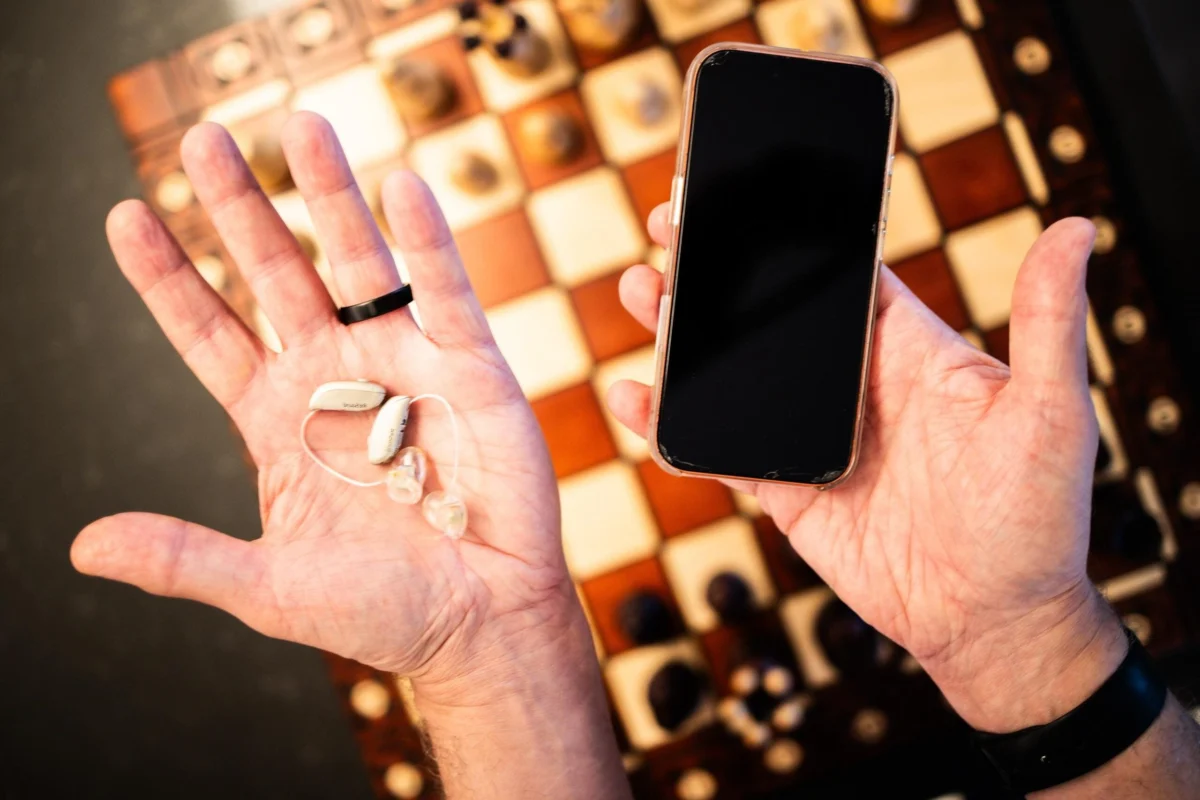
The modern human body is increasingly draped in silicon, titanium, and sophisticated sensors, yet the promise of a truly "quantified self" remains a fractured reality. We have entered an era where our accessories know our resting heart rate, our peripheral oxygen saturation, and the exact decibel level of a crowded bistro. However, despite this deluge of data, these devices remain remarkably ignorant of the human experience they are meant to augment. They possess the data, but they lack the narrative. As I embark on a new technological experiment—integrating the Oura Ring 5, the Apple Watch, and the upcoming ReSound Sensia hearing aids—I am struck by a persistent irony: my devices are more observant than ever, yet they still do not truly understand me.
For decades, the technology industry has chased the ghost of personal health integration. We are naturally curious about the invisible mechanics of our own biology. We feel the sudden dip in energy at 3:00 PM or the subtle prickle of anxiety before a presentation, but the "why" often remains elusive. Traditionally, these nuances were lost in the gap between doctor visits. Patients often find it difficult to articulate transient symptoms or feel too self-conscious to mention seemingly minor fluctuations in mood or fatigue. Wearables were supposed to solve this. While they do not transform the user into a physician, they are intended to turn us into expert observers of our own lives, providing the empirical evidence needed to ask the right questions. Yet, as the ecosystem matures, we are discovering that a collection of high-tech sensors does not automatically equal a high-definition portrait of a human being.
The journey to our current state of wearable saturation has been littered with the remains of ambitious failures. To understand where we are going, we must look back to 2006, a pivotal moment when Apple and Nike collaborated on the Nike+iPod Sport Kit. This was a primitive but revolutionary step: a simple sensor tucked beneath the insole of a running shoe that communicated with an iPod Nano. It was the birth of mainstream consumer biometrics, placing the tracker not on the wrist, but underfoot.
The years that followed saw a gold rush of form factors. We witnessed the rise and fall of the Jawbone UP and the Nike FuelBand—products that once occupied prime real estate on Apple Store shelves. These devices attempted to gamify movement, turning every step into "points" or "fuel." They were joined by companies like Withings, which brought a design-forward aesthetic to connected scales and blood pressure monitors, making clinical data feel like a lifestyle choice. Perhaps most telling was the Misfit Shine, a minimalist disc of metal that eschewed screens for a series of blinking lights. It was beautiful, but it was also a burden; it required the user to decode its cryptic light patterns and constantly refer back to a smartphone for any semblance of meaning. These early iterations taught the industry a harsh lesson: attractive hardware and capable sensors are insufficient to sustain a long-term relationship with the consumer. If the device requires more effort from the user than it provides in insight, it is destined for the desk drawer.
Today, the Oura Ring 5 represents the pinnacle of this hardware evolution. By moving the sensor array from the wrist to the finger, Oura has managed to capture high-fidelity data—heart rate variability, temperature, and sleep cycles—in a form factor that is virtually indistinguishable from jewelry. Its commercial success is a testament to this "invisible tech" philosophy. With over 5.5 million rings sold and a valuation hovering around $11 billion, Oura has proven that consumers are willing to pay for a device that observes without intruding.
However, even a device as sophisticated as the Oura Ring exists in a silo. My current ecosystem is a trifecta of specialized intelligence: the Apple Watch monitors my cardiovascular health and environmental noise; the Oura Ring tracks my recovery and internal stress; and my ReSound hearing aids manage my connection to the auditory world. On paper, this is a powerhouse of personal telemetry. In practice, it is a choir of soloists who refuse to sing the same song.
The most glaring disconnect lies in the realm of auditory health—a critical but often overlooked component of general well-being. The Apple Watch’s Noise app is technically proficient; it can alert me when a construction site or a concert exceeds safe decibel levels. But it has no concept of "listening effort." It does not know if I am struggling to hear a friend over the din of a restaurant, nor does it understand how that struggle contributes to cognitive fatigue.

This is where the ReSound Sensia hearing aids enter the frame. These are not merely amplifiers; they are sophisticated computers that use deep neural networks and automatic sound classification to adapt to the environment. For a user who depends on these devices, they are the most vital piece of technology in the kit. Without them, social and professional life would effectively cease. Yet, for all their intelligence in processing sound, they are disconnected from the broader biometric picture. They do not share data with the Apple Watch or the Oura Ring.
The iPhone sits at the center of this web, acting as a physical hub, but it fails to act as a cognitive one. While the Oura Ring can export some data to Apple Health, it keeps its most valuable insights—Readiness scores and Daytime Stress metrics—within its own proprietary app. Similarly, Apple Health has no way to ingest the "listening effort" or "fatigue" data from the ReSound Sensia. This lack of interoperability creates a "meaning gap."
Consider a typical scenario: I spend an evening in a loud, crowded venue. My Apple Watch records the high decibel levels. My Sensia hearing aids work overtime to filter out the background noise so I can follow a conversation. My Oura Ring later detects a spike in stress and a subsequent dip in my sleep quality. To me, the connection is obvious: the cognitive strain of hearing in a loud environment caused physical stress that ruined my rest. To my devices, these are three unrelated data points. The Apple Watch thinks I was just in a loud place; the hearing aid thinks it was just doing its job; and the Oura Ring thinks I might be getting sick or overtrained. The convergence of these insights has not arrived because the "meaning" of the data remains trapped in the user’s head.
For business leaders and developers in the wearable space, the next frontier is not more sensors—it is context. We have reached a point of diminishing returns on hardware specs. Whether a heart rate monitor is 98% or 99% accurate matters less than whether the system knows why the heart rate is elevated. Is the user running a marathon, or are they having a panic attack in a boardroom? True personalization requires the convergence of disparate data streams into a unified intelligence.
This transition from "quantified self" to "contextual self" will be the defining battleground of the next decade. Apple holds a significant advantage because it owns the hub—the iPhone—and the operating system that connects these devices. However, the challenge is as much ethical as it is technical. To bridge the biometric divide, companies must ask users for even more intimate data access. For a system to understand that my "listening effort" is causing "cardiovascular stress," it needs permission to analyze my auditory environment, my heart rate, and my calendar simultaneously.
Trust, therefore, becomes the ultimate competitive currency. As we move toward a future where wearables might predict burnout or detect early signs of neurological decline based on speech patterns and gait, consumers will demand radical transparency. They will need to know that their data is not just being collected, but is being used specifically to serve their interests, rather than those of advertisers or insurance companies.
The future of wearables lies in their ability to stop being "trackers" and start being "interpreters." We are waiting for a system that doesn’t just tell us how many steps we took, but tells us how those steps—and the sounds we heard, and the stress we felt—all relate to the person we are trying to become. Until my ring, my watch, and my hearing aids can sit down and have a conversation about me, they will remain brilliant, isolated observers. The opportunity for true convergence is visible on the horizon, but for now, I remain the only one who truly knows how the pieces of my digital life fit together. The machines are watching, but they are not yet understanding.
