

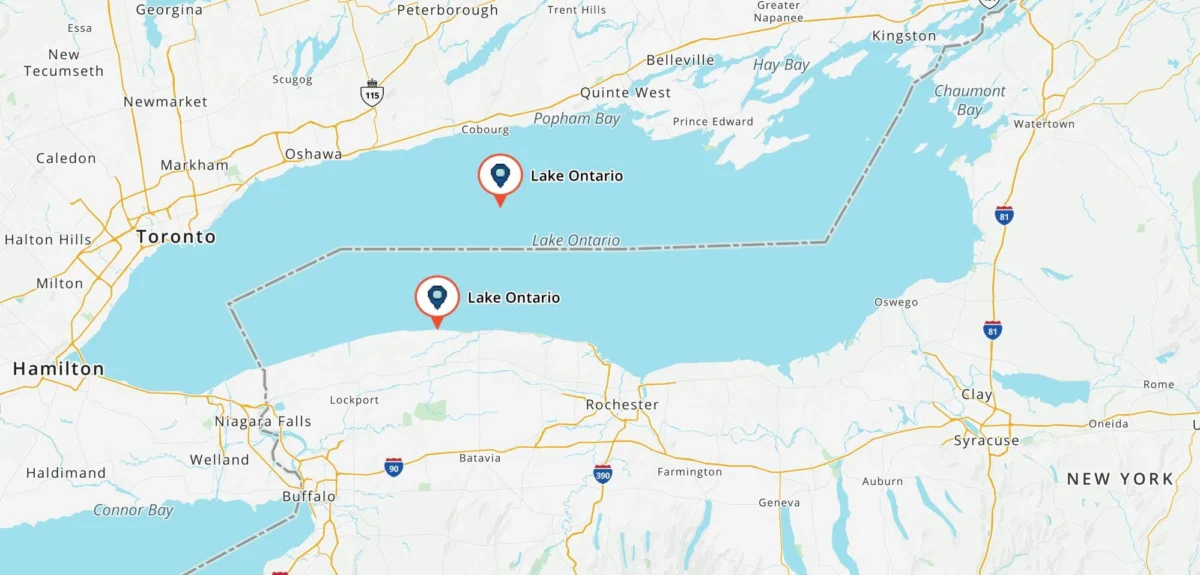
In an era dominated by the algorithmic precision of Silicon Valley’s modern titans, few expected a brand synonymous with the dot-com boom of the late 1990s to trigger a seismic shift in the mobile application market. Yet, MapQuest, the self-described "OG of online mapping," has staged one of the most improbable comebacks in tech history. The catalyst was not a revolutionary new feature or a billion-dollar marketing campaign, but rather a succinct, two-word declaration of editorial independence: "We’re not changing it." This refusal to comply with a high-profile executive order to rename Lake Ontario as "Lake America" has propelled the legacy service to the summit of the App Store, signaling a new intersection between cartography, digital activism, and international diplomacy.
The current controversy stems from a directive issued by the White House, where President Donald Trump signed an executive order aimed at federal databases and the U.S. Geographic Names Information System (GNIS). The order sought to officially rebrand Lake Ontario—a massive body of water shared by the United States and Canada—as "Lake America." While the administration framed the move as an assertion of national pride and a tactical maneuver within an escalating trade war with Canada, the international community and domestic tech companies have been forced to choose between official government nomenclature and historical cartographic accuracy.
As of this week, the repercussions of this decision are visible on every smartphone screen. MapQuest has surged to the No. 1 spot for navigation apps in both the United States and Canada. In the broader category of all free applications, it currently holds the No. 3 position in the U.S. and the No. 1 spot in Canada. This represents a staggering reversal of fortune for a company that many younger users associated with an era of printing out turn-by-turn directions on inkjet printers and taping them to car dashboards.
The Great Nomenclature Divide
The tech industry’s response to the executive order has been sharply divided, highlighting different philosophies regarding data integrity and government compliance. Google Maps, the market leader, moved quickly to adopt the change. Over the weekend, users noticed that the blue expanse between New York and Ontario had been relabeled "Lake America." In a formal statement, Google cited its long-standing policy of mirroring official government sources, specifically the GNIS, to ensure that its data remains synchronized with federal records. For Google, the map is a reflection of the legal and administrative reality defined by the state.
Apple, meanwhile, has found itself under direct pressure. Interior Secretary Doug Burgum confirmed that the administration has reached out to the Cupertino-based giant to demand similar compliance. While Apple has historically resisted certain government mandates in the name of privacy or corporate autonomy, the pressure to align its global mapping service with federal standards creates a complex PR and legal minefield.
In this landscape, MapQuest’s defiance is particularly striking. By choosing to retain the name "Lake Ontario," the company has positioned itself as a guardian of geographic tradition. This stance has resonated deeply with a public that is increasingly weary of "politicized geography." For many, the map is not just a tool for navigation but a record of shared human history and environmental reality that should remain insulated from the whims of transient political administrations.
The Anatomy of a Resurrection
To understand the weight of MapQuest’s current success, one must look back at its origins. Launched in 1996, MapQuest was the first service to make digital mapping accessible to the general public. It predated the launch of Google Maps by nearly a decade and was the undisputed king of the road during the early years of the internet. However, the advent of the smartphone and the integration of GPS-heavy services like Apple Maps and Waze eventually pushed MapQuest into the periphery. It became a "legacy brand," a nostalgic relic of a slower, more deliberate web.
However, the company has spent the last several years quietly modernizing its infrastructure. While the public perception remained stuck in 1999, MapQuest was integrating real-time traffic data, hotel booking features, and voice-guided navigation. The "Lake America" controversy provided the perfect "viral hook" to showcase this modernization. According to MapQuest General Manager Doug Berger, the surge in interest is not merely symbolic. Usage of the app has reportedly increased 50-fold since the company announced its refusal to rename the lake.
"What started as a joke about being so old that we didn’t know how to update our maps quickly turned into a viral hit," Berger noted in a recent interview. He emphasized that the influx of new users is actually engaging with the product, suggesting that the "protest download" is evolving into genuine user retention. "They’re opening the app and trying MapQuest again. Our focus now is turning that renewed attention into long-term users."
Cartography as a Diplomatic Weapon
The renaming of Lake Ontario cannot be viewed in a vacuum; it is a symptom of the deteriorating relationship between the U.S. and its northern neighbor. The ongoing trade war has seen tariffs levied on everything from softwood lumber to dairy products, but the symbolic "annexation" of a shared Great Lake via nomenclature represents a new frontier in diplomatic friction.

In Canada, where MapQuest is currently the most downloaded free app, the sentiment is one of gratitude and solidarity. For Canadians, the name "Lake Ontario" is tied to provincial identity and centuries of heritage. The U.S. executive order is seen by many in Ottawa as an overreach that ignores the bilateral treaties governing the Great Lakes. By refusing to update its maps, MapQuest has inadvertently become a hero of Canadian sovereignty, proving that in the digital age, a private company’s data can carry as much diplomatic weight as a formal protest from a foreign ministry.
This isn’t the first time MapQuest has played this card. In 2025, the company saw a similar, though smaller, surge when it refused to rename the Gulf of Mexico to the "Gulf of America." These repeated instances of cartographic "civil disobedience" suggest that MapQuest has found a unique niche: the "Alternative Map" for those who want a version of the world that exists independently of executive decrees.
The Rise of Digital Activism via App Stores
The MapQuest phenomenon highlights a growing trend in consumer behavior: the use of the App Store as a platform for political expression. Much like "buycotts" or social media blackouts, downloading an app has become a low-friction way for individuals to "vote" with their digital footprint. When a company takes a stand that aligns with a user’s values, the resulting "download surge" can bypass traditional marketing metrics.
However, this trend presents a challenge for tech journalists and industry analysts. Is MapQuest’s success sustainable, or is it a "flash in the pan" driven by a news cycle? Historically, apps that rise to the top of the charts based on political controversy often struggle to maintain those numbers once the outrage fades. For MapQuest to survive this moment, it must prove that its navigation engine is as robust as its competitors. If the app is glitchy or the data is stale, the millions of users who downloaded it this week will likely return to Google or Apple within the month.
Expert Analysis: The Ethics of Geo-Data
Ethicists and cartographers are also weighing in on the implications of this divide. There is a fundamental question at play: Who owns the name of a place? If a government changes a name, does a mapping service have a moral obligation to follow suit, or does it have a duty to the "truth" of the terrain?
"Maps have always been tools of power," says Dr. Elena Vance, a digital geography researcher. "Historically, whoever drew the map controlled the narrative of the land. What we are seeing now is the decentralization of that power. When Google complies with the government, they are prioritizing their relationship with the state. When MapQuest refuses, they are prioritizing their relationship with the historical record and their user base’s sense of reality. It’s a fascinating case study in corporate ethics."
Furthermore, the technical aspect of "syncing" with the GNIS is not always as straightforward as it seems. While the GNIS is the official authority for federal use, it does not legally bind private entities. MapQuest’s decision to diverge from the GNIS is a calculated risk, one that could potentially complicate its relationships with federal agencies that might rely on its API.
Future Implications and the "Nostalgia Tech" Trend
The success of MapQuest also taps into a broader cultural trend toward "Nostalgia Tech." In a world of hyper-personalized, AI-driven, and often invasive platforms, there is a growing desire for simpler brands from a perceived "purer" era of the internet. By leaning into its "OG" status, MapQuest is marketing itself as a dependable, no-nonsense alternative to the "Big Tech" ecosystem.
As we look toward the future, the "Lake America" controversy may be remembered as the moment when the digital mapping industry lost its perceived neutrality. If different apps show different names for the same locations based on their political or editorial leanings, we may be entering an era of "partisan cartography." Users might choose their mapping app not based on the best route to the grocery store, but on how that app labels the world around them.
For now, MapQuest is enjoying its time in the sun. The company has successfully parlayed a moment of political tension into a massive user acquisition event. Whether it can leverage this momentum to become a permanent third player in the navigation space remains to be seen. But for one week in August, the "OG of mapping" proved that sometimes, the best way to move forward is to refuse to change. In the high-stakes game of digital geography, MapQuest has reminded the world that the name of a lake is more than just a label on a screen—it is a piece of the world that people are willing to fight for, one download at a time.
