

The digital preservation of video games has transitioned from a niche concern of archivists to a central pillar of the modern gaming industry’s commercial and cultural strategy. As hardware generations cycle with increasing speed, the risk of losing foundational titles to the "black hole" of obsolete architecture becomes a looming threat. It is within this context that the arrival of the second volume of the Metal Gear Solid: Master Collection must be viewed. While the first volume served as a nostalgic homecoming for the original trilogy, the second volume represents something far more significant: a rescue mission for titles previously shackled to specific, difficult-to-emulate hardware and a celebration of the franchise’s most overlooked gems.
At the heart of this collection’s value proposition is a title that many casual fans might have initially dismissed: Metal Gear: Ghost Babel. Originally released in 2000 for the Game Boy Color under the title Metal Gear Solid in Western markets, the game has long been a holy grail for series completionists. Its inclusion here, under its original Japanese title Ghost Babel, marks the first time in over two decades that the game has been made officially available on modern platforms. For a franchise that prides itself on cinematic complexity and technological boundary-pushing, a 2-bit handheld title might seem like an odd choice for "star of the show," yet Ghost Babel earns that distinction through its sheer mechanical brilliance and its unique place in the series’ convoluted chronology.
Ghost Babel is not a port of the 1998 PlayStation classic, despite sharing its Western name for years. Instead, it serves as an "alternate history" sequel to the original 1987 Metal Gear for the MSX2. It imagines a world where the events of the later Solid-numbered sequels never occurred, providing a 2D stealth experience that many argue is the pinnacle of the top-down formula. By utilizing the limitations of the Game Boy Color, the developers created a masterclass in level design and visibility management. The game successfully translates the "Tactical Spy Action" DNA—crawling through ducts, leaning against walls to peak around corners, and utilizing a variety of gadgets—into a portable format without losing the tension that defines the series. Its return is not just a win for fans; it is a necessary restoration of a game that proved Hideo Kojima’s vision was not dependent on 3D polygons, but on the philosophy of the "stealth sandbox."
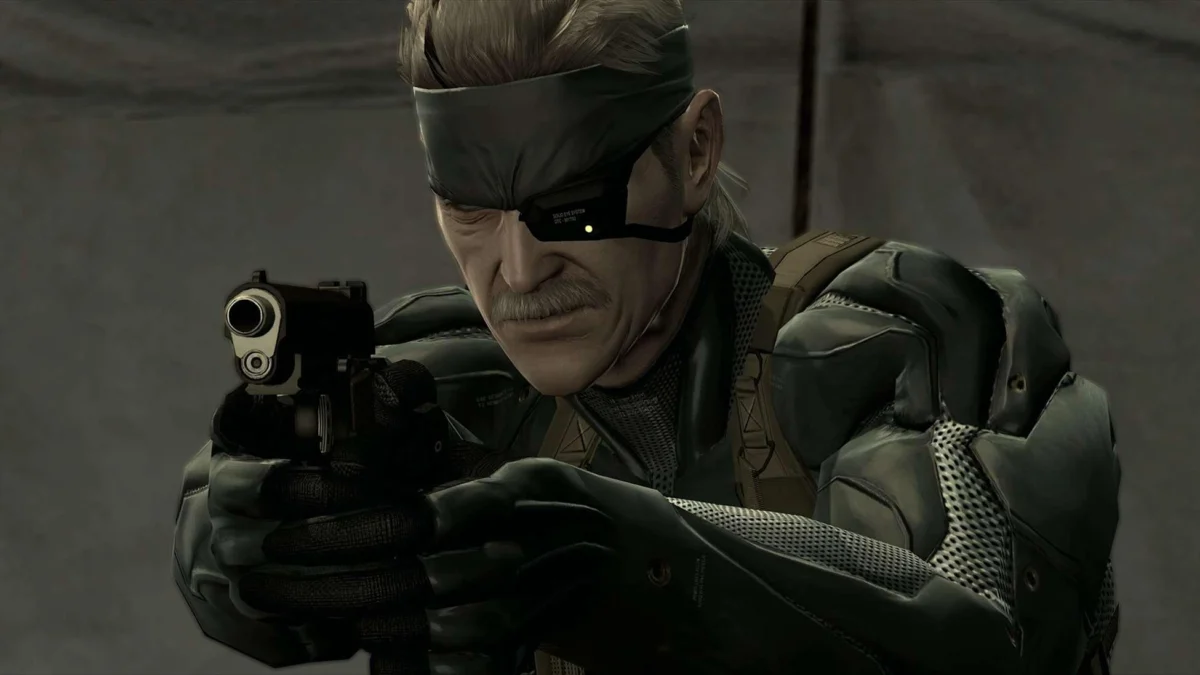
Beyond the handheld nostalgia, the collection tackles the single most significant technical hurdle in the franchise’s history: Metal Gear Solid 4: Guns of the Patriots. Since its launch in 2008, Guns of the Patriots has been famously "trapped" on the PlayStation 3. This was not merely a matter of licensing, but of architectural complexity. The PS3’s Cell Broadband Engine was a notoriously difficult piece of hardware to develop for, and MGS4 was built from the ground up to exploit its unique, asymmetrical processing power. For years, the conventional wisdom in the industry was that a port of MGS4 would require a ground-up remake because the original code was so deeply intertwined with the PS3’s specific hardware quirks.
The fact that Metal Gear Solid 4 is included in this collection and runs smoothly on modern hardware—including the high-performance capabilities of next-generation handhelds like the rumored "Switch 2"—is a monumental technical achievement. This release represents the first time a new generation of players can experience the conclusion of Solid Snake’s narrative arc without hunting down legacy hardware and a physical disc that is prone to "disc rot." From a journalistic perspective, the performance of MGS4 in this collection is the ultimate litmus test for Konami’s commitment to quality. The game’s heavy use of cinematics, its complex "Octocamo" system, and its large-scale battlefield environments were benchmarks of the seventh console generation. Seeing them rendered with modern stability and higher resolutions vindicates the "Master Collection" branding.
Complementing these two heavyweights is Metal Gear Solid: Peace Walker, the title that arguably laid the mechanical foundation for the modern open-world stealth seen in Metal Gear Solid V: The Phantom Pain. Originally a PSP title, Peace Walker was previously remastered for the PS3 and Xbox 360 as part of the HD Collection. The version included in the Master Collection Vol. 2 is based on that HD lineage but features essential refinements. The ability to remap controls for modern dual-analog setups is a transformative upgrade over the original PSP "face-button camera" limitations. Furthermore, the increased resolution and improved frame stability allow the game’s comic-book-inspired art style, illustrated by the legendary Ashley Wood, to shine with a clarity that was impossible on the PSP’s small screen.

The industry implications of this collection extend far beyond simple nostalgia. Konami’s strategy with the Master Collection series reflects a broader trend in the industry: the "museumification" of gaming. By bundling these titles with digital artbooks, soundtracks, and comprehensive master books that detail the lore and development history, Konami is treating the Metal Gear intellectual property as a historical archive. This approach is a direct response to the criticism leveled at earlier, "bare-bones" ports seen across the industry. While the first volume of the collection faced some initial scrutiny regarding its resolution caps and lack of graphical toggles, it was ultimately a faithful preservation of the original experiences. Volume 2 appears to have taken those lessons to heart, offering a more robust package that addresses the specific technical needs of each included title.
The inclusion of Ghost Babel also signals a willingness to acknowledge the "peripheral" history of the franchise. For years, the focus of preservation was strictly on the "Kojima-directed" canon. However, the Metal Gear series is a vast tapestry of spin-offs, mobile experiments, and non-canonical entries. By elevating a Game Boy Color title to the same status as a mainline PlayStation 3 blockbuster, Konami is validating the work of the broader development teams who contributed to the series’ legacy. It opens the door for future volumes to potentially include other "lost" titles, such as the Metal Gear Acid series or even the much-maligned but technically interesting Metal Gear Survive, ensuring that the entire history of the brand is accessible to future researchers and fans alike.
From an expert-level analysis of the gameplay, the contrast between the three titles in this collection offers a fascinating look at the evolution of game design. Ghost Babel represents the perfection of 2D spatial puzzles; Peace Walker represents the shift toward "meta-game" systems, where base building and recruitment are as important as the sneaking itself; and Metal Gear Solid 4 represents the peak of the "cinematic game," where the line between movie and play becomes intentionally blurred. Together, they provide a cross-section of three different philosophies of stealth action, all under one roof.
Looking toward the future, the success of the Master Collection Vol. 2 will likely dictate the roadmap for the franchise. With Metal Gear Solid Delta: Snake Eater (a remake of the third game) on the horizon, Konami is clearly invested in a dual-track strategy: preserving the past through the Master Collections while reimagining the most popular entries for the 4K era. This "preservation-plus-remake" model is becoming the gold standard for legacy publishers like Capcom and Square Enix, and its application to Metal Gear is a sign of a healthy, respected IP.
Furthermore, the smooth performance of these games on modern handheld hardware suggests a bright future for "stealth on the go." The Metal Gear series has always had a strange, symbiotic relationship with portable consoles, and seeing MGS4—a game once thought to be the antithesis of portability—running on a handheld device is a "full-circle" moment for the industry. It proves that with the right optimization and a dedicated focus on emulation, the barriers between "console-quality" and "portable-convenience" have effectively evaporated.
In conclusion, Metal Gear Solid: Master Collection Vol. 2 is far more than a simple bundle of old games. It is a vital piece of cultural maintenance. While the return of Metal Gear Solid 4 is the headline-grabbing achievement, it is the revival of Ghost Babel that defines the collection’s soul. It reminds us that greatness in gaming is not measured by the number of polygons on screen, but by the elegance of the systems and the creativity of the designers. For those who value the history of the medium, this collection is an essential acquisition—a digital time capsule that ensures the legend of Snake, in all his forms and timelines, will not be forgotten. The "tourists" of the gaming world may find minor technical details to bicker over, but for the true enthusiast, the ability to play these masterpieces on modern hardware is nothing short of a victory for the art form.
