

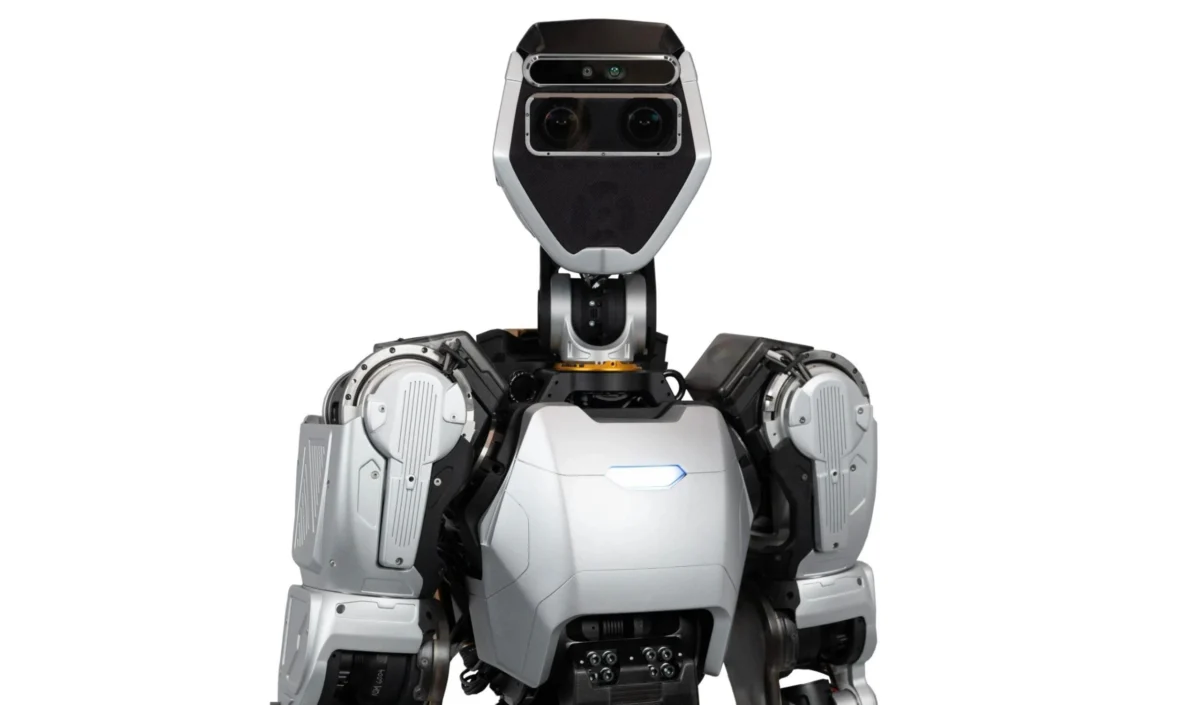
In the high-stakes theater of industrial automation, the ultimate prize has long been the general-purpose humanoid robot—a machine capable of stepping into any human role without requiring the redesign of the factory floor. However, a significant shift is occurring within the vanguard of this industry. Sanctuary AI, a firm previously synonymous with its sophisticated Phoenix humanoid platform, has demonstrated a strategic evolution that may redefine the path to mass robotic adoption. By decoupling its advanced "Physical AI" from the humanoid form factor, the company is proving that in the immediate term, the "brain" of the robot is a far more marketable asset than the "body."
This transition was punctuated by a recent technical milestone that has resonated throughout the automotive sector. Working with a global Tier 1 automotive supplier, Sanctuary AI successfully automated a task long considered a "holy grail" of manual labor: the high-speed insertion of flexible wired plugs into moving targets on an active conveyor line. The performance metrics were staggering, achieving a success rate exceeding 99.5% with a cycle time of just 2.54 seconds. Notably, this was achieved not by a bipedal robot walking alongside the line, but by a pair of dexterous, disembodied hands powered by Sanctuary’s proprietary AI. This deployment signals a pivot—or perhaps a strategic expansion—from building robots that look like us to building intelligence that can inhabit any machine.
The Problem of Deformable Objects and Tactical Dexterity
To appreciate the magnitude of a 99.5% success rate in wire plugging, one must understand the inherent difficulty of "deformable object manipulation." Traditional industrial robots excel at "pick and place" tasks involving rigid objects—steel beams, engine blocks, or glass panels—where the geometry is predictable. Flexible wires, however, are a nightmare for standard automation. They bend, sway, and change shape unpredictably. Inserting a flexible plug into a moving socket requires the same level of hand-eye coordination and tactile "feel" that a human worker uses instinctively.
Geordie Rose, the visionary co-founder and former CEO of Sanctuary AI, famously noted that half of a robot’s total complexity resides in its hands. This philosophy has clearly dictated the company’s development path. By focusing on the "Physical AI" required to manage high-dexterity tasks, Sanctuary has bypassed the current mechanical limitations of bipedal locomotion. While the world waits for humanoid robots to master the balance required to navigate a cluttered warehouse, Sanctuary is putting its intelligence to work in stationary applications where the ROI is immediate and measurable.
The Hardware-Agnostic Strategy
Under the leadership of its new CEO, Daniel Friedmann—a veteran of the aerospace and clean-tech industries who previously led MDA, the firm behind the iconic Canadarm—Sanctuary AI is leaning into a hardware-agnostic model. This approach acknowledges a hard truth in the robotics industry: manufacturing bespoke humanoid hardware at scale is an immense capital and logistical challenge.
By offering its Physical AI as a standalone system capable of running on existing industrial arms and third-party end effectors, Sanctuary is lowering the barrier to entry for enterprise customers. Friedmann’s strategy is built on the premise that "function matters more than form." For a plant manager facing a chronic labor shortage, a robot that can plug in wires with 99% accuracy is valuable regardless of whether it has legs.
This modularity allows Sanctuary to gather massive amounts of real-world edge data. Every hour its AI spends on a factory floor, regardless of the hardware it inhabits, it learns more about physics, friction, and object manipulation. This "data flywheel" creates a proprietary advantage; the AI becomes more robust, eventually making the transition back into the Phoenix humanoid body more seamless when that hardware reaches commercial maturity.
Parallels in the Tech Giants: The Data Center Frontier
The shift toward task-specific, high-dexterity automation is not unique to Sanctuary. Recent reports indicate that Meta is experimenting with similar robotic systems within its massive data centers. The tasks are nearly identical: plugging in fiber optic cables, resetting servers, and managing the intricate physical maintenance of the hardware that powers the metaverse and AI models.

For companies like Meta, the bottleneck for scaling data centers is often the availability of skilled technicians to perform these "micro-tasks." If Sanctuary AI can prove that its Physical AI can handle the "contact-rich" environments of an automotive assembly line, the leap to a data center or a logistics hub is relatively small. The common thread is the need for a system that can "see" a flexible object, "feel" the resistance as it is inserted, and adjust its trajectory in real-time.
The Symbiosis of Hardware and Software
Despite the current focus on industrial integration, Sanctuary AI maintains that it is a "full-stack" company. Friedmann emphasizes that the relationship between their Physical AI and their robotic hardware is symbiotic. To train the most capable AI, the company needs access to high-fidelity sensors and actuators that only their in-house hardware, like the Phoenix Gen 8, can currently provide.
The Phoenix Gen 8 represents the pinnacle of this hardware development, featuring a refined torso and sensor suite designed for better manufacturability. However, the commercial reality is that the market for "brains" is currently larger than the market for "bodies." By selling the intelligence today, Sanctuary funds the hardware of tomorrow. This "dual-track" development ensures they are not left behind if a competitor suddenly solves the locomotion problem, while also ensuring they have a revenue-generating product in the present.
Economic and Labor Implications
The timing of this pivot coincides with a global labor crisis in manufacturing. As the workforce ages and younger generations move away from repetitive manual labor, the "labor gap" has become a systemic risk for Tier 1 suppliers. Traditional automation, which relies on rigid programming and expensive "caging" for safety, cannot fill this gap because it lacks the flexibility to handle varied tasks.
Sanctuary’s Physical AI offers a "production-ready" solution that can be deployed within weeks rather than months. Because the system can inhabit existing robots, companies do not need to scrap their current investments to benefit from the new wave of AI. The ROI is calculated not just in speed, but in the reduction of error rates and the ability to maintain 24/7 throughput on lines that would otherwise be idle due to staffing shortages.
The Road Ahead: From Proof of Concept to Ubiquity
While the recent automotive success is currently at the proof-of-concept stage, the implications are profound. The test, which spanned 40 minutes and 313 successful trials, proved that Physical AI could match and eventually exceed human benchmarks in specific, high-value tasks.
As Sanctuary AI moves toward broader production, the industry will be watching to see how the system scales across different types of manufacturing. The ultimate goal for the company is a "General Purpose" intelligence—an AI that doesn’t need to be painstakingly reprogrammed for every new task but can instead "learn" by observing or through minimal simulation-to-reality (Sim2Real) training.
The broader robotics landscape is currently a battlefield of philosophies. On one side are the "humanoid purists" who believe the form factor is essential for a human-centric world. On the other are the "pragmatists" who believe intelligence should be applied wherever it is most needed. Sanctuary AI is successfully playing both sides. By unbundling the brain from the body, they have found a way to monetize the most difficult part of robotics research while continuing to perfect the mechanical vessel that may one day walk among us.
In the end, the success of Sanctuary AI may not be measured by how many Phoenix robots we see on the street, but by how many "dumb" industrial machines are suddenly granted the "sight" and "touch" necessary to perform the world’s most tedious and difficult tasks. The era of the "Robot Brain" has arrived, and it is starting its career on the assembly line.
