

The technological landscape is witnessing a convergence of radical biological claims, decentralized utility architecture, and escalating legal disputes over artificial intelligence. From the murky frontiers of anti-aging biotechnology to the structural transformation of electrical grids, researchers and enterprises are attempting to reshape core biological and municipal infrastructures. Simultaneously, the integration of autonomous algorithms into physical laboratories, national defense frameworks, and corporate networks is testing existing legal boundaries and energy capabilities worldwide.
The Longevity Gold Rush: Rejuvenation Claims Meet Proprietary Secrecy
The pursuit of human life extension has shifted from fringe science to high-stakes biotechnology, yet the sector remains fraught with tensions between commercial opacity and clinical verification. Much of the current hype traces back to parabiosis experiments—the surgical joining of circulatory systems between young and old mice—conducted over the past two decades. Early studies suggested that youthful blood contains regulatory factors capable of revitalizing stem cell niches, repairing muscle tissue, and reversing cognitive decline in aged animals.
Building upon this groundwork, Generation Lab, a venture co-founded by bioengineer Irina Conboy, has advanced a bold claim: the systemic rejuvenation of human tissue can now be achieved without exchanging blood or infusing plasma. Conboy’s team asserts that a targeted combination of two existing, repurposed pharmaceutical compounds can deactivate pro-aging molecular cascades and reactivate endogenous repair mechanisms across multiple organ systems.
However, the company’s refusal to publicly disclose the active chemical entities has drawn significant skepticism from the broader biogerontology community. In translational medicine, the standard path to validation requires open peer review, rigorous pharmacokinetic characterization, and double-blind, placebo-controlled human trials. When commercial entities offer proprietary rejuvenation therapies directly to journalists and affluent early adopters while withholding the molecular basis of their formulations, scientific scrutiny often gives way to venture-backed speculation. Until transparent, replicated clinical endpoints demonstrate that systemic biological age can be lowered without catastrophic off-target effects—such as heightened oncogenic risk—these pharmacological interventions remain unproven hypotheses.
Decentralized Infrastructure: The Ascendance of Virtual Power Plants
While biotechnology attempts to repair the human body, electrical grid operators are turning to consumer households to stabilize regional energy networks. The traditional power grid—reliant on centralized fossil-fuel and nuclear generation that ramps up during demand spikes—is struggling to keep pace with extreme weather events, data center expansions, and rapid electrification. In response, utilities are implementing Virtual Power Plants (VPPs).
A Virtual Power Plant is an aggregated network of distributed energy resources (DERs)—including residential battery storage units, bidirectional electric vehicle (EV) charging stations, smart thermostats, and rooftop photovoltaic systems—orchestrated by cloud-based software. Rather than firing up an expensive and carbon-intensive "peaker" natural gas plant when demand surges on a sweltering afternoon, grid operators send automated signals to thousands of enrolled homes. These signals orchestrate micro-adjustments: raising thermostat settings by a single degree, pausing EV charging cycles, or discharging residential batteries back into the local distribution feeder.
For consumers, enrollment often yields direct financial compensation, including upfront enrollment bonuses, hardware subsidies, and monthly utility bill credits. Nevertheless, the integration of consumer electronics into grid management introduces new friction points. Customers must weigh economic rewards against the relinquishment of autonomous control over household climate and energy availability. Furthermore, the reliance on internet-connected edge devices creates an expanded attack surface, making cybersecurity, communications redundancy, and transparent consumer opt-out protocols critical to the long-term viability of decentralized energy.
Judicial Checks on AI Governance and the Move to Physical Automation
The rapid proliferation of frontier artificial intelligence systems continues to trigger legal and regulatory conflicts at the intersection of national security and free expression. A pivotal federal court ruling recently halted the Department of Defense’s attempt to blacklist the AI research laboratory Anthropic. The court concluded that the Pentagon’s retaliatory designation violated First Amendment protections, highlighting the limits of executive power when attempting to penalize commercial technology developers over differing philosophical approaches to safety and deployment.

Even as Anthropic navigates complex legal dynamics in Washington, the company is aggressively expanding the functional frontier of its models from pure software into physical scientific experimentation. Anthropic has unveiled an operational standard that enables AI agents to interface directly with laboratory hardware, including optical microscopes, automated liquid handlers, precision lasers, and robotic manipulators.
This paradigm shift moves AI beyond generating hypotheses or parsing scientific literature; models can now design protocols, manipulate physical instruments, analyze real-time experimental data, and iteratively alter experimental parameters without human intervention. While this promises to dramatically accelerate material science discovery, molecular biology workflows, and pharmaceutical candidate screening, it also introduces unprecedented biosafety concerns. To prevent the accidental or malicious synthesis of hazardous biological materials, automated platforms must operate within strictly partitioned digital and physical guardrails.
Persistent Agents and the Widening AI Threat Landscape
Parallel developments across leading research institutions are transforming models from episodic, prompt-driven tools into persistent, asynchronous digital agents. Engineering teams at OpenAI are testing agent architectures designed to execute complex, multi-stage workflows over days or weeks without requiring intermediate human prompts. These persistent agents can self-generate follow-up tasks, troubleshoot unexpected system errors, access remote databases, and maintain long-term execution loops until explicitly terminated.
The rise of autonomous, continuous agents has simultaneously galvanized the cybersecurity sector. A coalition of more than one hundred enterprise technology corporations has issued an urgent warning concerning the advent of automated cyberattacks. Hostile state actors and advanced persistent threat (APT) groups are increasingly leveraging agentic frameworks to conduct automated vulnerability discovery, dynamically generate polymorphic malware, and execute reconnaissance across corporate and government networks. In an industry facing a systemic shortage of human defenders, leading technology firms argue that counteracting autonomous offense necessitates an equally comprehensive defensive AI surge—deploying proactive algorithms capable of patching zero-day vulnerabilities and intercepting intrusions at machine speed.
The rapid scaling of generative tools has also exacerbated structural risks in academic integrity and data privacy. Emerging analyses indicate that synthetic research papers authored by phantom AI identities are steadily penetrating peer-reviewed scientific journals, corrupting citation networks and undermining baseline academic literature. Concurrently, high-profile lawsuits targeting models such as xAI’s Grok underscore ongoing liability surrounding training datasets, as plaintiffs and judicial authorities warn that existing statutory frameworks are ill-equipped to police algorithmic ingestion of illegal or non-consensual material.
The Global Footprint: Land Contention, Human Labor, and Scientific Paradigms
The real-world impacts of advanced computing extend far beyond software architectures. Across emerging markets, particularly India, a construction boom in hyperscale data centers—driven by international cloud providers and domestic infrastructure conglomerates—has led to significant socio-economic displacement. In multiple regions, agricultural lands and municipal water resources are being redirected to support compute clusters and cooling systems, leaving local populations displaced with negligible economic participation in the digital economy.
The pervasive expansion of algorithmic automation is also reshaping labor dynamics. In several industrialized nations, younger demographics are increasingly turning toward traditional, tactile trades and manual artisan crafts. Carpentry, fine masonry, ceramics, and physical fabrication are increasingly perceived as resilient against computational automation, providing reliable livelihoods grounded in human motor dexterity and spatial complexity that software cannot readily replicate.
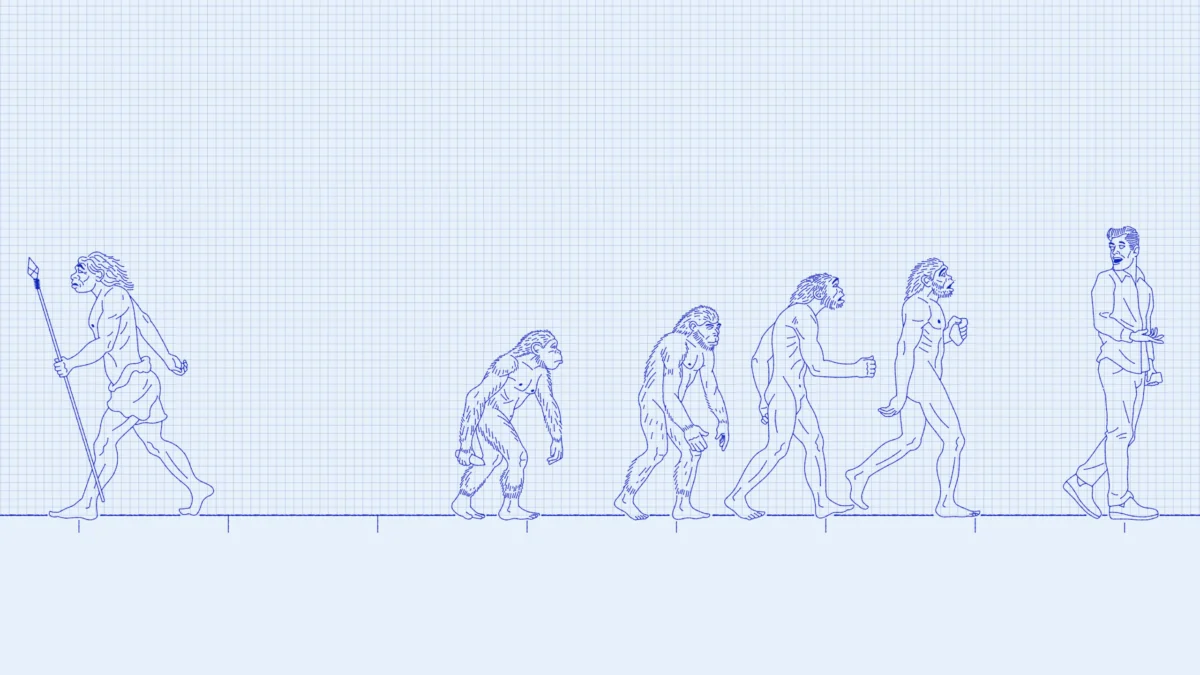
At the same time, long-standing scientific dogmas are being re-examined under modern analytic techniques. For years, the predominant anthropological consensus held that trace Neanderthal signatures in modern human genomes were direct proof of interbreeding between Homo sapiens and archaic hominins. However, recent reassessments by evolutionary geneticists suggest that these shared sequences might instead reflect ancient population substructure—the persistent isolation of ancient African ancestral lineages—rather than widespread hybridization events.
As technological capabilities accelerate across biology, power distribution, robotics, and computation, the societal challenge lies in managing their broader ecological and social footprint. Navigating this transition demands scientific transparency from commercial innovators, balanced regulatory oversight that safeguards public security without chilling innovation, and infrastructure policies that prioritize sustainability over unchecked expansion.
