

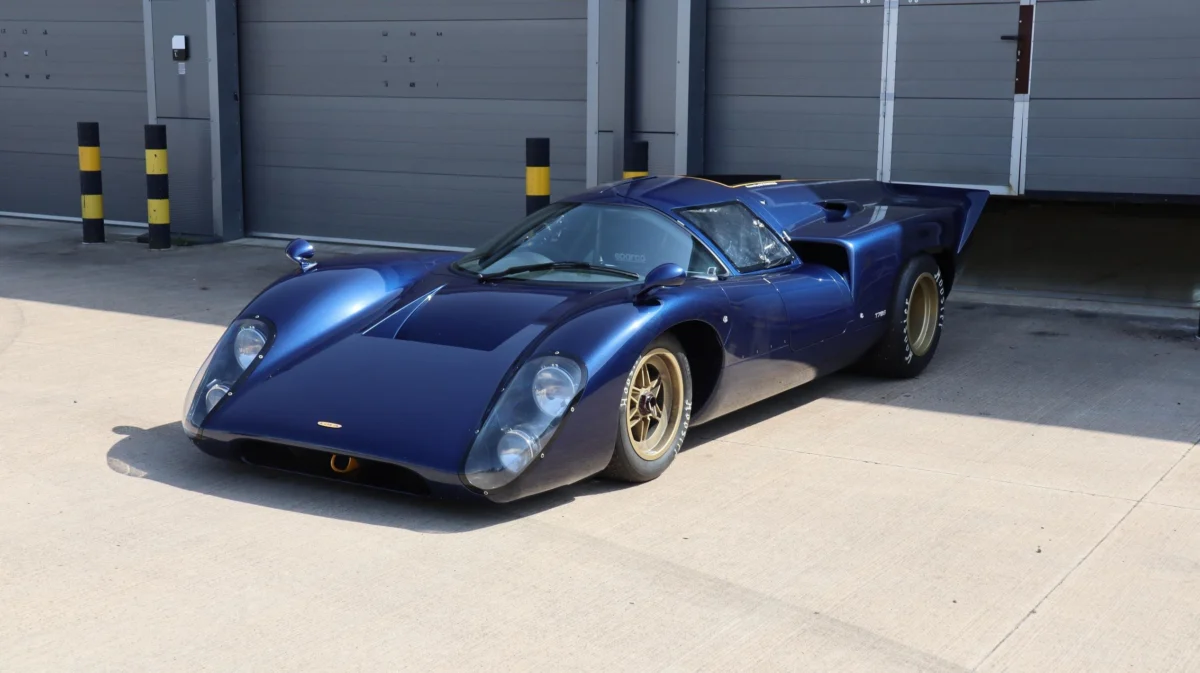
In the pantheon of British motorsport, few names command as much reverence as Lola Cars. Founded by Eric Broadley in 1958, the company became a cornerstone of global racing, producing chassis that dominated everything from the Indy 500 to the 24 Hours of Le Mans. Perhaps the most evocative symbol of this golden era is the Lola T70, a mid-engine masterpiece that arrived in 1965 as the successor to the Mk6—the very car that provided the DNA for the legendary Ford GT40. Today, as the automotive industry grapples with the existential challenge of decarbonization, the T70 is making a return. However, this revival is not merely a nostalgic trip into the past; it is a high-tech manifesto for the future of sustainable performance.
Under new ownership and a revitalized strategic vision, Lola Cars has unveiled the T70S. This project represents the first tangible output of a strategy that seeks to marry the brand’s historic prestige with cutting-edge environmental stewardship. By producing a limited run of just 16 units, Lola is positioning itself not just as a boutique manufacturer, but as a laboratory for sustainable materials and manufacturing processes that could eventually scale to the wider automotive industry.
The Duality of the T70S: Competition and Capability
The T70S project is defined by a unique "split personality" approach, offering two distinct configurations tailored to different ends of the enthusiast spectrum. The first is a track-only model designed to meet the rigorous requirements of the Historical Technical Passport (HTP). This version is a purist’s dream, engineered to compete in historic motorsport events where authenticity is paramount. To achieve HTP certification, Lola had to ensure that the car remains faithful to the original 1960s specifications, a task that required a delicate balance between period-correct design and modern precision.
The second variant is the GT, a road-legal interpretation that brings the T70’s aggressive silhouette to public thoroughfares. While the original Lola was notoriously "busy" on the track—leaving little room for the company to develop a road-going version in the 1970s—the new Lola team has prioritized the GT to allow a broader audience to experience the car’s visceral character. Achieving road-legal status for a low-volume vehicle powered by a massive V8 is a significant engineering hurdle, particularly concerning emissions and safety homologation, yet it serves as the ultimate proof of concept for Lola’s new engineering prowess.
Precision Engineering Meets Heritage
To recreate the T70 with modern accuracy, Lola’s engineering team, led by Technical Director Peter McCool and Executive Innovation Director Matt Faulks, turned to digital archaeology. The original paper drawings were meticulously scanned into Computer-Aided Design (CAD) software, creating a comprehensive 3D model that allows for tolerances far tighter than those achievable in the 1960s.
While the original cars featured hand-formed aluminum panels, the T70S utilizes a network of specialist suppliers near Silverstone to laser-cut and CNC-fold components. This ensures a level of structural integrity and repeatability that honors the original design while benefiting from 21st-century manufacturing.
The heart of the T70S remains a roaring American V8, a nod to the "special relationship" between British chassis and US power that defined 1960s racing. The track-focused HTP model utilizes a 5.0-liter Chevrolet small-block producing 530bhp, capable of propelling the 860kg machine to 60mph in just 2.5 seconds. The GT road version employs a slightly larger 6.2-liter variant with 500bhp, clocking a 0-60mph time of 2.9 seconds. Both versions are geared to exceed the 200mph barrier, ensuring that the car’s performance remains as terrifyingly impressive today as it was half a century ago.
One of the most ingenious engineering feats in the T70S is the gearbox. Historic racing enthusiasts often demand the tactile engagement of a traditional H-pattern manual, but these systems are prone to "money shifts"—accidental downshifts that can over-rev and destroy an engine. Because the original Hewland gearboxes are no longer in production for this application, Lola developed a proprietary "shift-by-wire" H-pattern system. It mimics the feel and resistance of a mechanical dog-engagement box but uses electronic actuators to ensure the car simply rejects a gear selection that would cause mechanical failure. It is a "fail-safe" heritage experience.

The Sustainability Revolution: Beyond the Tailpipe
The most significant aspect of the T70S is its role as a pioneer for the Lola Natural Composite System (LNCS). While the automotive world has long relied on carbon fiber for its strength-to-weight ratio, the material carries a staggering environmental cost. The production of carbon fiber and its associated epoxy resins is energy-intensive and largely dependent on petrochemicals.
Lola’s LNCS offers a radical alternative. The bodywork of the T70S is constructed from a "sandwich" of natural fibers, including basalt and flax, bonded with a resin derived from sugar cane. According to Peter McCool, these panels have a carbon footprint roughly 20 times smaller than traditional carbon fiber. Crucially, Lola has managed to match the stiffness and durability required for high-speed racing without the environmental baggage. This technology is not just a one-off for the T70S; Lola has patented the process, viewing it as a viable replacement for the semi-flexible sustainable panels currently used by major Original Equipment Manufacturers (OEMs).
Furthermore, Lola is tackling the carbon intensity of metallurgy. Historic T70s used significant amounts of magnesium, traditionally produced via the Pidgeon process, which is notorious for high CO2 emissions. In a remarkable pivot, Lola now sources magnesium extracted from saltwater using solar-powered electrolysis. By combining this with lower-carbon shielding gases during the casting process, the company has effectively "cleaned" one of the most carbon-heavy segments of its supply chain.
To validate these efforts, Lola developed internal software to audit the carbon footprint of every single component in the car. This level of granular data allows the company to state with confidence that the total manufacturing footprint of an HTP race car is approximately 4.4 tons of carbon. For context, the T70S can also run on carbon-neutral biofuels developed in partnership with Coryton, potentially allowing the internal combustion engine to exist in a net-zero future.
The "Soul" of the Machine in an Era of Electrification
The revival of a V8 icon during the rise of the electric vehicle (EV) era highlights a growing tension in the performance car market. While brands like Ferrari and Lamborghini are navigating the transition to hybrid and electric powertrains, there remains a passionate cohort of enthusiasts who equate the "soul" of a car with the sound and vibration of an internal combustion engine.
Lola’s leadership recognizes this "mad responsibility" to preserve the fun of driving. The T70S intentionally avoids modern driver aids like ABS and traction control, which the team believes would dilute the purity of the experience. Instead, the focus is on "functional safety"—using modern dampers (developed with R53) and advanced tire compounds to provide more predictable handling and long-term reliability. The goal is a car that rewards respect and skill rather than one that uses software to mask a driver’s lack of it.
Future Trajectory: Lola as a Technology Powerhouse
The T70S is only the beginning. With the 16 build slots reportedly filling fast, Lola is already looking toward a future that includes more heritage projects and potential expansion into the GT3 and GT4 categories. The company’s indexed archive allows them to support the thousands of Lola chassis still in existence, providing a "cradle-to-grave" service for the brand’s legacy.
However, the real growth may lie in consultancy. Lola’s involvement in Formula E provides a natural bridge to work with global OEMs on high-performance EV platforms. By positioning itself as a leader in sustainable materials and low-carbon supply chains, Lola could become the "green" equivalent of an AMG or an Alpina—a specialized engineering house that helps larger manufacturers solve the complex puzzle of sustainable performance.
As the T70S prototype laps test tracks with former Formula 1 driver Johnny Herbert at the wheel, it serves as a reminder that the past and the future are not mutually exclusive. By applying 21st-century environmental science to a 20th-century icon, Lola Cars is proving that the roar of a V8 doesn’t have to be a swan song for the planet. Instead, it might just be the opening note of a new, more responsible chapter in automotive history.
