

The rolling hills and rugged massifs of Calabria, the "toe" of the Italian boot, have long stood as a silent witness to a slow-motion demographic catastrophe. For decades, the narrative of southern Italy has been one of "borghi fantasma"—ghost towns—where the echoes of children playing have been replaced by the rustle of overgrown weeds and the creak of abandoned shutters. From the craggy peaks of the Pollino National Park to the sun-drenched jasmine coasts, the region has grappled with an exodus of its youth, leaving behind an aging population and a stagnant economy. However, a new economic paradigm is emerging, one that rejects the frantic pace of modern industrialization in favor of a "Slow Food" model that leverages heritage, biodiversity, and sustainable tourism to breathe life back into the Mezzogiorno.
The crisis in rural Italy is not unique to Calabria, but it is perhaps most acute there. Regions like Basilicata, Sicily, and the remote reaches of the Apennines have all faced the same trifecta of decline: depopulation, aging, and economic disinvestment. In Calabria, the statistics are particularly sobering. Data from the Italian National Institute of Statistics (Istat) indicates that the region saw a net loss of 7,000 residents through internal migration in 2025 alone. This "brain drain" sees the most educated and ambitious young people fleeing to the industrial hubs of Milan, Turin, or abroad to escape a cycle of low GDP per capita and high youth unemployment. Currently, nearly half a million people in Calabria—roughly a quarter of the population—are over the age of 65.
Initial attempts to arrest this decline have been creative, if somewhat experimental. The "one-euro home" schemes captured global headlines, as did initiatives to attract digital nomads and resettle migrants in dying villages. Yet, while these projects provided temporary bursts of publicity and localized successes, they often failed to address the structural root of the problem: the lack of a sustainable, indigenous economic engine. This is where the marriage of gastronomy and tourism enters the frame, transforming Calabria’s ancient agricultural traditions from a symbol of past struggle into a high-value asset for the future.
The Slow Food Framework as a Macroeconomic Tool
The Slow Food movement, founded in Italy in 1986 as a protest against the encroachment of fast food, has evolved far beyond its culinary origins. Today, it serves as a sophisticated socio-economic framework. At its core, the philosophy prioritizes "good, clean, and fair" food—products that are high quality, environmentally sustainable, and provide fair compensation to producers. In Calabria, this model is being deployed to strengthen local collaboration between farmers, chefs, and the hospitality sector, creating a closed-loop economy that retains value within the region.
Angela Donato, founder and president of the Calabria Food Fest, emphasizes that this model is predicated on human connection. "Local producers benefit from food and wine tourism because it creates direct connections between visitors and the people behind the products," Donato explains. For a region that has historically exported its raw commodities—citrus, olives, and timber—only to see the profit margins captured by northern processors, this shift toward direct-to-consumer experiences is revolutionary. It allows small-scale artisans to differentiate themselves based on provenance and authenticity rather than competing on price in a globalized market.
Biodiversity as Intellectual Property
One of the most potent weapons in Calabria’s economic arsenal is its extraordinary biodiversity. The region’s varied microclimates, ranging from alpine forests to sub-tropical coasts, have preserved crop varieties that exist nowhere else on Earth. In the Slow Food model, these are not just plants; they are the region’s "intellectual property."
The Belmonte Tomato, the Maiorca and Carosella wheats, and the iconic Tropea Red Onion are more than ingredients; they are cultural markers that attract "gastronauts"—high-spending travelers who seek out specific, localized experiences. Similarly, the Diamante Smooth Citron and the Castrovillari White Onion provide a niche market for the region, catering to a global demand for rare, heirloom produce.
Beyond the fields, the movement is reviving native livestock breeds that were once on the brink of extinction. The Black Calabrian Pig, the Podolica Cattle, and the Calabria Rustic Goat are essential players in a "regenerative" economy. These breeds are naturally adapted to the rugged terrain, and their grazing habits provide a vital ecological service: clearing underbrush. In a region increasingly plagued by wildfires and soil erosion due to climate change, these animals act as a biological defense mechanism, stabilizing the soil and reducing the fuel load for summer blazes.
The Tourism Multiplier and the "Experience Economy"
The transition from traditional agriculture to "slow tourism" creates a powerful multiplier effect. In the past, tourism in Calabria was often seasonal and confined to coastal resorts. The new model encourages "slow travel," drawing visitors into the interior mountainous villages like Bova, Civita, and Bivongi.
In these remote hilltop towns, the impact of a single food-focused traveler is significantly higher than that of a traditional tourist. By staying in agritourism farm stays, participating in cooking classes for ancient pastas like Fileja or Lagane e Cicciari, and purchasing small-batch olive oils or Nduja di Spilinga (a spicy, spreadable pork sausage), visitors directly fund the preservation of local traditions.

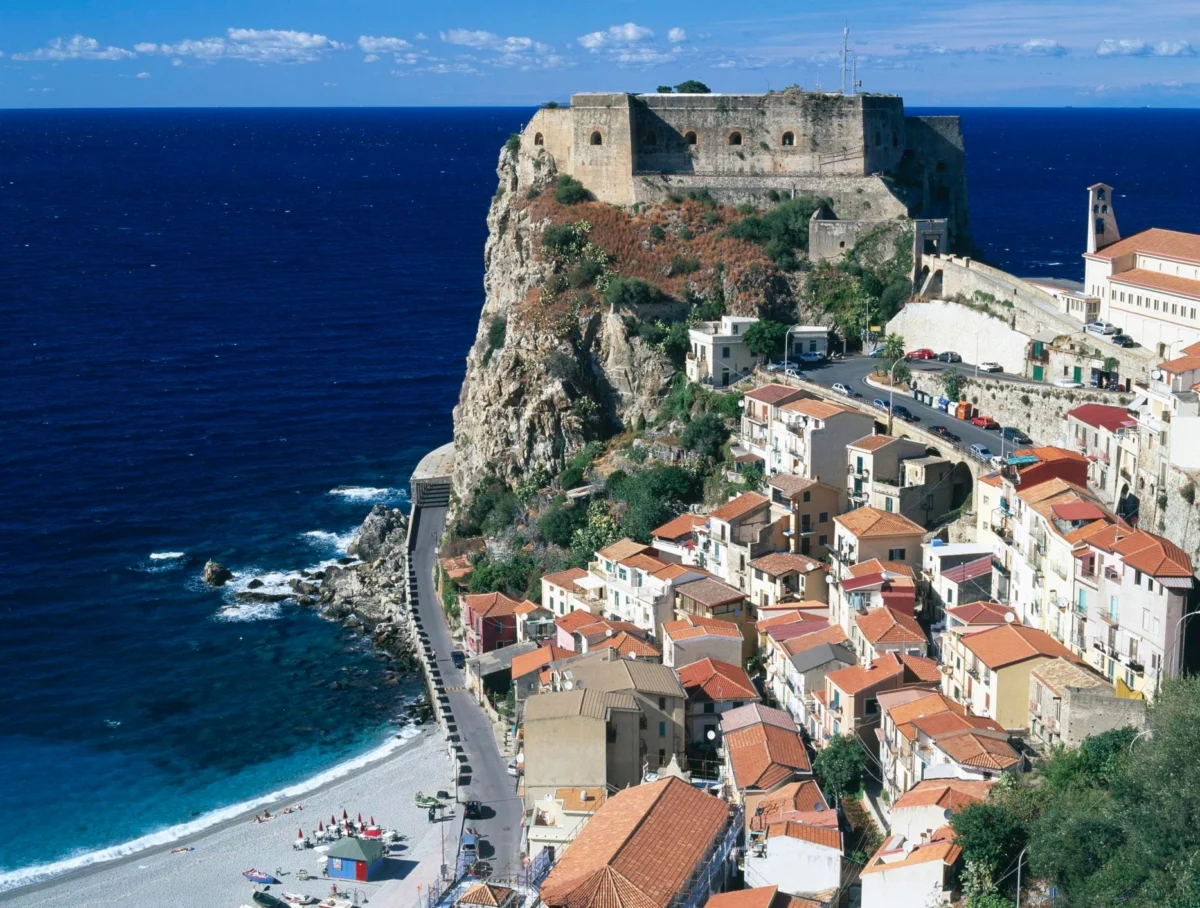
This approach has also found a way to bridge the generational divide. In villages like Montauro and Scilla, older residents are being integrated into the tourism economy as "heritage ambassadors." They lead workshops on fermentation, curing meats, and cheese-making, passing down centuries-old skills to both tourists and younger locals. This creates a sense of regional pride and provides a social lifeline for an aging population, while simultaneously creating stable, year-round employment that can compete with the lure of northern cities.
Overcoming Structural Hurdles and the Mafia Shadow
Despite the promise of the Slow Food model, Calabria’s path to revitalization is fraught with obstacles. The region suffers from chronic infrastructure deficits. Distance from Italy’s major economic hubs has resulted in a lack of high-speed digital connectivity and inadequate public transport, making it difficult for rural businesses to scale or for digital nomads to settle permanently.
Furthermore, the pervasive presence of the ‘Ndrangheta—the local mafia—remains a significant deterrent to external industrial investment. The Slow Food model offers a partial solution to this by focusing on decentralized, small-scale, and transparent networks that are harder for organized crime to co-opt than large-scale industrial projects. However, a true renaissance will require the €100 million in sustainable agriculture and infrastructure funding recently allocated by regional authorities to be managed with absolute transparency and efficiency.
The labor market also requires a drastic overhaul. While Calabria is a major citrus producer, the sector has long been criticized for its reliance on informal, poorly paid migrant labor. The Slow Food movement’s emphasis on "fair" compensation is a direct challenge to these exploitative practices. By shifting toward high-value, artisanal products, producers can afford to pay living wages, thereby formalizing the labor market and improving the region’s social fabric.
The Paradox of Success: Overtourism and Authenticity
As Calabria’s profile rises, it faces a classic development paradox: how to grow without destroying the very authenticity that makes it attractive. The overcrowding seen in Venice, Florence, or the Amalfi Coast serves as a cautionary tale. For a fragile mountain village, an influx of even a few hundred tourists a day can strain water supplies, waste management, and social cohesion.
The challenge for Calabria is to maintain its "rugged" and "undiscovered" appeal while scaling its tourism infrastructure. This requires a move away from mass tourism and toward "value-based" tourism. Rather than increasing the number of visitors, the goal is to increase the length of stay and the depth of engagement.
Climate change adds another layer of complexity. Frequent droughts and extreme heatwaves are already degrading the soil and threatening the production of the region’s signature crops. The future of Calabrian gastronomy is inextricably linked to its climate resilience. The preservation of indigenous seeds and traditional farming techniques—which are often more drought-resistant than modern monocultures—is not just a matter of heritage; it is a survival strategy.
A Global Lesson in Resilient Economics
The Calabrian experiment is being watched closely by rural communities across the globe. From the Appalachian Mountains in the United States to the fading villages of rural Japan, the struggle against depopulation is a universal theme of the 21st century. Calabria’s model suggests that the answer lies not in trying to replicate the industrial success of urban hubs, but in leaning into the unique, the local, and the slow.
By transforming its culinary heritage into a strategic economic asset, Calabria is doing more than just selling food; it is selling a "genuine way of life." The success of this model will ultimately depend on a delicate balance: the ability of regional governments to provide the necessary technological and physical infrastructure, and the ability of local communities to guard their traditions against the pressures of commercialization.
If Calabria succeeds, it will provide a blueprint for a new kind of rural economy—one that is ecologically sound, socially inclusive, and economically viable. It proves that even in the most neglected corners of the Mediterranean, the past can be harvested to nourish the future. The "Slow Food" model is not a retreat from the modern world, but a sophisticated response to it, offering a path where heritage and innovation coexist to save a culture from vanishing into the silence of history.
