

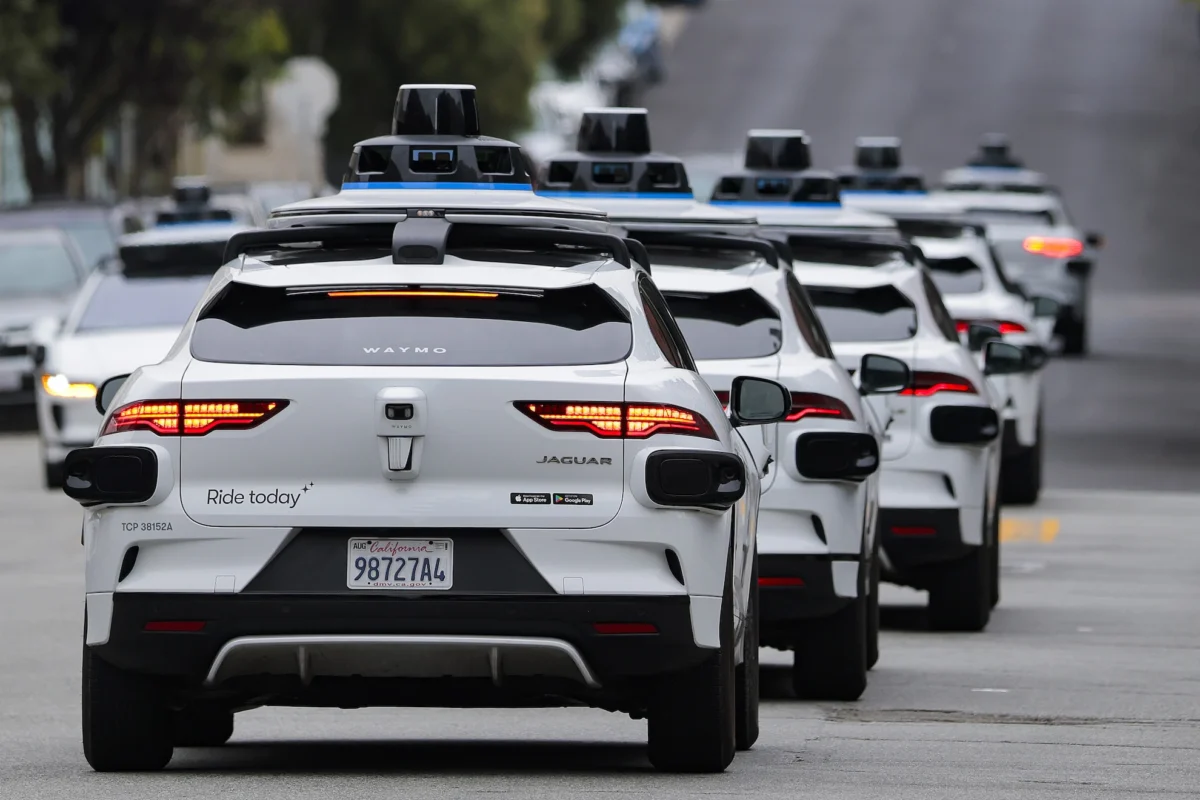
On July 18, 2026, a localized power grid failure in San Francisco triggered a cascading series of operational adjustments for Waymo, the autonomous vehicle subsidiary of Alphabet. The incident, which left approximately 7,000 Pacific Gas and Electric (PG&E) customers without power, prompted the driverless ride-hailing pioneer to enact a proactive, temporary suspension of its passenger services across the city. Lasting roughly one hour, the operational pause highlights the ongoing vulnerability of cutting-edge autonomous transportation networks to the legacy physical infrastructure of the cities they inhabit.
During the brief service disruption, users attempting to hail a ride through the Waymo app were notified that services were temporarily unavailable and that high-speed freeway routes had been completely taken offline. The decision to restrict freeway access during a localized municipal crisis underscores the conservative safety margins that autonomous vehicle (AV) operators must maintain when baseline urban support systems fail. Waymo later confirmed that the suspension was a deliberate, precautionary measure designed to allow its operations team to assess the scale of the blackout and coordinate directly with municipal emergency services and local officials before resuming standard operations.
This brief operational halt is not an isolated event, but rather the latest chapter in a series of infrastructure-related disruptions that have plagued driverless fleets in San Francisco. In December of the previous year, a widespread blackout in the city led to several Waymo vehicles stalling in active lanes of traffic, creating localized gridlock and drawing immediate condemnation from emergency responders. A similar operational failure occurred during the Fourth of July fireworks celebration near the Golden Gate Bridge, where a combination of extreme traffic congestion and cellular network saturation paralyzed several driverless vehicles, leaving them stranded on critical arterial roads.
These recurring incidents point to a fundamental technical vulnerability in the current generation of autonomous vehicles: their deep, systemic reliance on external municipal infrastructure. While the vehicles themselves are fully electric and operate on self-contained battery power, their navigation, safety, and remote-assistance systems are deeply intertwined with the broader urban ecosystem. When a power outage occurs, several critical points of failure emerge simultaneously, challenging the limits of the vehicles’ on-board intelligence.
First, the loss of traffic signals transforms orderly intersections into highly complex, unregulated environments. For a human driver, navigating a dark intersection requires treating the junction as a four-way stop—a task that relies heavily on eye contact, hand gestures, and intuitive social negotiation. For an autonomous vehicle, interpreting the behavior of multiple human drivers at a darkened intersection is one of the most computationally taxing edge cases in robotics. While Waymo’s sensor suite, which includes lidar, radar, and cameras, is capable of detecting vehicles and pedestrians in the dark, the lack of standardized traffic flow signals increases the likelihood of conservative driving behavior, often resulting in vehicles hesitating or refusing to proceed to avoid collision risks.
Second, power outages frequently disrupt localized cellular and data networks. Autonomous fleets rely on continuous, high-bandwidth cellular connections to communicate with cloud-based routing servers and remote assistance hubs. While a Waymo vehicle does not require a cellular connection to drive safely—its core perception and decision-making software runs entirely on local, on-board computers—it does rely on remote human operators to provide strategic guidance when the vehicle encounters an unfamiliar obstacle or a complex road blockage. If a localized blackout drops cell tower coverage, a vehicle may lose its link to these remote support teams. Under such conditions, safety protocols dictate that the vehicle must execute a "minimum risk maneuver," which frequently results in the car pulling over or stopping in its lane, inadvertently blocking traffic and complicating efforts for emergency vehicles.

This intersection of infrastructure vulnerability and public safety has transformed the roll-out of autonomous vehicles into a highly charged political battleground. In the wake of the recent service halt and the previous traffic disruptions, San Francisco Mayor Daniel Lurie has intensified his calls for more stringent state-level oversight. Mayor Lurie has advocated for tougher regulatory frameworks that would hold autonomous vehicle operators strictly accountable for how their fleets behave during both planned public events and unplanned municipal emergencies.
Currently, the regulation of autonomous vehicles in California is split between two state agencies: the Department of Motor Vehicles (DMV), which oversees testing and deployment permits, and the California Public Utilities Commission (CPUC), which regulates commercial passenger service. Municipal governments, including San Francisco’s leadership, have repeatedly expressed frustration with this centralized regulatory structure, arguing that it deprives local authorities of the power to manage their own streets. Local officials contend that while the state prioritizes technological innovation, local communities bear the immediate consequences when driverless fleets block emergency vehicles, disrupt public transit routes, or stall during power outages.
The push for tougher regulations could manifest in several ways, including mandating that AV operators prove their vehicles can navigate dark intersections without stalling, requiring redundant communication systems that do not rely solely on commercial cellular networks, and imposing heavy financial penalties for vehicles that block traffic during municipal crises. Such regulations would force AV companies to transition from "fail-safe" protocols—where a vehicle simply stops in place when confused—to "fail-operational" architectures, where a vehicle must actively navigate to a safe, non-disruptive location, such as a parking lot or a side street, even when its primary systems are compromised.
The implications of these regulatory and technical challenges extend far beyond Waymo and San Francisco. As the autonomous ride-hailing industry prepares for global scaling, with companies like Amazon’s Zoox, General Motors’ Cruise, and various international competitors vying for market share, the relationship between AV fleets and urban infrastructure must undergo a fundamental evolution. The industry must move away from treating the city as a passive, static backdrop and instead view it as a dynamic, sometimes volatile partner.
To build the necessary resilience, AV developers are heavily investing in decentralized edge computing. By reducing a vehicle’s dependence on cloud connectivity and remote assistance, operators hope to ensure that fleets can maintain fluid operations even during severe network blackouts. Furthermore, the future of urban transit will likely require the integration of Vehicle-to-Everything (V2X) communication technologies. In a V2X-enabled city, decentralized, battery-backed municipal sensors could broadcast real-time infrastructure status reports directly to approaching vehicles. If a neighborhood loses power, the grid could instantly alert incoming autonomous fleets, allowing them to proactively reroute around the affected zone before they ever encounter a darkened intersection or a dead cellular zone.
Ultimately, Waymo’s rapid, one-hour recovery and its decision to proactively pause service during the San Francisco power outage demonstrate a growing operational maturity. By choosing to temporarily halt operations rather than risk widespread vehicle stalls, the company showed that it is actively applying lessons learned from previous infrastructure failures. However, the incident serves as a stark reminder that the path to a fully autonomous future cannot be paved by software and sensors alone. It requires a deep, resilient, and collaborative integration with the physical and regulatory fabric of the cities these driverless fleets aim to transform. Until urban power grids and communication networks are built to match the sophistication of the vehicles driving on them, localized infrastructure shocks will continue to dictate the limits of autonomous mobility.
