

The Commercialization and Misinformation of the Menopause Transition
The biological transition preceding menopause, known as perimenopause, has shifted from a whispered medical anomaly to a prominent fixture of mainstream cultural discourse. Historically shrouded in societal taboo and clinical neglect, this multi-year phase—characterized by erratic hormonal fluctuations—is now discussed openly on social media platforms, daytime television, and wellness podcasts. However, this newfound visibility has brought a significant challenge: a surge of unregulated commercialization and scientific misinformation.
As venture capital pours into the "femtech" and midlife wellness sectors, a highly profitable market has emerged, offering solutions for symptoms ranging from vasomotor instability (hot flashes) to cognitive fatigue and mood disturbances. Despite aggressive marketing campaigns promising clarity through diagnostics, clinical science maintains that there is no definitive test for perimenopause. Because estrogen and progesterone levels fluctuate wildly on a daily or even hourly basis during this transition, single-point blood, saliva, or urine tests are clinically unreliable.
The danger of the current wellness boom lies not in the acknowledgment of these symptoms, but in the proliferation of unsubstantiated therapies. Many proprietary supplements, customized hormone formulations, and holistic regimens marketed to midlife women lack rigorous, peer-reviewed clinical trial backing. Furthermore, medical experts caution against the trend of attributing all physical and psychological changes experienced in midlife exclusively to endocrine decline. Overemphasizing hormonal deficits can lead to the underdiagnosis of co-occurring conditions, such as thyroid dysfunction, cardiovascular disease, or clinical depression, which require distinct medical interventions.
This commercial health rush also intersects with growing concerns over digital privacy. As women turn to digital tools to track their cycles and symptoms, recent investigations have revealed that several popular period-tracking applications engage in questionable data-sharing practices. Sensitive health metrics, cycle lengths, and symptom logs are frequently shared with third-party data brokers and advertisers. In a shifting legal landscape regarding reproductive autonomy, the commodification of this intimate biological data represents a profound privacy vulnerability, highlighting the urgent need for robust regulatory frameworks governing health-related software.
The Geopolitics of Artificial Intelligence: China’s Open-Source Offensive
While the West grapples with the ethical boundaries of consumer health technologies, the geopolitical arena of artificial intelligence is undergoing a major structural shift. The historical technological gap between United States AI laboratories and their Chinese counterparts has narrowed significantly, catalyzed by the release of the world’s largest open-source AI model by a prominent Chinese technology startup.
This development challenges the assumption that unilateral export controls on advanced semiconductors would permanently relegate China to a secondary position in the AI race. By releasing a massive, highly capable open-source model that directly rivals the performance of proprietary systems developed by leading American firms, Chinese developers are executing a sophisticated strategic pivot. Facing restricted access to Nvidia’s top-tier graphics processing units (GPUs), Chinese firms are leveraging open-source distribution to crowdsource optimization, accelerate global adoption, and establish their architectures as the foundational standards for international software development.
The economic and strategic implications of this shift are profound:
- Market Disruption: The launch of this advanced open-source model triggered a notable contraction in global semiconductor and technology stocks, as investors re-evaluated the long-term defensive moats of proprietary AI developers.
- Hardware Adaptation: Denied access to Western silicon, Chinese enterprises are rapidly adopting domestic hardware alternatives. Local semiconductor designers are projecting massive sales increases, indicating that Western trade restrictions may be inadvertently accelerating China’s domestic supply chain resilience.
- Diplomatic Alignment: At the World Artificial Intelligence Conference in Shanghai, Chinese leadership positioned the nation as a key AI partner for the developing world. By offering open-access models and infrastructure support, Beijing aims to foster a technological ecosystem independent of Western corporate monopolies.
Industry analysts suggest that this strategy is designed not merely to match Western capabilities, but to redefine the global rules of AI governance. By championing open-source models, China can bypass traditional gatekeepers, foster international dependence on its technological frameworks, and challenge the regulatory paradigms favored by Washington and Brussels.
Regulatory Pressures and the Re-Engineering of Mobile Ecosystems
The tension between technological dominance and public interest is also manifest in the regulatory actions of the European Union. In a sweeping antitrust mandate, European regulators have ordered Google to share its proprietary search data with competing search providers and to open its Android operating system to rival artificial intelligence assistants.

This decision represents a fundamental shift in how digital platforms are regulated. Rather than relying solely on retrospective financial penalties, the EU is employing structural remedies to prevent the monopolization of the emerging AI economy. By forcing Google to grant competitors access to its search data and allowing third-party AI bots to integrate deeply with the Android ecosystem, the mandate aims to ensure that mobile devices do not become exclusive distribution channels for a select group of Silicon Valley conglomerates. This regulatory precedent could force a broader decoupling of operating systems from proprietary AI services globally, reshaping the competitive landscape for software developers and consumers alike.
Bio-Engineering and the Frontiers of Neuro-Rehabilitation
While software developers and regulators contest digital ecosystems, bio-engineers are successfully redrawing the boundaries of the human nervous system. In a clinical breakthrough, a pioneering brain-computer interface (BCI) has successfully restored both tactile sensation and motor control to a paralyzed patient.
The neural bypass system works by decoding motor intentions directly from the motor cortex and routing those signals around the damaged spinal cord to stimulate muscles in the hand. Concurrently, sensors placed on the patient’s hand transmit tactile feedback back to the sensory cortex, closing the loop between action and perception. This dual-action pathway enabled the patient to perform complex daily tasks, such as drinking from a cup and feeding himself.
Intriguingly, researchers observed that the patient retained some degree of improved movement even when the active neural stimulation was deactivated, suggesting that the continuous use of BCIs may stimulate neuroplasticity and facilitate long-term biological recovery. The clinical and commercial significance of this field is underscored by China’s recent regulatory approval of its first domestic brain chip, signaling the onset of a highly competitive international race to commercialize neuro-prosthetic technologies.
Autonomy, Surveillance, and Market Arbitrage
The integration of advanced technology into daily life continues to generate friction across various sectors, from financial markets to transportation and personal privacy:
- Information Arbitrage: In the financial sector, the monetization of political communication has reached a new level of sophistication. Platforms are now offering high-speed, API-driven access to market-moving social media posts from influential political figures. By providing institutional traders with microsecond advantages on public statements, these services raise critical ethical questions regarding market manipulation, fair access, and the financialization of political discourse.
- The Automation Fallacy: The limits of semi-autonomous transportation were highlighted by federal investigators examining a fatal collision involving a vehicle equipped with automated driving features. The investigation concluded that the driver overrode the vehicle’s safety systems by depressing the accelerator to 100%, bypassing automated collision-avoidance protocols. This incident emphasizes the ongoing challenge of human-machine handoffs, where partial automation can foster overreliance or panic, leading to catastrophic system failures.
- Counter-Surveillance Fashion: In response to the expansion of public surveillance networks, a novel counter-cultural movement is emerging at the intersection of fashion and technology. "Adversarial clothing"—garments featuring patterns specifically engineered to confuse and overload facial recognition algorithms—is transitioning from conceptual art to consumer retail. This trend reflects a growing public desire to assert personal privacy and reclaim physical anonymity in increasingly monitored urban spaces.
Ecological Engineering and Extraterrestrial Biology
Beyond digital networks and neural pathways, scientific innovation is addressing fundamental questions of ecological sustainability and the origins of life.
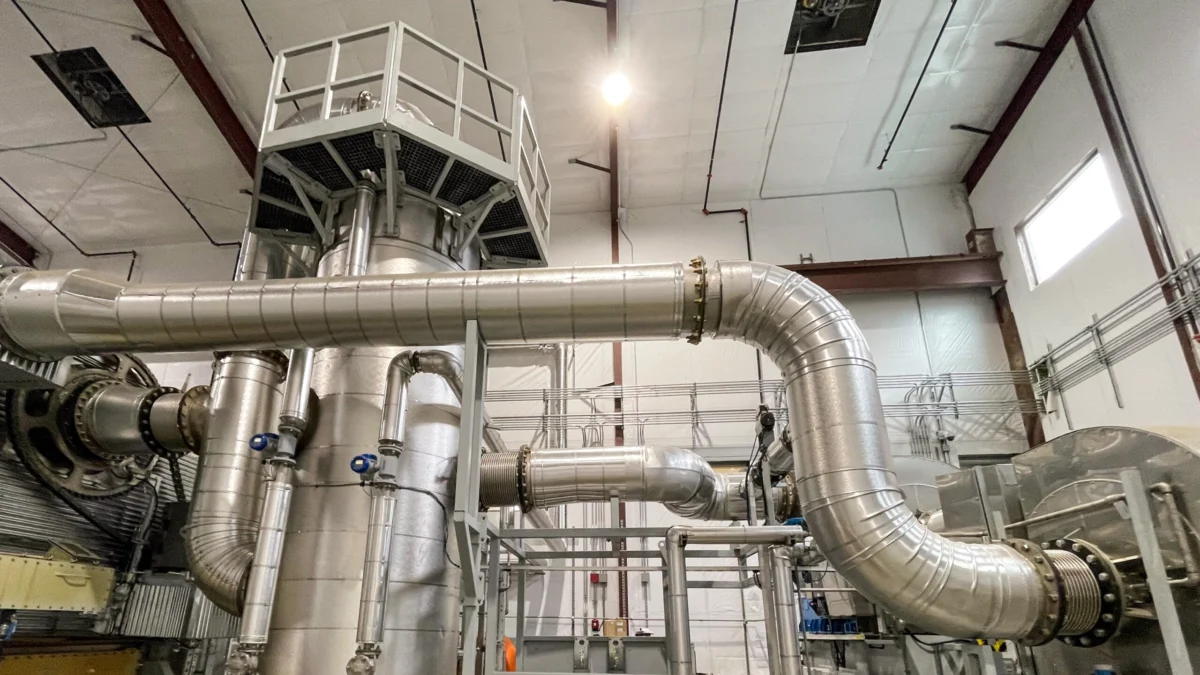
In the agricultural sector, the transition toward circular economies is being driven by advanced biowaste processing facilities. In the Pacific Northwest, a new industrial-scale facility is demonstrating how human and livestock waste can be safely processed to extract vital, finite nutrients such as phosphorus and nitrogen. As global fertilizer supply chains face geopolitical instability and depletion, the ability to reclaim these nutrients through energy-efficient, pathogen-free processes transforms an environmental hazard into a crucial resource for agricultural security.
Simultaneously, our understanding of biology is expanding both microscopically and cosmically. Researchers analyzing data from the International Space Station have identified the precise molecular mechanisms behind the muscle wasting and bone density loss experienced by astronauts, pointing to microgravity-induced mitochondrial dysfunction that impairs cellular protein production. This research is vital for planning long-duration crewed missions to Mars and beyond.
At the furthest reaches of scientific discovery, astronomers utilizing next-generation space telescopes have confirmed the presence of a distinct atmosphere on a nearby, Earth-sized exoplanet. Located within its star’s habitable zone, this planet represents one of the most promising candidates yet discovered in the search for extraterrestrial life, providing scientists with an unprecedented laboratory to study the chemical signatures of prebiotic worlds.
The Interconnected Future
These developments—ranging from the microscopic processes of human cellular biology to the macroscopic forces of geopolitical AI strategies—reveal an increasingly interconnected technological landscape. Whether navigating the complexities of personal health, regulating global digital platforms, or exploring the cosmos, the rapid pace of modern innovation demands a continuous, critical evaluation of how technology is developed, governed, and integrated into society.
