

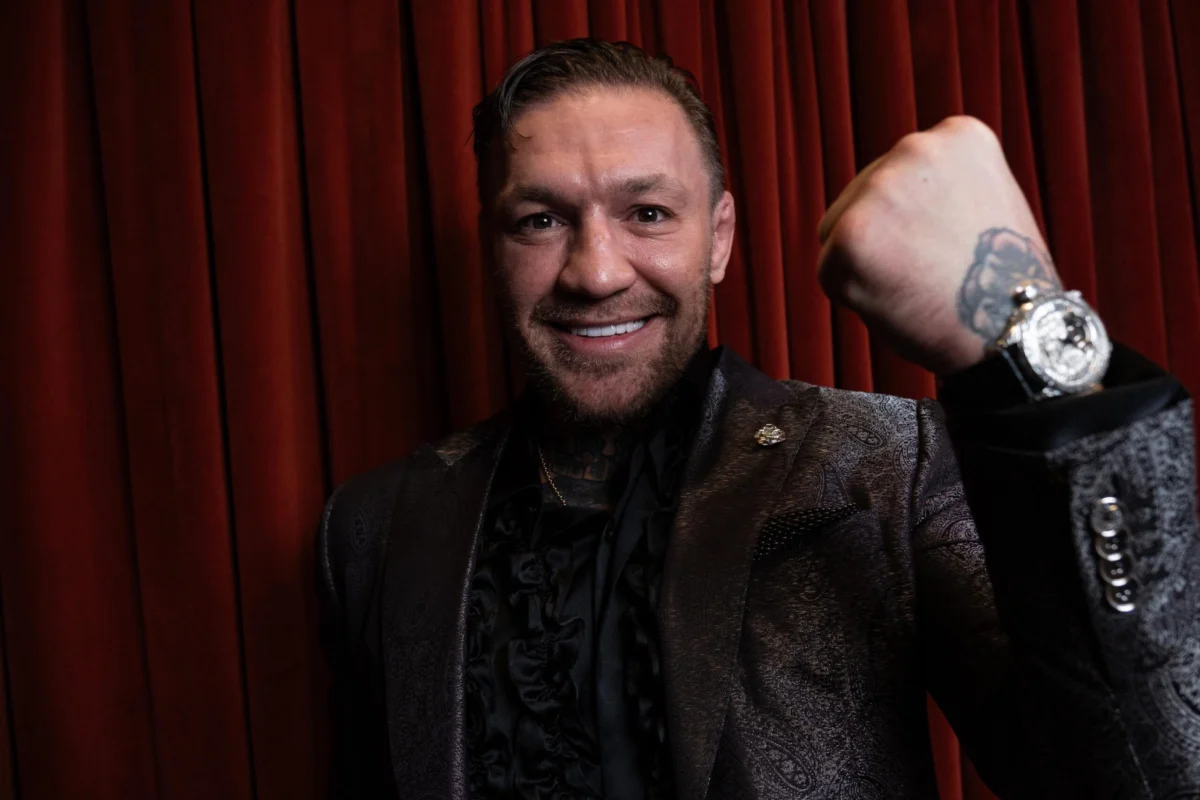
The landscape of mixed martial arts is often defined by cycles of hype, but few moments carry the gravity of a scheduled return for the sport’s most polarizing and profitable figure. On July 11, at the T-Mobile Arena in Las Vegas, the combat sports world will pivot toward UFC 329. While the marquee typically favors championship gold, the headlining bout between Conor McGregor and Max "Blessed" Holloway represents something far more complex than a mere title fight. It is a collision of legacies, a high-stakes gamble on commercial viability, and a definitive litmus test for whether the "McGregor Era" has any remaining chapters or if it is merely entering a prolonged epilogue.
This matchup is not a fresh rivalry, but rather a sequel eleven years in the making. When McGregor and Holloway first met in August 2013, they were prospects fighting for a foothold in the featherweight division. Today, they are titans of the industry, though they arrive at this crossroads from vastly different trajectories. For McGregor, the bout is an attempt to salvage a reputation that has been battered by inactivity and a 1-3 record over his last four outings. For Holloway, it is a chance to solidify his status as an all-time great while experimenting with his physical ceiling in the 170-pound welterweight division.
The McGregor Paradox: Reputation vs. Reality
At 37 years old, Conor McGregor is navigating the most treacherous waters of his professional career. The "Notorious" one has not tasted victory inside the Octagon since a 40-second demolition of Donald "Cowboy" Cerrone in January 2020. Since then, the narrative surrounding McGregor has shifted from his technical brilliance to his durability and focus. A devastating leg injury suffered in his 2021 trilogy bout against Dustin Poirier led to a grueling multi-year recovery process, during which McGregor’s public persona often overshadowed his athletic identity.
The betting markets have reacted to this decline with cold precision. McGregor enters UFC 329 as the longest-priced underdog of his entire career. This valuation is not just a reflection of his recent losses, but a clinical assessment of the "ring rust" factor and the physiological reality of returning from a catastrophic bone break at an age where fast-twitch muscles and reaction times naturally begin to erode.
However, the stakes for McGregor transcend the win-loss column. He is fighting for his "believability." If McGregor can defeat a prime, elite-level operator like Holloway, he immediately reinstates himself as a viable contender for massive paydays and potential "BMF" or divisional title shots. A loss, conversely, would likely relegate him to the "spectacle" tier of fighting—a realm where he remains a draw, but is no longer viewed as a competitive peer to the elite.
Max Holloway’s Welterweight Gambit
Max Holloway’s entry into this fight is characterized by a different kind of ambition. Having spent the better part of a decade as the gold standard of the 145-pound division, Holloway has recently sought challenges that transcend weight classes. His move to 170 pounds to face McGregor is a calculated risk. Unlike McGregor, Holloway’s reputation is currently at an all-time high, despite a recent loss to Charles Oliveira where he surrendered the "BMF" title.
Holloway’s primary weapon remains his unrelenting pace. Averaging 6.9 significant strikes per minute, he possesses a "cardio-based" style of warfare that has broken many of the best fighters in history. The central question for UFC 329 is whether that volume-heavy approach translates to the welterweight division. At 170 pounds, Holloway will be facing a naturally larger, more powerful McGregor. While Holloway has arguably the best "chin" in the history of the sport—having never been officially knocked down in over 30 professional fights—the extra weight and McGregor’s signature counter-punching power will provide the ultimate stress test for that durability.
For Holloway, a victory here is a "no-lose" scenario. Beating McGregor at a higher weight class adds a massive scalp to his Hall of Fame resume and keeps him in the conversation for "superfights" against names like Justin Gaethje or even a return to lightweight for a title run.
A Decade of Divergence: From Boston to Las Vegas
To understand the magnitude of this rematch, one must look back at UFC Fight Night 26 in Boston. In 2013, McGregor defeated Holloway via unanimous decision, but the victory was bittersweet; McGregor tore his ACL midway through the fight, forcing him into a ten-month hiatus. At the time, Holloway was a 21-year-old kid with raw talent, and McGregor was the brash newcomer.
In the decade that followed, their paths diverged into two of the most storied careers in the promotion. McGregor became the first simultaneous two-weight champion, a global icon, and a participant in the biggest boxing match of the century against Floyd Mayweather. Holloway, meanwhile, went on a legendary 13-fight winning streak at featherweight, cleaning out the division and becoming one of the most respected champions the sport has ever seen.

The fact that these two are meeting again now, at welterweight, is a testament to their longevity and the UFC’s ability to manufacture "legacy" events. The 2013 version of this fight was an undercard curiosity; the 2025 version is a cultural event that defines International Fight Week.
Tactical Analysis: The Clash of Styles
The technical battle at UFC 329 will likely hinge on two factors: McGregor’s early-round power versus Holloway’s late-round attrition.
McGregor’s best chance for victory has historically been in the first seven minutes. His ability to find the "center-line" with his left hand and his improved use of lead-leg kicks (pre-injury) made him a nightmare for orthodox fighters. However, following his leg surgery, there are significant questions about his mobility. Will he be able to pivot and use the lateral movement that once made him so elusive? Or will he be a more stationary, "heavy-handed" boxer?
Holloway, on the other hand, thrives as the fight progresses. His strategy will almost certainly involve weathering the early storm, utilizing his reach, and peppering McGregor with volume to drain the Irishman’s gas tank. McGregor has shown vulnerability in five-round fights when he cannot secure an early finish, and Holloway is perhaps the worst opponent to face if your cardiovascular endurance is in question.
Industry Implications and the "McGregor Effect"
From a business perspective, UFC 329 is a pivotal moment for the promotion. The UFC has spent the last few years diversifying its brand so it is no longer dependent on any single star. However, the "McGregor Effect" remains a unique phenomenon. A successful return for McGregor provides a massive boost to the UFC’s pay-per-view metrics and commercial sponsorships.
Moreover, this fight highlights the UFC’s shift toward "prize-fighting" over "rankings-fighting." In an era where the "BMF" title and "superfights" often draw more attention than traditional divisional rankings, McGregor vs. Holloway 2 is the gold standard of this trend. It proves that name recognition and historical narrative can still outweigh championship stakes in the eyes of the general public.
The Crossover Future and Contractual Freedom
The results of UFC 329 will dictate the final phase of Conor McGregor’s career. He currently has one fight remaining on his UFC contract after the Holloway bout. McGregor has been vocal about his desire for "freedom"—specifically the ability to participate in crossover events. His recent acquisition of a stake in Bare Knuckle Fighting Championship (BKFC) and his persistent rumors regarding a boxing match with Terence Crawford suggest that McGregor is looking to move beyond the restrictive structure of a standard UFC contract.
McGregor recently claimed that Crawford turned down a nine-figure, two-fight deal to face him in a mixed-rules format. Whether or not these claims are fully accurate, they signal McGregor’s intent: he wants to be his own promoter. A win over Holloway gives him the leverage to demand a historic contract renewal or to walk away into a world of massive independent spectacles.
Conclusion: A Defining Moment for Combat Sports
As July 11 approaches, the narrative will continue to fluctuate between McGregor’s redemption and Holloway’s ascension. UFC 329 is more than just a fight; it is a crossroads for the sport’s past and its future. If McGregor falls, it may truly signify the end of an era that changed the financial trajectory of MMA forever. If he wins, the sport prepares for a resurgence of the "Mac Life" on a scale we haven’t seen in years.
In the T-Mobile Arena, under the bright lights of Las Vegas, two men who started as featherweight hopefuls will settle a decade-long score. For the fans, it is a dream matchup. For the fighters, it is a battle for the right to dictate their own futures. And for the industry, it is a reminder that in the world of the UFC, there is no currency more valuable than the return of a legend.
