

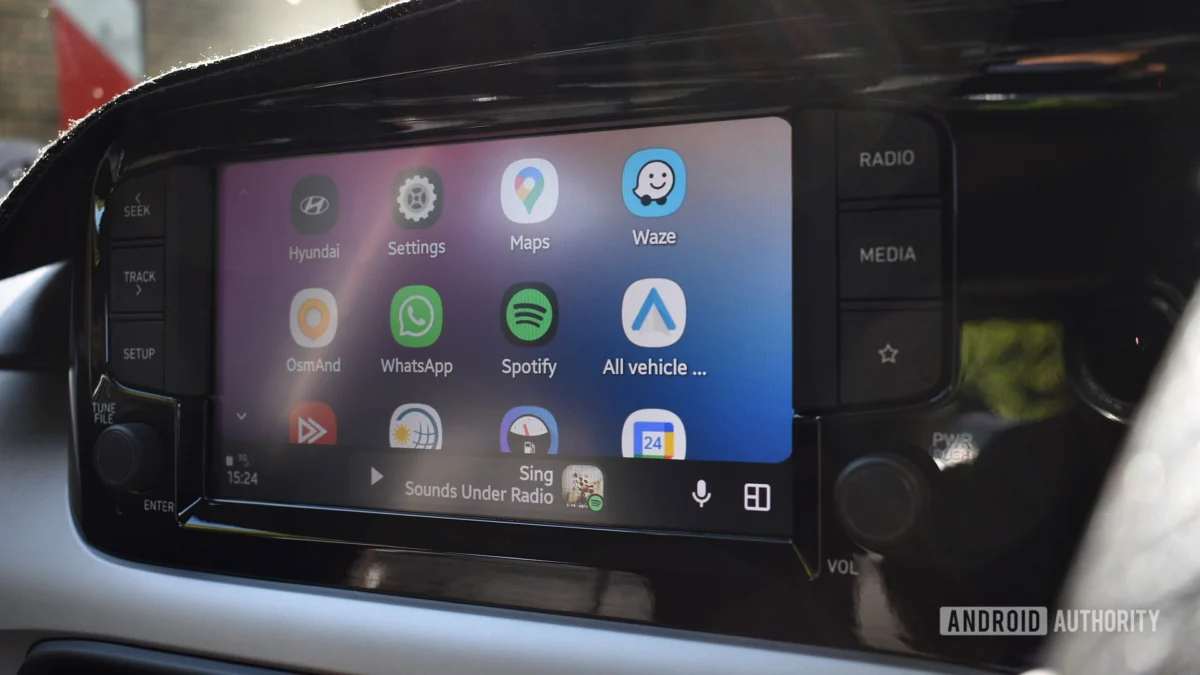
The integration of generative AI into the automotive user experience has long been heralded as the next frontier of smart mobility. Google’s strategic push to replace the legacy Google Assistant with its more sophisticated Gemini model within Android Auto was intended to provide a more contextual, conversational, and helpful in-car companion. However, recent weeks have revealed a technical hiccup that has left the user base in a state of confusion: an erratic and unprompted reversion from the new Gemini interface back to the older Google Assistant.
This phenomenon, which has been documented across various community forums and user support channels, serves as a microcosm of the challenges inherent in deploying large-scale AI updates across fragmented hardware ecosystems. For many, the experience is not just a minor inconvenience; it is a jarring disruption of a daily workflow that relies heavily on voice-activated commands while navigating complex traffic environments.
The Anatomy of the Disruption
Reports surfacing on platforms like Reddit and official Google support forums describe a remarkably consistent pattern. Users who had successfully transitioned to the Gemini interface—often enjoying its enhanced ability to process complex requests or summarize messages—suddenly find their vehicle’s infotainment system defaulting to the familiar, more limited Google Assistant experience. This is not a uniform global failure, but rather a sporadic, intermittent bug that seems to ignore standard troubleshooting protocols.
The technical complexity of this issue is compounded by the varying experiences reported by affected drivers. While some users find that the change is fleeting, disappearing after a single power cycle of their vehicle, others report being locked into the legacy interface regardless of how many times they attempt to reconfigure their settings. The frustration is palpable, as users who have grown accustomed to the nuanced capabilities of Gemini find themselves suddenly downgraded, forced to interact with a system that may no longer be tuned to their current preferences or feature requirements.
Correlation vs. Causation in Software Updates
A significant portion of the discourse surrounding this bug has centered on the recent rollout of Android Auto version 16.7. Many users have pointed to this update as the definitive catalyst for the regression. In the software development lifecycle, it is common for updates to trigger unintended side effects in background services—particularly when those services rely on cloud-side switches rather than local code alone.
However, a careful examination of user reports suggests that version 16.7 may not be the sole culprit. Evidence from the field indicates that similar issues have surfaced in earlier iterations, such as version 16.6.661414. This discrepancy suggests that the root cause might lie deeper within the server-side architecture that manages the handshake between the Android Auto application and the Google account’s assistant configuration. When the system fails to verify the user’s "AI status" during the boot-up sequence of the vehicle, it likely defaults to the legacy Google Assistant as a fail-safe measure to ensure that basic voice commands remain functional, even if the more advanced AI capabilities are temporarily unreachable.
Industry Implications and the Complexity of AI Rollouts
This incident highlights a critical reality for major technology companies: the transition from traditional rule-based voice assistants to generative AI models is fraught with architectural fragility. When Google decided to pivot its mobile and automotive strategy toward Gemini, it effectively moved from a centralized, static service model to a highly dynamic, cloud-reliant architecture.
In the automotive sector, where reliability is paramount, this shift introduces new layers of complexity. An infotainment system is not merely a smartphone app; it is a critical interface that must function flawlessly to minimize driver distraction. When the underlying AI model suddenly switches or fails to load, it can break the mental model the user has developed for interacting with their vehicle. This "ghosting" effect—where the interface you expect is replaced by one you previously abandoned—erodes trust in the platform’s stability.
Furthermore, the industry at large is watching these deployments closely. As competitors like Apple and various automotive OEMs (Original Equipment Manufacturers) integrate proprietary AI solutions, the challenges faced by Google serve as a cautionary tale. Ensuring that AI updates are seamless and "invisible" to the end-user is not just a matter of good design; it is a requirement for safety and user retention.
Expert Analysis: The "Fail-Safe" Paradox
From an engineering perspective, this "swapping" bug represents a failure in state management. Ideally, the system should remember the user’s preferred assistant state and cache it locally. However, if the system is designed to verify the user’s eligibility for Gemini via a server check every time the vehicle initiates an Android Auto session, any latency or handshake failure will trigger a fallback.
The fact that a simple workaround—toggling the assistant setting off and then back on—often restores the functionality points toward a "refresh" of the local state cache. By manually overriding the setting, the user is essentially forcing the application to re-register its preference with the Google servers, which then pushes the correct configuration back to the vehicle. While this is an effective temporary fix, it is not a sustainable solution for the average consumer who expects their technology to "just work" without needing to troubleshoot settings mid-commute.
Future Impact and Trends
As we look toward the future, the reliance on cloud-side AI will only increase. We are moving toward a paradigm where the "Assistant" is no longer an application, but a persistent identity that follows the user from their phone to their car, their home, and their office. This requires a level of synchronization that current network architectures are struggling to maintain.
To mitigate such issues, tech giants will likely move toward more robust local-processing models—often referred to as "Edge AI." By keeping more of the assistant’s logic and state information on the device itself, developers can minimize the dependency on constant server-side verification. This would not only improve latency but also prevent the system from reverting to a "default" state simply because a server call failed.
Moreover, the industry is trending toward more granular control for the end-user. The ability to lock in a specific version or behavior of an AI assistant will become a standard request from power users. The current "black box" approach, where the AI experience can be changed by a silent server-side update, will likely face increasing pushback as consumers demand more transparency and stability in their digital environments.
Final Reflections
The current situation with Android Auto and Gemini is a classic example of the "growing pains" associated with the generative AI revolution. While the technology promises to transform our interaction with our vehicles, it also introduces a level of variability that can be jarring for those who rely on consistency.
For those currently experiencing this issue, the temporary solution of toggling the assistant settings remains the most viable path forward. However, the broader lesson here is that as we invite more complex AI into our daily lives, the importance of robust, fail-safe software engineering becomes more pronounced than ever. Google has acknowledged the reports and is investigating, which is the necessary first step in restoring the seamless experience that Android Auto users expect.
As the dust settles on this particular bug, it will be interesting to see how Google refines its deployment strategy. Will they implement more aggressive local caching, or will they provide users with more granular control over their AI experience? Whatever the outcome, this incident serves as a reminder that in the race to deploy the latest AI, the foundational stability of the user experience must remain the top priority. The goal of technology should always be to simplify, not to introduce new, unforeseen complexities into our already busy lives.
