

The trajectory of modern innovation has reached a pivotal juncture where the boundaries between the organic and the artificial are not merely blurring but are being fundamentally reconstructed. We are entering an era defined by "synthetic divergence," a period where human ingenuity is capable of creating biological systems that defy natural laws and digital entities that threaten to displace the very workers who built them. As global powers grapple with the regulatory and ethical implications of these advancements, the conversation has shifted from the optimism of the early 21st century to a more cautious, and at times alarmist, assessment of our technological future.
The Mirror World: Bio-Engineering’s Existential Gamble
In the quiet corridors of synthetic biology, a radical concept once viewed as the "Holy Grail" of cellular design has become a source of profound dread. In early 2019, a visionary group of researchers proposed the creation of "mirror bacteria"—microorganisms with a molecular structure that is a perfect, inverted reflection of life as we know it. To understand the gravity of this project, one must understand chirality. In nature, almost all biological molecules possess a specific "handedness"; for instance, DNA spirals in a right-handed fashion, while the amino acids that build proteins are left-handed. Mirror life would reverse this, creating a "right-handed" protein world.
Initially, the National Science Foundation and the broader scientific community saw this as a revolutionary path toward drug discovery and an unparalleled tool for understanding the origins of life. Because mirror-image proteins would be invisible to natural enzymes, drugs made from them could theoretically bypass the body’s traditional breakdown mechanisms, leading to ultra-potent therapies. However, the scientific consensus has undergone a dramatic and chilling reversal.
The primary concern is no longer just the success of the experiment, but the catastrophic consequences of its "leakage" into the biosphere. If mirror bacteria were to escape the laboratory, they could potentially trigger an ecological collapse. Because no natural predator or enzyme could digest mirror-image organisms, they would be essentially "invincible" in the wild. They could consume natural resources—sugars, nitrogen, and phosphorus—without being integrated back into the food chain. This "biological dark matter" would create a one-way street for nutrients, effectively starving the natural world. Experts now warn that such a synthetic life form could be more "murderous" than any pathogen, not by design, but by its mere existence as an apex competitor that the Earth’s ecosystem is fundamentally unequipped to handle.
The Digital Shadow: China’s Workforce and the Rise of AI Replicas
While biologists weigh the risks of mirror-image cells, the global technology workforce is confronting a mirror of a different kind: the AI double. In China’s hyper-competitive tech sector, a new form of industrial friction is emerging. The recent viral spread of a project titled "Colleague Skill" on GitHub served as a satirical but piercing critique of the current corporate climate. The project claimed to "distill" the essence of a worker’s professional output and personality into an autonomous AI agent capable of performing their duties.
While the project itself was a spoof, the reality it lampooned is very real. Major tech firms are increasingly deploying tools like OpenClaw, which encourage employees to meticulously document every nuance of their workflow. Ostensibly marketed as a productivity aid, workers increasingly view these initiatives as a "digital harvest." By recording the step-by-step logic of high-level engineering and creative tasks, companies are effectively training the very algorithms meant to replace the human contributors.
The psychological toll is significant. Tech workers describe a feeling of being "flattened" into code—their years of experience and intuition reduced to a series of weights and biases in a neural network. In response, a grassroots movement of "digital sabotage" is gaining momentum. Some developers are intentionally introducing subtle inefficiencies or "noise" into their documented workflows to confuse automation models, while others are developing tools specifically designed to poison the data sets that corporations use to build these AI doubles. This represents a new chapter in labor relations, where the strike is no longer a physical walkout, but a refusal to yield one’s cognitive "source code."
Geopolitics and the Regulatory Tug-of-War
The tension between innovation and safety is also playing out in the halls of government. In Washington, a complex negotiation is underway between the executive branch and Anthropic, one of the world’s leading AI safety and research companies. This follows a period of friction where the administration had previously signaled a move to phase out the use of Anthropic’s technology within federal agencies.
However, the reality of national security has forced a compromise. Despite public-facing blacklists, reports indicate that the National Security Agency (NSA) has already begun integrating Anthropic’s sophisticated "Mythos" model into its operations. This highlights a recurring theme in modern governance: the "AI arms race" often supersedes stated regulatory or safety goals. Governments are finding that they cannot afford to ban the very tools their adversaries might use to gain a strategic advantage.

Simultaneously, the ideological landscape of Silicon Valley is shifting. Palantir, led by CEO Alex Karp, recently released a manifesto that reads more like a call to arms than a corporate strategy. By advocating for universal national service and denouncing what it terms "regressive" corporate cultures, Palantir is positioning itself as the vanguard of a "Technological Republic." This vision suggests that tech companies should not just be service providers, but active participants in the defense and ideological fortification of the state.
This hawkish stance contrasts sharply with the situation in Europe. In Germany, Chancellor Friedrich Merz and industrial giants like Siemens are pushing for a significant loosening of AI regulations. They argue that the European Union’s stringent "AI Act" is handicapping local firms, threatening to drive investment toward the United States. Siemens has gone as far as to suggest that it will shift its R&D spending across the Atlantic if Brussels does not provide more "regulatory freedom." This burgeoning rift suggests that the global map of AI development may soon be divided into "safe zones" and "innovation zones," with companies moving to whichever jurisdiction offers the least resistance.
The Physical and Social Costs of the Intelligence Boom
The shift toward AI is also reshaping the physical world and the industries that support it. Nvidia, once the darling of the gaming community, is facing a growing backlash from its original consumer base. As the company pivots its focus toward massive data center GPUs for AI training, the availability and affordability of consumer-grade graphics cards have plummeted. Gamers, who essentially funded Nvidia’s early R&D, now find themselves sidelined in favor of enterprise AI clients.
Beyond the market shift, the environmental impact of the AI boom is reaching a crisis point. The hardware required to power large language models—ranging from specialized chips to cooling systems—is contributing to a massive surge in electronic waste. Much of this e-waste is being exported to non-Western countries, creating a secondary environmental catastrophe in the Global South. This "intelligence tax" is being paid by the world’s most vulnerable populations, who bear the brunt of the pollution generated by the West’s pursuit of AGI.
Even the most personal aspects of human life are being mediated by AI and biometrics. Companies like Tinder and Zoom have partnered with Sam Altman’s Worldcoin—a project that uses iris-scanning "Orbs" to verify "proof of humanity." In an age of deepfakes and AI influencers, the ability to prove one is a biological human has become a premium commodity. Yet, the irony of using a high-tech biometric scanner to verify "humanity" is not lost on critics, who see it as another step toward a totalizing digital identity system.
The Final Frontier: A Commercialized Orbit
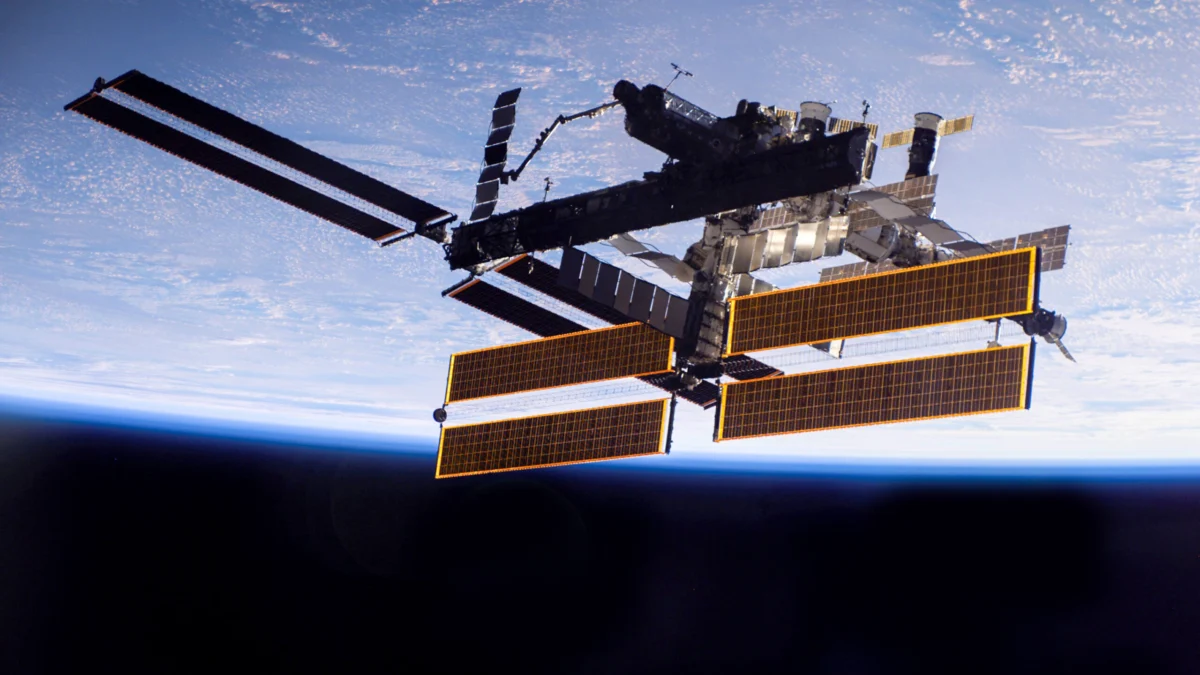
As the Earth grapples with these terrestrial challenges, the future of human presence in space is also undergoing a radical transformation. The International Space Station (ISS), a symbol of global cooperation for decades, is slated for decommissioning by 2030. However, this does not mark the end of Low Earth Orbit (LEO) exploration; rather, it marks its privatization.
NASA is transitioning from an owner and operator of space stations to a "tenant." By partnering with private firms like Axiom Space, the agency is fostering a new ecosystem where private rockets will ferry researchers and tourists to private space stations. This model is designed to free NASA from the massive overhead of maintaining aging infrastructure, allowing it to focus on deep-space missions to Mars and beyond. It represents the ultimate "handover" of the final frontier to the private sector, turning the orbital plane into a hub for manufacturing, tourism, and high-stakes corporate research.
A Unified Front of Concern
Perhaps the most telling sign of the times is the emerging political consensus regarding AI safety. In an era of unprecedented polarization, a diverse array of figures—from populist agitators to progressive stalwarts—are finding common ground on the need for AI policy priorities. As Ben Cumming of the Future of Life Institute noted, the threat of unchecked synthetic intelligence is the only issue capable of bringing together the most disparate ends of the political spectrum.
Whether it is the biological threat of mirror bacteria, the social threat of AI doubles, or the geopolitical threat of unregulated algorithms, the message is clear: the synthetic divergence is here. The decisions made in the next five years regarding how we regulate, resist, and integrate these technologies will determine not just the future of the economy, but the definition of life itself. The challenge for humanity will be to ensure that in our quest to build mirrors of our world and ourselves, we do not create something that ultimately shatters the original.
