

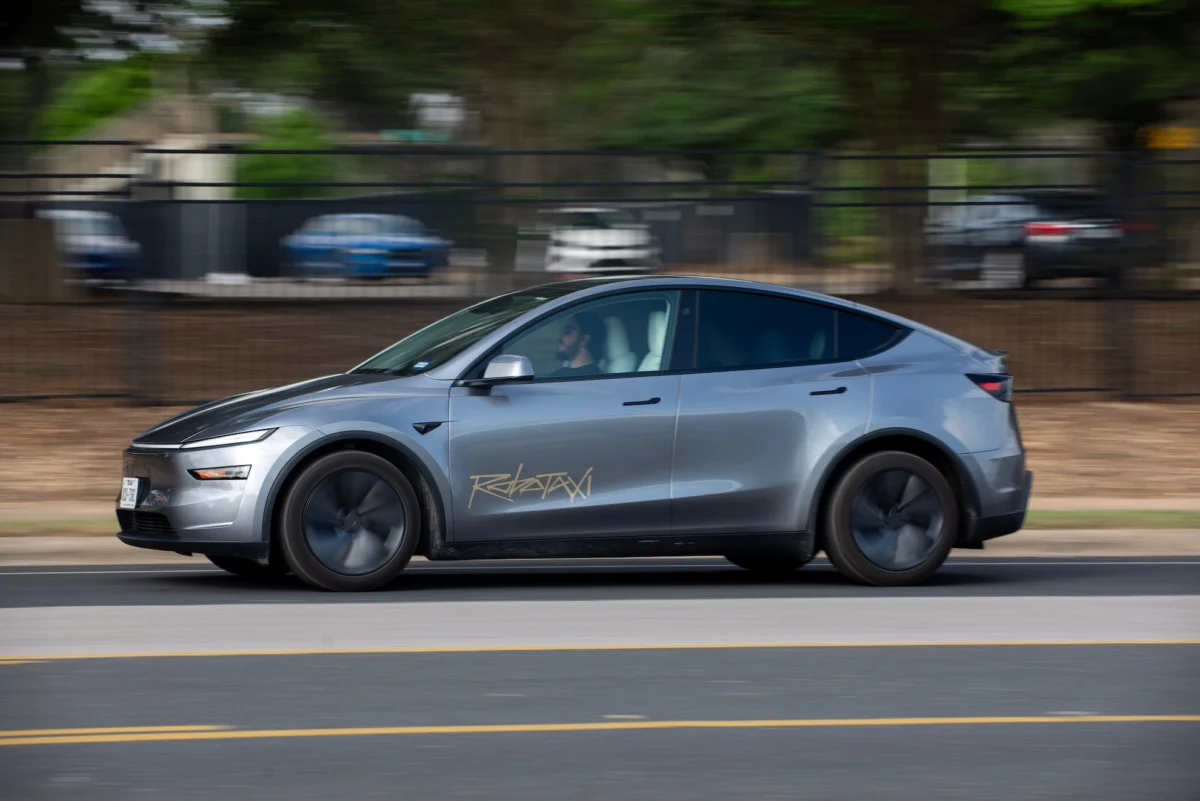
Tesla has officially extended its driverless ride-hailing network to two of Texas’s largest metropolitan areas, Dallas and Houston, marking a significant milestone in the company’s transition from a traditional electric vehicle manufacturer to a full-scale artificial intelligence and robotics powerhouse. This expansion, confirmed via the company’s dedicated social media channels, signifies the beginning of a broader commercialization phase for Tesla’s Full Self-Driving (FSD) technology. In a brief but impactful visual demonstration, the company released footage of its vehicles navigating complex urban environments without a human safety monitor behind the wheel, signaling that the "driverless" era has moved beyond the experimental stage in the Texas market.
With this move, Tesla now operates its nascent robotaxi service in three major Texas cities. The journey toward this point began in Austin, where the company first launched its ride-hailing platform last year. By January 2026, the Austin operations had matured enough for Tesla to remove human safety drivers entirely, allowing the vehicles to operate autonomously with passengers on board. The addition of Dallas and Houston creates a powerful "Texas Triangle" of autonomous testing and commercialization, providing the company with a diverse array of urban layouts, traffic patterns, and weather conditions to further refine its neural networks.
The Strategic Pivot to the Texas Frontier
The decision to focus initial robotaxi efforts on Texas is neither coincidental nor merely a matter of proximity to Tesla’s Gigafactory in Austin. Texas has emerged as one of the most permissive regulatory environments for autonomous vehicle (AV) testing in the United States. Unlike California, which requires rigorous reporting, specific permits for driverless deployment, and often faces friction from local municipal leaders, Texas passed Senate Bill 2205 years ago. This legislation effectively prevents local governments from banning or over-regulating AVs, provided they comply with federal safety standards and state traffic laws.
Furthermore, the geography and climate of the Texas Triangle—comprising Austin, Dallas, and Houston—offer an ideal "goldilocks" zone for scaling. The roads are generally wide, the infrastructure is relatively modern, and the weather, while occasionally prone to extreme heat or heavy rain, lacks the consistent snow and ice that can blind the camera-based sensors upon which Tesla’s "Vision" system relies. By dominating these three hubs, Tesla is positioning itself to capture a massive share of the ride-hailing market in a region with high population growth and a heavy reliance on personal transportation.
Decoding the Technology: The Vision-Only Gamble
Tesla’s approach to autonomy remains the most controversial and distinct in the industry. While competitors like Waymo (owned by Alphabet) and Zoox (owned by Amazon) rely on a "belt and suspenders" approach—utilizing a combination of LiDAR, radar, and high-definition maps—Tesla has doubled down on a vision-only strategy. The vehicles operating in Dallas and Houston utilize the latest iterations of FSD, which rely entirely on cameras and end-to-end neural networks to interpret the world.
This "end-to-end" architecture means that the car’s behavior is not dictated by millions of lines of "if-then" code written by engineers. Instead, the system has been "trained" on billions of miles of video data from the existing Tesla fleet. The car essentially "learns" how to drive by watching human behavior, identifying patterns, and predicting the movements of pedestrians, cyclists, and other vehicles.
Critics argue that without the depth-sensing capabilities of LiDAR, Tesla’s vehicles are susceptible to "phantom braking" or misinterpreting visual cues in low-contrast lighting. However, Tesla CEO Elon Musk has long maintained that humans drive using vision and biological neural networks, and therefore, a sufficiently advanced artificial intelligence should be able to do the same with digital cameras. The expansion into Dallas and Houston serves as a live-market stress test of this philosophy.
The Reality of Scaling: Small Steps in Large Cities
Despite the high-profile announcement, current data suggests that the rollout in Dallas and Houston is in its "alpha" or "seed" phase. Crowdsourced data from the Robotaxi Tracker platform indicates that while Austin has a robust fleet of approximately 46 active autonomous vehicles, the presence in Dallas and Houston is currently limited to a handful of cars—potentially as few as one or two per city for initial mapping and validation.
This "soft launch" approach allows Tesla to gather hyper-local data on specific intersections, traffic flow quirks, and regional driving habits before flooding the streets with a larger fleet. It also serves as a marketing tool, generating organic sightings and social media buzz that build public familiarity with the concept of a driverless Tesla. As the neural networks digest the data from these new environments, the fleet size is expected to grow exponentially, eventually incorporating the upcoming "Cybercab"—a dedicated robotaxi vehicle without a steering wheel or pedals.
Safety Metrics and the Shadow of Scrutiny
The expansion comes at a time of heightened regulatory and public scrutiny. In a February filing, Tesla disclosed that its Austin robotaxi operations had been involved in 14 crashes since their inception. While Tesla has not provided a breakdown of fault or the severity of these incidents, the figure has become a focal point for safety advocates and federal regulators.
The National Highway Traffic Safety Administration (NHTSA) continues to monitor Tesla’s FSD performance closely. The challenge for Tesla—and the AV industry at large—is the "safety paradox." Statistically, if an autonomous system is even marginally safer than a human driver, it should be deployed to save lives. However, the public’s tolerance for machine error is significantly lower than its tolerance for human error. A single high-profile accident involving a driverless Tesla in Dallas or Houston could result in significant setbacks for the company’s regulatory standing and brand reputation.
Tesla’s defense often hinges on the sheer volume of data it collects. By analyzing the 14 crashes in Austin, the company can theoretically update its fleet-wide software to ensure those specific scenarios never result in a collision again. This "fleet learning" is an advantage that traditional ride-hailing services like Uber or Lyft, which rely on independent human contractors, cannot replicate.
Industry Implications: A Threat to the Status Quo
The arrival of Tesla’s robotaxi service in Dallas and Houston sends a clear signal to the broader transportation industry. For years, the "Big Three" of autonomy were considered Waymo, Cruise, and Tesla. With Cruise currently navigating a difficult recovery following a major safety incident in San Francisco, the race has narrowed to a head-to-head battle between Waymo’s localized, highly curated approach and Tesla’s scalable, camera-based model.
If Tesla can successfully scale in Texas, the economic implications are staggering. The current ride-hailing model is burdened by the cost of the human driver, which typically accounts for 60% to 70% of the fare. By removing the driver, Tesla can theoretically offer rides at a price point lower than the cost of a bus ticket, potentially disrupting not just Uber and Lyft, but also the very concept of private car ownership.
Furthermore, Tesla’s strategy involves a dual-track approach. While it builds its own dedicated fleet, it also plans to allow existing Tesla owners to "rent out" their vehicles to the robotaxi network when they aren’t using them. This would turn a depreciating asset into a revenue-generating one, a prospect that has kept Tesla’s stock valuation significantly higher than that of traditional automakers like Ford or GM.
The Road Ahead: Regulatory and Technical Hurdles
While Texas is a welcoming host, the path to a nationwide robotaxi network is fraught with obstacles. To expand beyond the Lone Star State, Tesla will need to prove its system’s efficacy in the dense, chaotic streets of New York City, the fog-heavy hills of San Francisco, and the snow-covered avenues of Chicago.
The San Francisco market remains a particularly difficult nut to crack. Currently, Tesla offers a limited ride-hailing service in the Bay Area, but it still requires a human safety driver. California’s Department of Motor Vehicles (DMV) and the California Public Utilities Commission (CPUC) have far more stringent requirements for driverless operation than their Texas counterparts. Tesla’s success or failure in Dallas and Houston will likely serve as the primary evidence the company presents to other state regulators when seeking to expand.
As we look toward the end of the decade, the expansion into Dallas and Houston will likely be viewed as the moment the "Tesla Network" moved from a theoretical white paper to a tangible urban reality. The data harvested from the streets of the Texas Triangle will feed the Dojo supercomputer, refining the algorithms that will eventually pilot millions of vehicles globally. For the residents of Dallas and Houston, the sight of an empty Model 3 navigating through traffic is no longer a glimpse of the future—it is a part of the present. Whether this technology can meet the lofty promises of safety and efficiency remains the multi-trillion-dollar question for the automotive world.
