

The rapid transformation of the physical and digital landscapes has reached a critical juncture where the convenience of synthetic materials and the raw power of artificial intelligence are forcing a global re-evaluation of progress. As we navigate the mid-2020s, the friction between technological expansion and ecological preservation is no longer a theoretical debate but a daily reality manifested in everything from the grass beneath our feet to the algorithms processing our thoughts.
The Synthetic Siege: Reassessing the Cost of Artificial Landscapes
For decades, synthetic turf was marketed as the ultimate solution for water conservation and low-maintenance urban planning. However, the scale of its adoption has reached staggering proportions. In 2001, the United States installed approximately 7 million square meters of artificial grass. By 2024, that figure has ballooned to 79 million square meters—an area large enough to cover the entire island of Manhattan several times over. While the plastic-manufacturing industry maintains that these installations are safe when managed correctly, a growing body of environmental researchers is sounding the alarm over the long-term consequences of "carpeting the world."
The primary concern lies in the proliferation of microplastics and the leaching of per- and polyfluoroalkyl substances (PFAS), often referred to as "forever chemicals." These compounds, used to make the plastic blades more durable and heat-resistant, eventually migrate into the soil and local water tables. Furthermore, synthetic fields contribute significantly to the "urban heat island" effect. On a mid-summer day, a natural grass field may remain at 85 degrees Fahrenheit, while its synthetic counterpart can soar to 150 degrees, radiating heat back into the atmosphere and increasing the energy demands of surrounding buildings. The "AstroTurf wars" represent a broader societal struggle: the trade-off between immediate aesthetic utility and the slow-motion collapse of local ecosystems.
The Scaling Myth: Why AI Development Shows No Signs of Plateauing
While the physical world grapples with the limits of plastic, the digital world is attempting to transcend all known boundaries of computation. Despite persistent predictions from skeptics that artificial intelligence would eventually hit a "compute wall"—a point where the returns on adding more data and processing power begin to diminish—the industry continues to defy these expectations. Mustafa Suleyman, CEO of Microsoft AI and a co-founder of Google DeepMind, argues that the forces driving the AI explosion are actually accelerating.
Three specific technological pillars are enabling this exponential growth. First is the evolution of basic calculators—the specialized chips designed for the matrix multiplication that underpins neural networks. Second is the advent of high-bandwidth memory (HBM), which allows data to move between storage and the processor at speeds previously thought impossible. Third, and perhaps most importantly, is the development of networking fabrics that allow disparate GPUs to function as a single, cohesive supercomputer. By treating thousands of chips as a unified brain, developers are able to train models with trillions of parameters, moving past simple pattern recognition toward genuine reasoning and problem-solving.
Meta’s Pivot Toward Superintelligence
In this high-stakes race for dominance, Meta has recently unveiled Muse Spark, the first model to emerge from its newly minted Superintelligence Labs. Led by Alexandr Wang, this unit represents a fundamental shift in Meta’s corporate strategy. Unlike previous iterations of the Llama series, which focused on broad accessibility and open-source principles, Muse Spark is a closed model specifically engineered for advanced reasoning.
The launch of Muse Spark signals that the era of "bigger is better" is being augmented by "smarter is better." The model is designed to integrate directly into the Meta AI ecosystem, providing users with capabilities that go beyond generating text or images. It aims to act as a logic engine, capable of breaking down complex multi-step problems in mathematics, coding, and strategic planning. This move places Meta in direct competition with OpenAI’s reasoning-focused models, suggesting that the next frontier of AI isn’t just about what the machine knows, but how it thinks.

Geopolitical Friction and the AI Supply Chain
The rapid advancement of AI is not occurring in a vacuum; it is deeply entwined with global security and trade politics. Anthropic, one of the primary rivals to OpenAI and Google, recently lost a legal bid to pause its blacklisting by the Pentagon. This decision by a Washington, D.C. appeals court leaves the company in a precarious legal limbo, highlighting the government’s increasing scrutiny of AI supply chains and the potential risks of foreign influence or data leakage.
This vacuum in government contracts is opening doors for smaller, more specialized AI firms that can meet the Pentagon’s stringent "sovereign cloud" requirements. Meanwhile, the geopolitical landscape is shifting elsewhere. In the Gulf region, Huawei is aggressively pitching its "multi-cloud" resilience strategies to clients who are increasingly wary of over-reliance on American infrastructure. By positioning itself as a neutral alternative capable of surviving Western sanctions or hardware strikes, China is making significant inroads into the cloud markets of the Middle East, potentially tilting the balance of technological power for the next decade.
The Gen Z Backlash: A Crisis of Confidence
As AI becomes more integrated into the fabric of daily life, the generation most expected to embrace it is showing signs of profound hesitation. Recent polling indicates a sharp rise in "AI anxiety" among Gen Z. In just one year, the percentage of young people reporting feelings of anger or fear regarding AI has jumped from 22% to 31%.
This sentiment is driven by a looming sense of replacement. Students entering university today, such as those at Rice University and other elite institutions, express a sense of futility, fearing that the skills they are working to acquire will be automated before they even graduate. This isn’t just about job security; it’s an existential crisis. If an algorithm can write an essay, compose a symphony, or solve a proof better than a human, young people are asking: what is left for us? This cultural friction has manifested in growing anti-AI protests across major tech hubs, suggesting that the "social license" for AI expansion may be more fragile than Silicon Valley realizes.
Engineering Resilience: Desalination and the Hunt for New Physics
While software captures the headlines, the survival of modern civilization relies on more tangible engineering feats. Desalination technology has become the silent backbone of water security in arid regions. The numbers are staggering: in countries like the United Arab Emirates and Saudi Arabia, desalination provides up to 90% of the domestic water supply. The industry is undergoing a massive shift from energy-intensive thermal desalination to high-efficiency reverse osmosis, driven by the need to lower carbon footprints while meeting the demands of a growing global population.
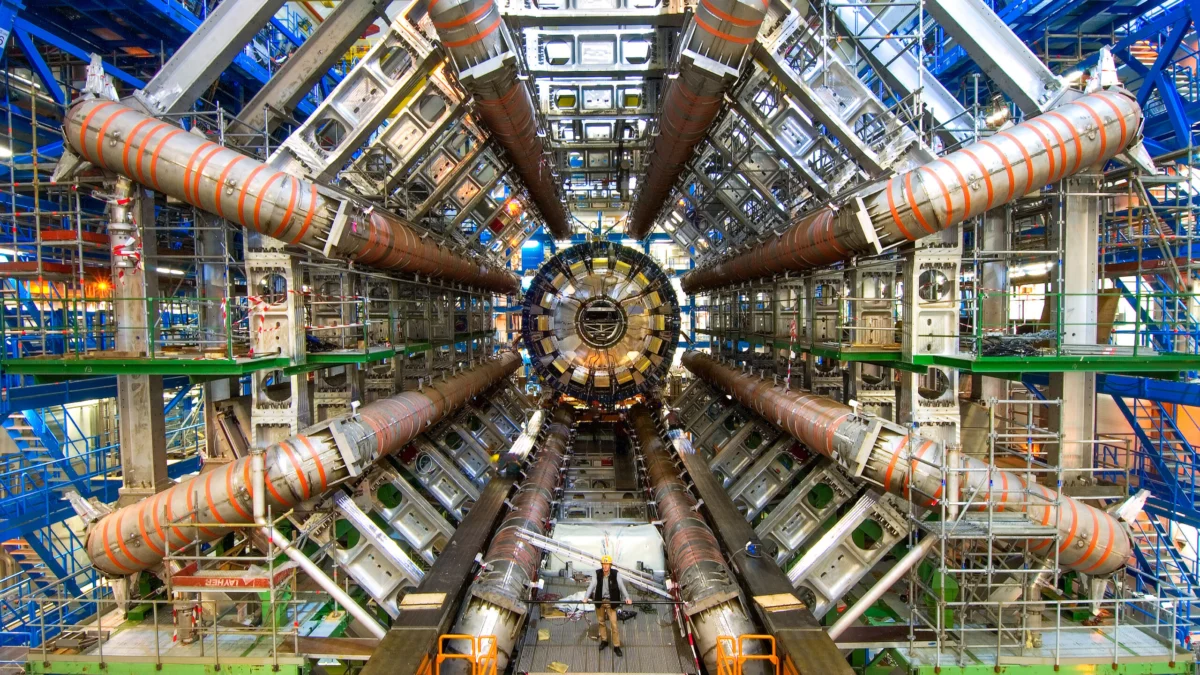
Simultaneously, at the farthest reaches of human inquiry, physicists at CERN’s Large Hadron Collider (LHC) are facing an impasse. Following the 2012 discovery of the Higgs boson, the hunt for "new physics"—particles that could explain dark matter or the asymmetry of the universe—has hit a plateau. Researchers are now looking toward AI to help find patterns in the petabytes of data generated by particle collisions, hoping that machine learning can see what the human eye cannot.
The Digital Frontier of Privacy and Identity
The intersection of technology and social justice is also evolving. In response to rising digital surveillance, marginalized communities are developing their own "digital self-defenses." For example, the "self-doxing" rave movement has emerged as a way for trans people to reclaim their online narratives and stay safe from malicious actors. By preemptively managing their digital footprints and using cybersecurity workshops to "deadname-proof" their online presence, these groups are turning the tools of the internet against those who would use data as a weapon.
Conclusion: The Two Sides of Innovation
The current state of technology is a study in contrasts. We are building massive synthetic landscapes to escape the labor of nature, only to find we are poisoning the soil. We are building superintelligent machines to solve our hardest problems, only to find they are creating a crisis of human purpose. From the microplastics in the turf to the reasoning models in our pockets, the challenge of the coming years will not be how much more we can build, but how we manage the consequences of what we have already unleashed. Whether it is through the "multi-cloud" diplomacy of the Gulf or the "tokenmaxxing" strategies of Big Tech, the goal remains the same: finding a way to thrive in a world that is becoming increasingly artificial, yet remains stubbornly, fragilely human.
