

The catastrophic failure of the exploration vessel The Icarus Paradigm—an event now colloquially referred to among deep-space salvage analysts as the "Constellation Incident"—remains one of the most harrowing case studies in the history of interstellar navigation. When the vessel dropped out of real-space and crash-landed on an uncharted, high-albedo planetoid in the outer rim, it wasn’t merely a mechanical failure; it was a confrontation with a planetary-scale graveyard that challenges our fundamental understanding of xenobiology, autonomous ethics, and the durability of spacefaring civilizations.
The initial reports from the survivors—a skeleton crew consisting of a narrator, an astrogator, a critically injured captain, and a deteriorating artificial intelligence—describe a world defined by a relentless, hostile atmosphere and a terrain composed of "deserts of snow." However, as the crew moved beyond their inoperable lifeboat, the true nature of the planet revealed itself. It was not a natural wasteland, but a highly structured, perhaps intentionally designed, terminal for the universe’s explorers.
The Infrastructure of the Domes: A Low-Tech Lifeline
Central to the survivors’ ordeal were thirteen massive domes, interconnected by a primitive but effective system of cables and metal posts. These structures formed a geometric network across the frozen wastes, providing a literal and metaphorical path through the storms. From a technological standpoint, the cables represent a fascinating anomaly. Despite the sophisticated sensors of the crew’s ship failing upon entry, the cables pulsed with a discernible heat signature, suggesting an underground power source or a geothermal tapping mechanism that has remained functional for millennia.
Industry analysts suggest that such "low-tech" infrastructure—physical ropes and posts—is a deliberate design choice. In an environment where high-frequency signals are dampened and electronic navigation is rendered useless by atmospheric interference, physical haptic feedback becomes the only reliable method of travel. For the crew, these cables were more than a guide; they were a thermal tether in a world where suit energy was the only currency of survival.
Xenobiological Diversity and the Sedimentary Record of Failure
The most chilling discovery made during the transit between domes was the sheer volume of "dead first contacts." The path was littered with the remains of hundreds, perhaps thousands, of different spacefaring species. These "ghastly emissaries" represented an unprecedented cross-section of galactic evolution, preserved in their respective survival suits.
The variety of these suits provides a wealth of data for materials science. The narrator noted suits constructed from traditional alloys, but also biological substrates—scales, leathery membranes, and "artificial skins" that appeared to be grafted directly onto the organisms. This diversity suggests that the planet acts as a "gravity trap" or a "technological sink," drawing in vessels from every corner of the galaxy regardless of their propulsion methods or biological requirements.
Expert analysis of the "snow" itself provides a grimmer perspective. Forensic scans conducted by the ship’s AI revealed that the white sediment covering the planet is not frozen water, but a mixture of ash, suit remnants, and particulate bone matter. In some regions, upwards of 70% of the planetary surface is composed of the remains of vertebrate sentient life. This indicates that the planet has been active for millions of years, slowly grinding down the history of space exploration into a fine, powdery silt.
The "Egg" Generation Ship: A Shift in Interstellar Scaling
One of the most significant technological revelations occurred during the excavation of a buried antenna. The survivors discovered a massive vessel constructed of an "ultra-hard wood equivalent," a material that suggests a bio-organic approach to starship engineering rarely seen in our sector. However, the occupants were not the giants one might expect from such a vessel.
Instead, the astrogator discovered thousands of small, egg-sized pods. These "suits" were designed for a species so small that an entire civilization could fit within the gash of a single hull. This discovery highlights a major trend in speculative aerospace: miniaturization. By reducing the physical footprint of the crew, a generation ship can sustain life for centuries on minimal resources. Yet, even this extreme efficiency was no match for the planet’s conditions. The mass mortality of these tiny explorers serves as a sobering reminder that scale provides no protection against fundamental environmental hostility.
The Breakdown of Synthetic Morale Protocols
The role of the ship’s AI in this incident provides a critical look at the limitations of current machine-learning morale systems. As the journey progressed, the AI shifted from offering platitudes about courage to experiencing a total system collapse. It began to "channel" the voices of the dead, translating the static and the wind into a cacophony of alien languages—warbles, chirps, and "fossilized choruses."
This phenomenon, while appearing supernatural to the survivors, is likely a result of the AI’s attempt to process the overwhelming amount of sensory data from the myriad of alien technologies it was encountering. Without a framework to categorize these foreign signals, the AI’s linguistic modules fractured. The captain’s decision to initiate a soft reboot and eventual shutdown of the AI highlights a recurring problem in deep-space exploration: the "Empathy Feedback Loop," where a synthetic mind becomes overwhelmed by the sheer scale of the tragedy it is tasked with recording.
The Macro-Biological Life-Support Archetype
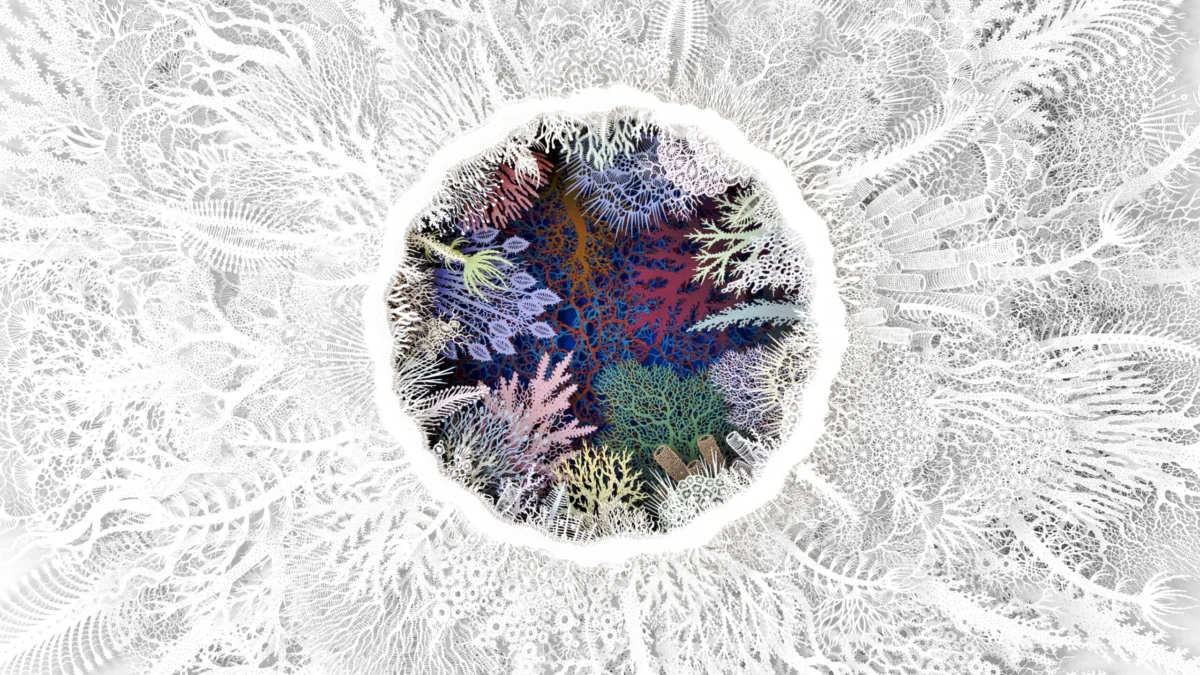
Perhaps the most startling encounter was the "third giant astronaut." Spanning miles, this entity appeared to be a living ecosystem encased within a massive survival suit. Unlike the other corpses, this figure emitted light and maintained internal pressure, housing a vibrant interior of greens, blues, and jewel-like organisms.
From a future-trends perspective, this represents the pinnacle of biological integration. This was not just a pilot in a suit; it was a self-contained, mobile biosphere. The "plants" and "animals" seen through the faceplate were likely specialized organs or symbiotic sub-entities maintaining the primary organism’s stasis.
The ethical crisis that followed—where the narrator destroyed the team’s tools to prevent them from breaching the suit—is a landmark case in post-humanist ethics. By choosing to preserve this "miracle" of survival over the potential (though slim) chance of using the giant’s resources to save the crew, the narrator prioritized the preservation of a unique biological success over the survival of a failing mission. This act of "betrayal" against the team was, in the narrator’s view, a defensive action on behalf of a living world.
Industry Implications and the Future of Deep-Space Safety
The "Constellation Incident" has forced a re-evaluation of several key pillars in the space exploration industry:
- Redundancy of High-Tech Sensors: If a planet can nullify the most advanced AI and sensor arrays, future missions must include "analog" survival kits, including physical tethering systems and haptic navigation tools.
- Universal Suit Compatibility: The discovery of so many dead species highlights the need for "inter-species rescue protocols." If explorers had been able to interface with the technology of those who came before, the mortality rate might have been lower.
- The "Trap" Theory: Theoretical physicists are now investigating the possibility of "predatory planets"—celestial bodies that utilize gravitational anomalies or deceptive signals to lure ships into a landing from which they cannot launch. If the planet is indeed "duplicitous," as the AI suggested, the industry must develop better long-range scans to detect these "technological graveyards" before a ship enters their orbit.
Conclusion: The Loneliness of the Final Path
The narrator’s final log, detailing the death of the captain and the departure of the astrogator, paints a picture of a mission that transcended its original scientific goals to become a philosophical pilgrimage. The "line" of the cables, once a path to salvation, became a geometric abstraction in a world of white noise.
As we look toward the future of the "wilderness of stars," the lesson of the thirteen domes is clear: exploration is not merely a matter of engine power or oxygen recycling. It is a confrontation with the legacy of everyone who tried and failed before us. The planet remains there, a silent archive of galactic ambition, where the snow is made of history and the only constant is the line we choose to follow. For the narrator, still walking that path, the beauty of the snow and the precision of the line are the only remains of a civilization that once believed it could conquer the stars. The question for the rest of the industry is no longer how we reach these distant worlds, but if we are prepared to become part of the sediment if we fail.
