

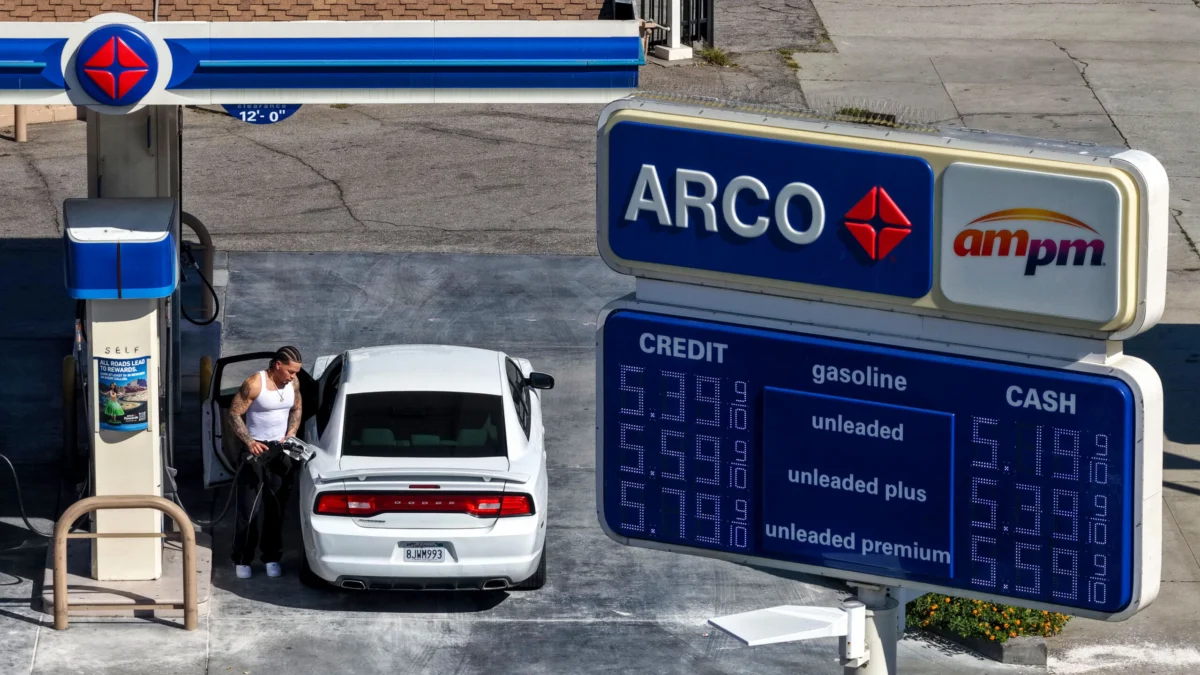
The daily rhythm of life in a modern, hyper-urbanized environment often provides a peculiar insulation from the traditional barometers of economic health. For those residing in dense metropolitan hubs where public transit is the primary circulatory system and private parking is a luxury of the elite, the oscillating numbers on a gasoline station’s marquee can feel like data from a distant planet. Yet, the recent geopolitical escalations in the Middle East, particularly the heightened conflict involving Iran, have shattered that insulation. As fossil-fuel prices embark on a chaotic upward trajectory, the ripple effects are no longer confined to the pockets of suburban commuters; they are reshaping the global conversation around energy security and the viability of the internal combustion engine.
In the United States, the national average for a gallon of gasoline has surged to roughly $3.98 as of late March. To the uninitiated, a dollar increase might seem incremental, but in the context of a fragile post-pandemic economy, it represents a seismic shift. This volatility has triggered a phenomenon that can only be described as "EV schadenfreude." Across digital forums and social media platforms, a vocal contingent of electric vehicle (EV) early adopters and climate advocates are taking what looks like a victory lap. The sentiment—often a mix of "I told you so" and a sense of vindication—suggests that the pain at the pump is the necessary medicine to force a recalcitrant public into a carbon-free future.
While it is true that this moment presents a historic opportunity for electric mobility to gain a permanent foothold, the reality is far more nuanced. High gas prices are a crude and painful instrument for social change. While they do accelerate the departure from fossil fuels, they also introduce systemic economic risks that could, paradoxically, hinder the very transition they seem to promote. To understand why this moment is so fraught, one must look beyond the immediate spike in EV search traffic and examine the deep-seated structural dependencies our global economy still has on oil and gas.
History provides a compelling roadmap for how energy shocks redefine consumer behavior. The oil crises of the 1970s serve as the ultimate precedent. When the OPEC embargoes sent prices skyrocketing, the American automotive landscape was dominated by "land yachts"—heavy, fuel-inefficient V8 monsters. The shock forced a radical reevaluation of the automobile. It was this specific era of volatility that allowed Japanese manufacturers like Toyota and Honda to dismantle the hegemony of the "Big Three" in Detroit. Their smaller, more efficient vehicles weren’t just a preference; they were a survival mechanism.
Today, we are witnessing a digital-age version of that shift. When the conflict in Iran intensified, online marketplaces saw an immediate 20% surge in search traffic for electric vehicles. For specific, high-visibility models like the Tesla Model Y, interest nearly doubled overnight. This isn’t merely an American phenomenon. From London, where dealerships are scrambling to source used EVs at auction to meet a sudden deluge of inquiries, to Manila, where showrooms for Chinese EV giant BYD are seeing a month’s worth of orders in a matter of weeks, the "oil shock" is acting as a global marketing campaign that no amount of advertising spend could replicate.
The timing of this particular shock is especially critical for the North American market due to a looming shift in inventory. Roughly three years ago, the passage of the Inflation Reduction Act (IRA) catalyzed a leasing boom by offering significant incentives for electric cars. This year, approximately 300,000 of those leases are set to expire. This means a massive wave of relatively young, well-maintained used EVs is about to hit the market. For the first time, the "price parity" argument—the idea that an EV can be as affordable as a gas car—will be tested not just on high-end new models, but in the secondary market where most people actually buy their cars.
However, the psychological threshold for a total abandonment of gasoline remains high. Market research from organizations like Cox Automotive suggests that while $4 per gallon creates headlines, the true "tipping point" for a mass-market exodus from internal combustion is closer to $6 per gallon. Until then, many consumers view high gas prices as a temporary storm to be weathered rather than a signal to change their entire lifestyle. This hesitation is bolstered by lingering anxieties over charging infrastructure and the perceived complexity of switching to a battery-electric ecosystem.
Furthermore, the "glee" expressed by some EV proponents overlooks the devastating inflationary pressure that high energy costs exert on the broader economy. We live in a world where the "last mile" of delivery might be electrified, but the "first ten thousand miles" are decidedly not. Fuel costs account for a staggering 50% to 60% of the total expense of shipping goods overseas. When the price of marine bunker fuel or diesel for long-haul trucking spikes, the price of everything from avocados to microchips rises in lockstep.
The agricultural sector is perhaps the most vulnerable. Modern industrial farming is essentially a process of turning fossil fuels into food. Natural gas is a primary feedstock for the production of nitrogen-based fertilizers. As gas prices have climbed—particularly in Europe, which is already reeling from the energy fallout of the Russia-Ukraine war—the cost of fertilizer has become a primary driver of global food insecurity. For a climate reporter or a technology enthusiast, it is easy to celebrate a Tesla in every driveway, but that victory tastes bitter if it comes alongside a global cost-of-living crisis that pushes millions into poverty.
Aviation remains another stubborn bastion of fossil fuel reliance. The International Air Transport Association recently noted that jet fuel prices have nearly doubled in a single month. Because fuel represents roughly a quarter of an airline’s operating costs, the immediate result is a surge in ticket prices and a corresponding increase in the cost of air-freighted goods. Unlike the passenger car market, there is no "Tesla of the skies" ready to take over long-haul commercial flight at scale. We are decades away from the decarbonization of aviation, meaning that for the foreseeable future, high oil prices simply mean a less connected and more expensive world.
Perhaps the most insidious risk of sustained high energy prices is the threat they pose to the capital-intensive projects required for the green transition itself. Building wind farms, solar arrays, and lithium-processing plants requires massive amounts of upfront capital. If high energy prices lead to a broader economic downturn or a recession, central banks often respond with interest rate hikes to combat inflation. Higher interest rates make it more expensive for developers to borrow money for renewable energy projects. In this scenario, the very volatility that makes EVs look attractive also makes it harder to build the clean grid needed to power them.
The transition to a decarbonized economy is a marathon, not a sprint, and while the current fuel crisis acts as a potent "nudge," it also highlights the precariousness of our current position. We are in a "middle-child" phase of the energy transition: we have developed the technology to move away from oil, but we haven’t yet built the infrastructure or the economic resilience to do so without significant pain.
For the consumer standing at a crossroads, the current uncertainty should indeed be a prompt to consider the long-term benefits of going electric. The total cost of ownership for an EV, when factoring in reduced maintenance and the lower cost of "fueling" via the grid, becomes an increasingly lopsided argument in favor of batteries as gas prices climb. But as a society, we must resist the urge to view energy volatility through a purely partisan or narrow lens.
True energy security won’t be achieved simply by replacing every gas car with an electric one; it requires a holistic decoupling of our entire supply chain from the whims of petrostates and the volatility of fossil fuel markets. Until we can ship grain, manufacture steel, and fly across oceans without being tethered to the price of a barrel of crude, even the most dedicated EV driver remains vulnerable to the shocks of a world at war. High gas prices are a signal that the old world is dying, but the birth of the new one remains a complex, expensive, and often painful process. The goal is not just to make gasoline too expensive to use, but to make it irrelevant to our survival. Until that day, the "good news" for EVs will continue to be tempered by the harsh realities of a global economy still running on the fuels of the past.
