

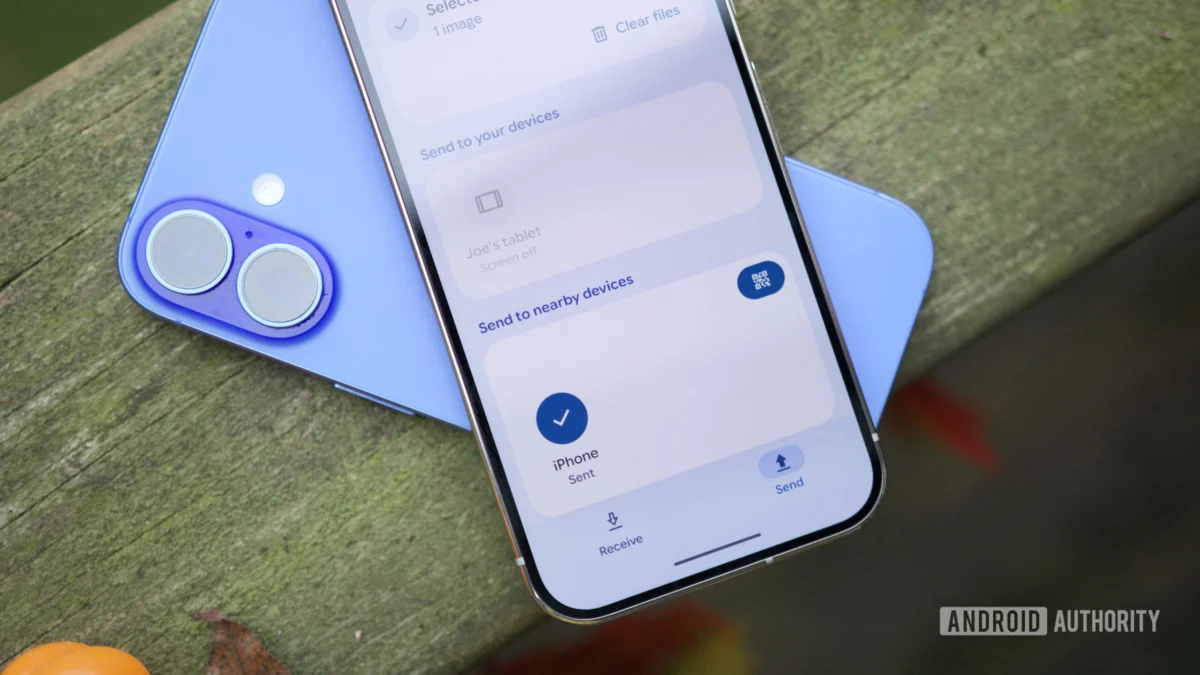
The digital ecosystem, long characterized by proprietary walled gardens and frustrating interoperability gaps, is witnessing a significant, albeit incremental, shift in how devices communicate. Reports emerging from South Korea confirm the initial operational status of a highly anticipated feature integrated into the Samsung Galaxy S26 series: the ability to seamlessly exchange files with Apple’s ecosystem using a direct counterpart to AirDrop, facilitated through the enhanced Quick Share protocol. This development marks a monumental step toward realizing a truly platform-agnostic mobile experience, something users have coveted for nearly a decade. However, the immediate availability of this transformative capability is not universal, hinging critically on a prerequisite software update that users must proactively manage.
The genesis of this cross-platform bridge lies in the evolution of file-sharing mechanisms within the Android sphere. For years, Apple’s AirDrop stood as the gold standard for effortless, local device-to-device transfer—a benchmark of user experience that Android manufacturers consistently struggled to match with their native solutions. Google’s response, Nearby Share, was a robust effort, but it remained confined primarily to the Android/ChromeOS sphere. Recognizing the need for a unified, industry-wide standard, Samsung—a key player in the Android landscape—pioneered Quick Share. This protocol, initially Samsung’s proprietary solution, was subsequently merged with Google’s Nearby Share in 2024 to create a unified, cross-vendor standard for Android devices. The current iteration, now debuting on the S26 lineup, extends this standardization effort beyond the Android family entirely, directly addressing the long-standing friction point between Android and iOS users.
Initial confirmation of this functionality rollout stems from reports circulating within Samsung’s official Korean community forums. These early adopters, utilizing the latest Galaxy S26 hardware, are documenting successful transfers initiated from their Samsung devices toward Apple products. This confirms that the underlying protocol—a harmonized blend of Quick Share and the forthcoming cross-platform specification—is now active on the ground, albeit in a geographically limited capacity.
Crucially, access to this inter-ecosystem functionality is gated by a specific software dependency. Reports indicate that for the Quick Share feature to recognize and communicate effectively with neighboring Apple devices, the device must be running a minimum version of Google Play Services, specifically identified as version 26.11.xx or newer. This dependency underscores the intricate layers of modern mobile operating systems. While the Galaxy S26 series runs Samsung’s One UI layered over Android, the core functionality facilitating these advanced connectivity protocols often resides within the background services managed by Google, emphasizing the deep reliance of the entire Android ecosystem on continuous updates to these foundational components.
For users taking delivery of their S26 devices or those residing in regions where the feature has begun deployment, the immediate troubleshooting step, should the AirDrop-like option not appear, involves manually verifying and updating Google Play Services. The prescribed pathway involves navigating through the device settings: Settings > Apps > Google Play Services > App details in store > update. This process bypasses the standard, often slower, staged rollout of Play Services updates, allowing eager early adopters to unlock features immediately upon their public announcement.
However, the dependency chain appears to be more complex than just a single Play Services version. Anecdotal evidence from users in other regions, such as India, suggests that even possessing the required Play Services version (26.11.xx or higher) does not guarantee feature activation. This disparity points toward a phased, region-by-region server-side activation orchestrated by Samsung and Google, likely tied to regulatory approvals, localized network optimizations, or simply a controlled deployment schedule designed to manage initial server load and provide targeted technical support during the initial launch window. Samsung’s strategic decision to debut this feature in South Korea first offers a controlled environment for ironing out any regional interoperability bugs before scaling globally.
The strategic significance of Samsung leading this charge cannot be overstated. As the largest manufacturer of Android smartphones globally, Samsung wields considerable influence in shaping ecosystem standards. Their deep collaborative history with Google on Quick Share—from its inception as a Samsung-specific tool to its unification with Nearby Share—positions them perfectly to shepherd the next evolution: true cross-platform parity. By integrating this capability natively into the Galaxy S26 series, Samsung is effectively setting a new baseline expectation for premium smartphone functionality. Competitors running near-stock Android will inevitably follow suit, but the S26 gains the first-mover advantage in marketing and user adoption.
From an industry analysis perspective, this development represents a major erosion of the experiential moat Apple has maintained for years. AirDrop has always been cited as a significant reason for user retention within the Apple ecosystem, especially for creative professionals and casual users who value frictionless file movement between their iPhone, iPad, and Mac. By offering a comparable, high-speed, secure local transfer mechanism directly to Apple devices via Quick Share, Samsung substantially lowers the switching cost for consumers considering migrating from iOS to Android, or for those maintaining a mixed-device household—a scenario increasingly common in modern professional and family settings.
The technology underpinning this bridge likely relies on a combination of Bluetooth LE for initial discovery and connection negotiation, followed by high-speed Wi-Fi Direct for the actual data transfer. The security protocols must be rigorously implemented to ensure that the transfer method is not only fast but also end-to-end encrypted, mirroring the trust users place in AirDrop’s established security framework. If Quick Share can demonstrate comparable speed, reliability, and security metrics to AirDrop, it elevates the entire Android sharing proposition.
The anticipated global rollout schedule confirms the urgency of this strategic push. Following the South Korean debut, the feature is slated for imminent arrival in the US market, followed shortly by broad releases across Europe, Hong Kong, Japan, Latin America, North America (beyond the initial US wave), Southeast Asia, and Taiwan. This aggressive timeline suggests that both Samsung and Google view platform interoperability not as a niche feature, but as a core competitive necessity for the next generation of flagship devices.
Looking ahead, this development signals a broader trend toward "co-opetition" in essential device functionalities. While Apple and Google remain fierce competitors in operating systems and core services, they are recognizing that basic utility features like file sharing, when siloed, actively detract from the overall user experience across the industry. The standardization of cross-platform sharing is likely to accelerate, potentially leading to mandated compliance across all major Android OEMs leveraging the unified Quick Share specification.
Furthermore, this move sets the stage for future enhancements. Once the basic file transfer mechanism is solidified across Android and iOS, the next logical steps involve integrating other capabilities. Imagine Quick Share enabling seamless clipboard synchronization, notification mirroring, or even remote control capabilities between Galaxy devices and Macs or iPhones—features that would further blur the lines between the two dominant mobile platforms.
For consumers holding the latest Galaxy hardware, the immediate takeaway is clear: ensure Google Play Services is updated to the specified minimum version. While the feature might be geographically throttled initially, being prepared maximizes the chance of immediate access once the server-side switch flips in your region. This small administrative step is the key unlocking the door to genuine, frustration-free cross-platform collaboration, finally addressing one of the longest-standing usability disparities in the mobile technology landscape. The era of demanding specific hardware just to send a few photos might finally be drawing to a close, thanks to the determined engineering efforts culminating in the Galaxy S26 series update. This isn’t just a new phone feature; it’s a foundational change in how personal technology interacts. The industry will be watching closely to see if this unified standard can maintain its integrity and performance as adoption scales globally. The initial positive reception suggests that the groundwork laid by Samsung and Google is sturdy, marking a significant victory for open, collaborative technology development over proprietary isolationism.
