

In a turn of events that has sent ripples through the electric vehicle sector and the halls of financial regulation, the Securities and Exchange Commission (SEC) has officially concluded its four-year investigation into Faraday Future Intelligent Electric Inc. The closure of the case marks the end of one of the most protracted and complex regulatory sagas of the "SPAC era," providing a surprising reprieve for a company that has spent much of the last decade teetering on the edge of insolvency and internal collapse.
The decision to shutter the investigation is particularly noteworthy given the procedural momentum that had built up behind the case. Just last year, SEC staff had taken the aggressive step of issuing "Wells Notices" to the company and several of its key executives, including its controversial founder, Jia Yueting. In the world of federal regulation, a Wells Notice is far more than a routine inquiry; it is a formal notification that the agency’s staff has gathered sufficient evidence to recommend an enforcement action. Statistically, receiving such a notice is a harbinger of imminent litigation or heavy settlements; historical data suggests that upwards of 80% to 85% of Wells Notice recipients eventually face federal charges. By walking away without an enforcement action, the SEC has handed Faraday Future a rare and significant legal victory.
The Anatomy of a Four-Year Inquiry
The federal probe, which was initiated in early 2022, was designed to peel back the layers of Faraday Future’s 2021 transition to the public markets. Like many of its peers in the EV space, Faraday Future bypassed the traditional initial public offering (IPO) route, opting instead for a merger with a special purpose acquisition company (SPAC). This maneuver allowed the startup to raise approximately $1 billion in capital, but it also invited intense scrutiny regarding the transparency of the disclosures made to investors during that process.
At the heart of the SEC’s interest were allegations that the company had made "false and misleading statements" concerning its production readiness and, perhaps more critically, the degree of control exerted by its founder, Jia Yueting. Jia, a flamboyant tech mogul who once led the Chinese conglomerate LeEco, had nominally stepped down from his leadership roles following a personal bankruptcy and his placement on a debtor blacklist in China. However, investigators—and the company’s own internal special committee—probed whether Jia remained the de facto hand on the tiller, directing day-to-day operations behind a veil of proxy executives.
The scope of the investigation expanded further in 2023 following a series of whistleblower complaints. At least three former employees alleged that the company had misrepresented the sales figures of its flagship luxury SUV, the FF91. These whistleblowers claimed that the "deliveries" celebrated by the company were not bona fide arm’s-length transactions but were instead engineered to project an image of commercial viability to a skeptical market. The SEC spent 2024 and much of 2025 conducting extensive depositions of former executives and subpoenaing internal communications to verify these claims.
A Shifting Regulatory Landscape
The dismissal of the Faraday Future case does not occur in a vacuum. It coincides with a broader, more systemic decline in SEC enforcement activity against publicly traded entities. Recent reports indicate that in the 2025 fiscal year, the commission initiated a historically low number of cases against public companies. This shift has led industry analysts to debate whether the agency is experiencing a "strategic pivot" in its enforcement priorities or is simply struggling with resource constraints following years of aggressive litigation against the crypto sector and the fallout of the 2020-2021 SPAC boom.
Faraday Future is not the only EV startup to see its legal clouds dissipate. The SEC recently closed a similar probe into the now-bankrupt Fisker Inc., and previously reached a settlement with Lucid Motors. However, the total exoneration—or at least the lack of penalty—for Faraday Future is distinct. While other companies often paid millions to put these matters behind them, Faraday Future appears to have emerged without a formal fine or a "neither admit nor deny" settlement, a result that Jia Yueting characterized as a vindication of the company’s integrity.
The Turbulent Legacy of Jia Yueting
To understand the weight of this SEC decision, one must look at the chaotic history of Faraday Future itself. Founded in 2014, the company was initially hailed as a "Tesla killer," a California-based startup backed by Chinese billions and staffed by elite talent from Apple, BMW, and SpaceX. Its 2016 debut at the Consumer Electronics Show (CES) was a masterclass in hype, featuring a concept car that looked more like a spaceship than a sedan.
However, the veneer of success cracked quickly. By late 2017, the company was hemorrhaging cash. The collapse of Jia’s LeEco empire in China left Faraday Future adrift, leading to mass furloughs and a desperate search for a white knight. That savior appeared to be the Chinese real estate giant Evergrande, which pledged $2 billion in 2018. Yet, that partnership dissolved into a bitter legal battle within months, with Evergrande accusing the startup of burning through cash without meeting milestones, and Faraday Future accusing Evergrande of holding its intellectual property hostage.
Throughout these crises, the question of Jia Yueting’s role remained central. Even after his 2019 bankruptcy filing, which was intended to settle billions in personal debt, Jia’s influence remained pervasive. This led to a 2022 internal coup where the board of directors attempted to sideline Jia and his associates. The fallout was dramatic, involving alleged death threats against board members and a campaign by "Global Partners"—a group of Jia-aligned employees—to retake control. Ultimately, the pro-Jia faction succeeded, leading to the resignation of several independent directors and the installation of a leadership team loyal to the founder.
Industry Implications and the SPAC Hangover
The closure of the Faraday Future probe serves as a post-script to the exuberant SPAC era of 2020 and 2021. During that period, dozens of "pre-revenue" technology companies were catapulted onto the Nasdaq and NYSE, often based on little more than optimistic projections and sleek renderings. The subsequent collapse in the share prices of many of these companies has led to a "SPAC hangover," characterized by investor lawsuits and regulatory crackdowns.
By failing to bring an enforcement action against Faraday Future, despite the recommendation of its own staff, the SEC may be signaling a high bar for proving "intent to defraud" in cases involving forward-looking statements. For the broader EV industry, this may lower the immediate threat of federal prosecution for companies that missed their lofty production targets, though it does little to restore the evaporated trust of retail investors who saw their portfolios decimated as these stocks tumbled.
A Pivot Toward Survival: Robotics, Vans, and Crypto
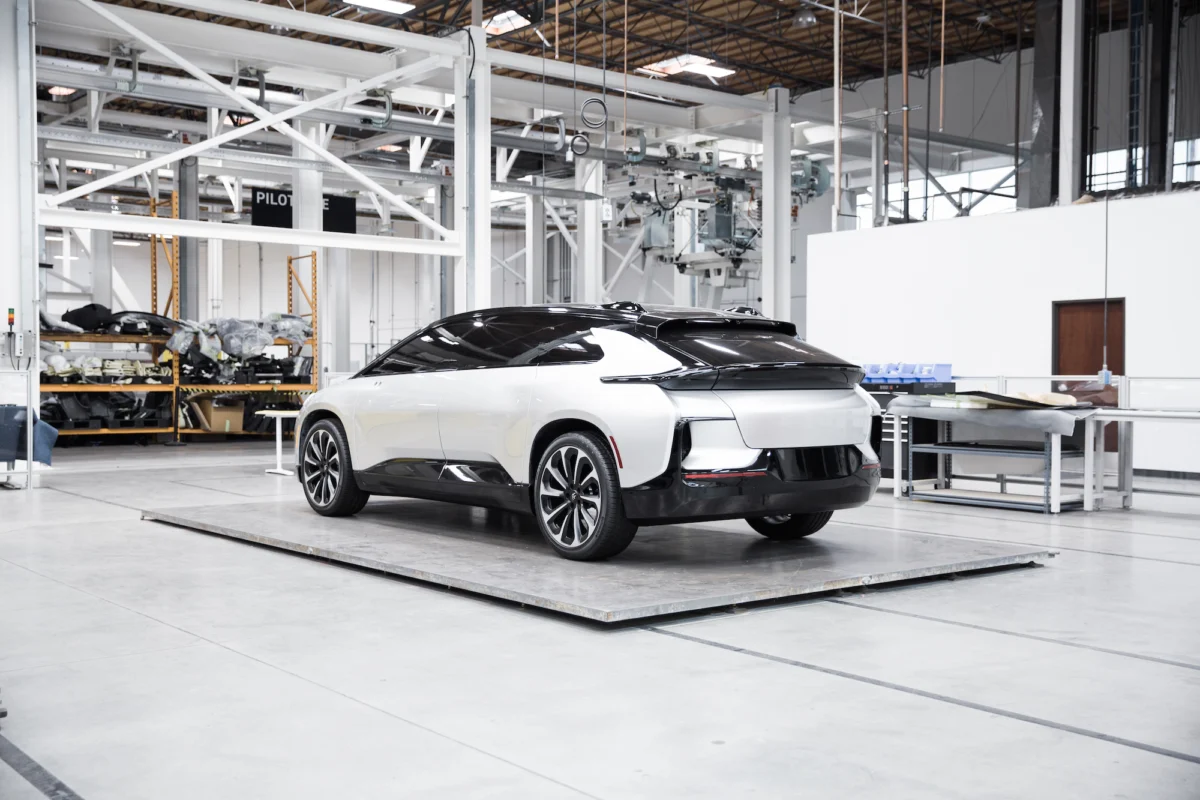
Freed from the "great deal of time, effort, and money" required to cooperate with federal investigators, Faraday Future is now attempting a radical transformation. The FF91, a luxury vehicle with a price tag exceeding $300,000, remains a niche product with negligible sales volume. Recognizing the limitations of its original business model, the company has begun exploring more utilitarian avenues.
This includes a plan to import affordable electric and hybrid vans from China for the North American market—a move that leverages China’s manufacturing dominance while bypassing the astronomical R&D costs of developing new platforms in-house. Even more surprising is the company’s recent foray into "white-label" robotics, where it appears to be rebranding Chinese-made humanoid robots for sale under its own banner. Perhaps most bizarrely, the company’s strategic investments have led it toward the cryptocurrency sector, effectively turning a biotechnology firm it invested in into a crypto-focused entity.
Critics view these pivots as a desperate "shotgun approach" to maintain relevance and generate any form of cash flow. Supporters, however, argue that in a world where hardware is increasingly commoditized, Faraday Future’s value lies in its brand and its ability to act as a bridge between Chinese manufacturing and Western markets.
The Looming Nasdaq Threat
Despite the legal victory, Faraday Future’s existential crisis is far from over. The company recently received a deficiency notice from the Nasdaq, warning that its stock price has remained below the $1 minimum requirement for too long. If the company cannot engineer a sustained rally—possibly through a reverse stock split or a sudden infusion of capital—it faces de-listing from the exchange.
De-listing would be a catastrophic blow, relegating the stock to the "over-the-counter" markets and cutting off access to the institutional capital required to keep its assembly lines moving. While the end of the SEC investigation removes a massive "contingent liability" from the company’s balance sheet, it does not solve the fundamental problem of a lack of demand for its core product and a dwindling cash reserve.
Conclusion: A Pyrrhic Victory?
The SEC’s decision to drop its investigation into Faraday Future will be studied by legal scholars and market analysts for years to come. It represents a rare instance where a company survived a Wells Notice and outlasted the regulatory clock. For Jia Yueting, it is a personal triumph that allows him to maintain his position at the vanguard of the company he built, lost, and reclaimed.
However, for the electric vehicle industry, the news is a somber reminder of the volatility that defined the last five years. As the sector matures, the focus is shifting from "who is being investigated" to "who is actually profitable." Faraday Future has cleared the first hurdle, but the second may prove even more daunting. Without the shadow of the SEC, the company can no longer blame its struggles on regulatory interference. The world is now watching to see if this "Tesla killer" can finally deliver on a decade of promises, or if the end of the investigation is simply the final quiet chapter before the lights go out.
