

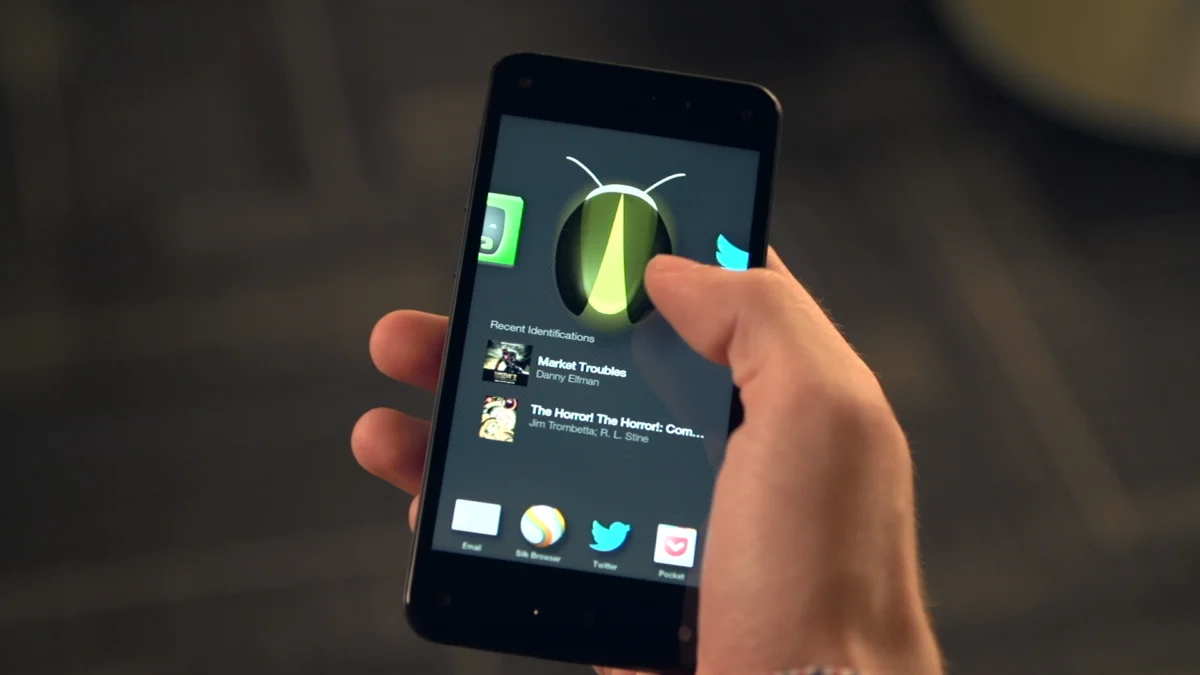
More than a decade after the spectacular flameout of the Fire Phone, Amazon is reportedly preparing for a second act in the smartphone industry. This clandestine effort, internally codenamed "Transformer," signals a fundamental shift in how the e-commerce and cloud computing giant views its role in the consumer hardware ecosystem. Unlike its predecessor, which was often criticized as a gimmick-laden shopping portal, the Transformer project appears to be a sophisticated vehicle for Amazon’s massive investments in generative artificial intelligence and the next evolution of its Alexa assistant.
The development is reportedly being spearheaded by a specialized, secretive unit within the Devices and Services division known as ZeroOne. To lead this ambitious venture, Amazon has tapped J Allard, a veteran technologist whose pedigree includes a pivotal role in the creation and launch of the Xbox during his tenure at Microsoft. Allard’s involvement suggests that Amazon is moving away from the "tablet-plus" philosophy that defined its previous hardware efforts and is instead looking toward a disruptive, platform-oriented approach that emphasizes high-performance integration and breakthrough user experiences.
The decision to re-enter the smartphone market is not merely a matter of corporate pride; it is a strategic necessity born from the shifting sands of the AI revolution. For years, Amazon has operated at a disadvantage in the mobile space, forced to deliver its services—from Prime Shopping to Kindle—through the gatekeepers of the duopoly held by Apple’s iOS and Google’s Android. By developing its own hardware, Amazon seeks to eliminate these intermediaries, creating a vertically integrated environment where its AI services can operate without the restrictions or "taxes" imposed by its primary competitors.
At the heart of Project Transformer is the recently revamped Alexa, now rebranded and enhanced as Alexa+. This is not the voice assistant of 2014 that struggled to do much more than set timers or report the weather. Powered by advanced generative AI, Alexa+ is designed to function as a proactive digital agent. In the context of a dedicated smartphone, this means an interface that moves beyond the traditional grid of apps. Instead of a user manually opening a travel app, a calendar app, and a browser to plan a trip, the Transformer phone is envisioned as a device where Alexa+ handles the heavy lifting—synthesizing data across the Amazon ecosystem to build itineraries, manage schedules, and provide real-time recommendations.
The timing of this project aligns with Amazon’s aggressive financial commitment to the AI arms race. The company recently signaled its intent to spend upwards of $200 billion on capital expenditures in 2026, with a significant portion of that capital earmarked for AI infrastructure, custom silicon, and robotics. This follows a massive $50 billion investment into OpenAI, illustrating that Amazon is no longer content to play catch-up. They are building a foundation where the smartphone is not just a screen, but a primary touchpoint for a sprawling AI-driven lifestyle.
To understand the potential of the Transformer phone, one must first look at the wreckage of the 2014 Fire Phone. That device failed for several reasons: its "Dynamic Perspective" 3D display was seen as a battery-draining novelty, its pricing was non-competitive, and its Appstore lacked the depth of the Google Play Store. Most importantly, it felt like a device built to serve Amazon’s bottom line rather than the user’s needs. However, the technological landscape of 2026 is vastly different. The industry is currently moving toward "Ambient Intelligence," where the hardware becomes secondary to the services it provides. If Amazon can position the Transformer as the ultimate "AI Phone," it could bypass the "app gap" that killed the Fire Phone by focusing on agentic workflows that don’t require a million third-party applications.
Industry analysts suggest that the ZeroOne team is focusing heavily on "personalized friction reduction." This involves a deep integration of Amazon Shopping, Prime Video, and Prime Music into the very fabric of the operating system. Imagine a device that uses AI to predict when you are running low on household essentials and offers a one-tap replenishment through a system-level notification, or a phone that automatically optimizes your media consumption based on your Prime profile. This level of integration is something Amazon cannot achieve on an iPhone or a Pixel, where they are treated as just another third-party developer.
Furthermore, the involvement of J Allard brings a "platform-first" mentality that was missing during the Fire Phone era. At Microsoft, Allard was known for building ecosystems—most notably the Xbox Live service—that turned hardware into a community. If Amazon can apply this logic to a smartphone, focusing on the "Prime" membership as a lifestyle OS, they may find a loyal audience among the hundreds of millions of Prime subscribers worldwide. The smartphone becomes the physical manifestation of a Prime subscription, potentially offered at a disruptive price point or bundled with service tiers to ensure rapid market penetration.
However, the path to success is fraught with significant technical and market challenges. The smartphone market is currently at a point of saturation, with consumers holding onto their devices longer than ever. For Amazon to break through, they must offer a hardware experience that rivals the build quality of the iPhone 16 and the Samsung Galaxy S26, while providing an AI utility that justifies switching ecosystems. There is also the question of the operating system; while Amazon has historically used a forked version of Android (Fire OS) for its tablets and Fire TV sticks, a modern flagship smartphone requires a level of polish and Google Service compatibility that forked OSs often lack. The Transformer project will likely have to address whether it will support the Google Play Store or if Amazon’s AI is powerful enough to render traditional apps obsolete.
The broader implications for the tech industry are profound. An Amazon smartphone that successfully integrates Alexa+ could force Apple and Google to accelerate their own AI hardware integrations. We are already seeing the beginnings of this with Apple Intelligence and Google’s Gemini-centric Pixel updates. Amazon’s entry would represent a third "AI-native" mobile platform, potentially disrupting the current power balance. If Amazon can leverage its $200 billion capex to produce its own custom AI chips for the Transformer, it could achieve a level of hardware-software synergy that has previously been the exclusive domain of Apple.
Moreover, the Transformer phone represents a pivot in Amazon’s "Devices and Services" strategy, which has recently seen layoffs and restructuring. By consolidating its efforts under the ZeroOne unit and focusing on a singular, high-impact flagship device, Amazon is signaling that it is moving away from the "throw everything at the wall" approach of the past. The goal is no longer just to have Alexa in every room, but to have Alexa in every pocket, serving as the primary interface for the digital world.
As we look toward the rumored 2026 release window, the focus will remain on how Amazon handles the privacy concerns inherent in a device so deeply integrated with a user’s shopping and browsing habits. In an era where data privacy is a top-tier consumer concern, Amazon will need to demonstrate that its AI-first phone is a tool for empowerment rather than just a sophisticated data-collection engine.
The "Transformer" codename is perhaps the most telling aspect of this report. It suggests a device capable of changing—not just in form, but in function—shifting the definition of what a smartphone is expected to do. If J Allard and the ZeroOne team can deliver a device that truly puts generative AI at the core of the user experience, Amazon may finally erase the stigma of the Fire Phone and secure its place as a dominant force in the mobile future. The stakes are incredibly high, but with a $200 billion war chest and a revamped AI vision, Amazon is clearly playing to win.
