

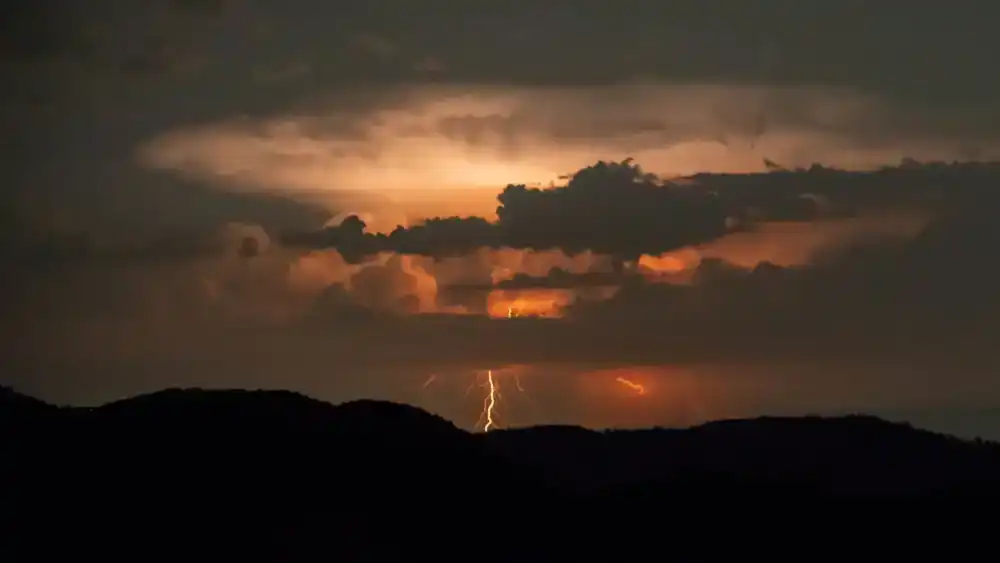
As the global climate shifts into a more volatile state, the traditional methods of land management and firefighting are being pushed to their breaking points. The "new normal" of the wildfire season is characterized by longer durations, greater intensity, and a disturbing trend toward "megafires" that consume hundreds of thousands of acres. Amidst this backdrop of escalating crisis, a provocative and technologically ambitious proposition has emerged: if we cannot easily stop a fire once it has grown into an inferno, perhaps we should stop the spark that starts it. Specifically, startups are now claiming they can intervene in the atmosphere to prevent lightning from ever reaching the ground, effectively "disarming" the sky during periods of extreme fire risk.
The premise sounds like science fiction, yet it is rooted in decades of atmospheric research and Cold War-era technology. To understand the gravity of this proposal, one must first understand the sheer scale of the problem. While human-caused ignitions—such as downed power lines or unattended campfires—often dominate headlines, lightning-sparked fires are frequently more destructive. They often occur in remote, rugged terrain where initial attack crews cannot easily reach them, allowing the flames to establish a foothold long before the first gallon of water is dropped. In the Arctic boreal regions and the high Sierras, lightning is the primary driver of forest transformation. As the planet warms, the atmosphere holds more moisture and energy, leading to an uptick in convective activity and, consequently, a higher frequency of lightning strikes in vulnerable ecosystems.
The mechanism behind lightning prevention is a masterclass in electrostatic physics. At its simplest level, a lightning bolt is a massive version of the static shock you experience after walking across a carpet and touching a metal doorknob. In the atmosphere, the "carpet" consists of turbulent clouds where updrafts and downdrafts force ice crystals and "graupel"—soft, small hail—to collide. These collisions strip electrons from the rising ice and deposit them on the falling graupel. This process creates a profound charge separation: the top of the cloud becomes positively charged, while the base becomes heavily negative. When the electrical potential between the cloud and the ground exceeds the insulating properties of the air, the atmosphere "breaks down," and a bolt of plasma carves a path through the sky to equalize the pressure.
The technological intervention currently being proposed involves the use of "chaff." This material consists of microscopic fiberglass strands coated in a thin layer of aluminum. When dispersed into a developing thunderstorm via aircraft or rockets, these metallic fibers act as millions of tiny dipoles. In theory, they provide a conductive path that allows the accumulated static electricity to "bleed off" slowly and harmlessly through a process known as corona discharge. By neutralizing the charge buildup before it reaches a critical threshold, the technology aims to prevent the sudden, violent discharge of a lightning strike.
This concept is not entirely new. The United States military has used aluminum chaff for decades to bloom on radar screens and confuse surface-to-air missiles. In the 1960s and 70s, the U.S. Forest Service conducted "Project Skyfire," an experimental program designed to test whether seeding clouds with silver iodide or chaff could reduce lightning ignitions. While the early results showed some promise, the program was eventually sidelined due to inconsistent data and the sheer logistical difficulty of seeding every suspicious cloud in the American West.
Modern proponents, such as the startup Skyward Wildfire, argue that we now have the computational power and meteorological modeling necessary to make this approach surgical and effective. Rather than a scattershot application, they propose targeted deployments on "high-risk" days—those rare windows of time when humidity is bottoming out, temperatures are soaring, and dry thunderstorms are forecasted over dense, tinder-dry fuel loads.
However, the scientific community remains cautious, if not outright skeptical. The primary hurdle is the lack of transparent, peer-reviewed evidence. While the physics of corona discharge is sound in a laboratory setting, the atmosphere is a chaotic, non-linear system. Critics point out that for chaff to effectively neutralize a massive thunderhead, it might require concentrations of material that are logistically impossible to maintain over thousands of square miles. Furthermore, there is the question of environmental impact. While aluminum and fiberglass are relatively inert, the large-scale dispersal of metallic fibers into the wilderness raises concerns about water quality, soil health, and the respiratory systems of local wildlife.
Beyond the technical hurdles lies a more profound ecological and philosophical dilemma: the "Fire Suppression Paradox." For over a century, the prevailing philosophy of forest management in North America was the total suppression of fire. The logic was simple: fire is a threat to timber resources and human lives, so every spark must be extinguished immediately. This policy, famously championed by the "Smokey Bear" campaign, was too successful for its own good. By removing fire from the landscape, we inadvertently allowed vast amounts of "fuel"—dead wood, thick underbrush, and overcrowded saplings—to accumulate.
In a natural cycle, frequent, low-intensity lightning fires would thin out this fuel, creating a mosaic of open forests that are more resilient to extreme heat. By suppressing these natural "clean-up" fires, we have created a landscape that is essentially a giant tinderbox. When a fire finally does break out today, it often bypasses the forest floor and climbs into the canopy, resulting in "crown fires" that are nearly impossible to stop and that sterilize the soil.
If we deploy technology to stop lightning, are we simply doubling down on a failed 20th-century policy? Many climate scientists and ecologists argue that the problem isn’t the existence of fire, but our relationship to it. Daniel Swain, a prominent climate scientist at the University of California, has noted that preventing ignitions does not address the underlying causes of destructive wildfires. The real drivers are the "thirstiness" of the atmosphere—vapor pressure deficit—and the sheer volume of accumulated biomass. In this view, stopping a lightning strike is merely delaying the inevitable. If the fuel remains on the ground and the climate continues to dry out the landscape, that fuel will eventually find a spark, whether from a rogue lightning bolt, a discarded cigarette, or a clashing power line.
To their credit, the companies developing this technology acknowledge these concerns. They emphasize that lightning suppression is not intended to be a "silver bullet" or a replacement for forest thinning and prescribed burns. Instead, they frame it as a tactical tool to be used in emergencies. If a dry lightning storm is predicted over a community that is already under a "Red Flag Warning," the ability to "turn off" the ignitions for 24 hours could be the difference between a routine day and a catastrophic evacuation.
The industry implications of this technology are vast. If proven effective, lightning suppression could become a staple of the burgeoning "Climate Tech" sector, attracting investment from insurance companies desperate to lower their payouts for wildfire damage. It could also find a home in the carbon credit market; if a company can prove that it prevented a fire that would have released millions of tons of sequestered carbon into the atmosphere, those "prevented emissions" could theoretically be monetized.
However, the regulatory and ethical landscape is a minefield. Who owns the weather? If a company seeds a cloud to prevent lightning in one county, and that same cloud subsequently produces a flash flood in the next county, who is liable? There is also the risk of moral hazard. If policymakers believe that a technological fix for wildfires is on the horizon, they may be less inclined to fund the difficult, expensive, and politically unpopular work of forest thinning and managed retreat from the Wildland-Urban Interface (WUI).
As we move toward the middle of the 21st century, the debate over lightning prevention will likely intensify. It represents a broader trend in climate adaptation: the move from passive observation to active "geoengineering" or weather modification. We are entering an era where the boundaries between the natural and the artificial are blurring.
Ultimately, the question of whether we should prevent lightning is as much about our values as it is about our technology. Do we want a managed, "safe" wilderness where the risks are mitigated by silver-coated fibers and satellite-guided drones? Or do we accept that fire is an essential, if terrifying, part of the Earth’s respiratory system? The most likely path forward is a middle ground—a hybrid approach where technology is used to protect human life and infrastructure during peak emergencies, while we simultaneously do the hard work of restoring fire’s natural role in the landscape.
The "spark gap" we must bridge is not just the electrical one between the cloud and the ground, but the gap between our desire for control and our need for ecological balance. As we test the limits of our atmospheric interventions, we must be careful not to create a world where the absence of small fires only paves the way for the ultimate conflagration. The tools we build today will determine the forests we leave behind tomorrow, and in the high-stakes game of wildfire prevention, there is very little room for error.
