

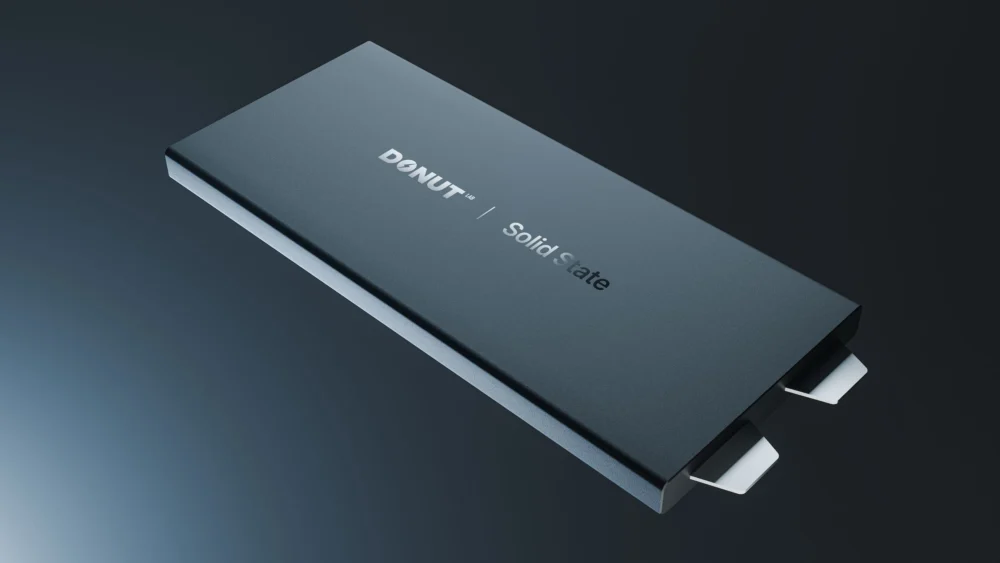
The global transition toward electric mobility has long been tethered to a singular, stubborn bottleneck: the limitations of the lithium-ion battery. While incremental improvements in energy density and charging speeds have sustained the electric vehicle (EV) market for a decade, the industry remains in a feverish pursuit of a "holy grail" technology that can match the convenience of internal combustion engines without the associated carbon footprint. Into this high-stakes environment stepped Donut Lab, a relatively obscure Finnish startup that has recently sent shockwaves through the automotive and energy sectors. By claiming to have perfected a solid-state battery ready for mass production—a feat that has eluded multi-billion-dollar giants like Toyota and CATL for years—Donut Lab has positioned itself at the center of a volatile debate between revolutionary optimism and scientific skepticism.
The allure of solid-state technology lies in its fundamental architecture. In a traditional lithium-ion battery, ions move between the anode and cathode through a liquid electrolyte. This liquid is not only bulky but also flammable, necessitating heavy cooling systems and safety enclosures. Solid-state batteries replace this liquid with a solid material, allowing for a more compact design, higher energy density, and inherent stability. In theory, this transition should yield vehicles with double the range of current EVs, charging times comparable to a stop at a gas station, and a significantly reduced risk of thermal runaway. However, the path from theoretical physics to a production-ready automotive component is notoriously treacherous, littered with the remnants of startups that promised a breakthrough but failed at the hurdle of scalability.
Donut Lab’s entry into the public eye was anything but subtle. Ahead of the Consumer Electronics Show (CES) in Las Vegas, the company released a provocative announcement claiming its all-solid-state cells were ready for integration into production vehicles. The metrics provided were, by any industry standard, staggering. The company cited an energy density of 400 watt-hours per kilogram (Wh/kg)—a massive leap over the 250 to 300 Wh/kg found in today’s premium commercial cells. Furthermore, Donut Lab asserted that its batteries could achieve a full charge in roughly five minutes, endure an unprecedented 100,000 cycles, and maintain 99% capacity across extreme temperature fluctuations. Perhaps most controversially, the company claimed these batteries would be cheaper than current lithium-ion technology and manufactured using "100% green and abundant materials."
For veteran observers of the battery industry, these claims triggered immediate red flags. The primary reason for skepticism is the "contradictory parameter" problem. In battery chemistry, there is almost always a trade-off between energy density and power density. High energy density typically requires thicker electrodes to store more energy, but thicker electrodes slow down the movement of ions, making ultra-fast charging difficult. Conversely, fast-charging batteries often sacrifice density to allow for rapid ion transport. To claim a battery that excels at both, while also offering extreme longevity and low cost, is to claim a defiance of established electrochemical norms.
This skepticism was voiced loudly by academic and industry leaders. Shirley Meng, a professor of molecular engineering at the University of Chicago and a prominent figure in battery research, noted the lack of physical demonstrations at Donut Lab’s CES booth. Her stance reflected a broader sentiment in the scientific community: in a field where "breakthroughs" are announced weekly but commercialized once a decade, the burden of proof is absolute. Eric Wachsman of the University of Maryland and Ion Storage Systems echoed this, pointing out that Donut Lab seemed to emerge "out of nowhere," lacking the long trail of peer-reviewed research or public pilot programs typical of a company on the verge of mass production.
The competitive landscape further complicates Donut Lab’s narrative. The race for solid-state supremacy is currently a geopolitical battleground. In China, companies like CATL and Changan are aggressively pushing toward "semi-solid-state" solutions—using gel-like electrolytes as an intermediary step—with plans for limited "all-solid-state" production by 2027. Toyota, which holds more solid-state patents than any other entity, has repeatedly pushed back its timelines, now aiming for a 2027 or 2028 debut. If a small Finnish startup has indeed bypassed these titans to reach the finish line first, it would represent one of the most significant upsets in the history of industrial technology.
In response to the mounting doubt, Donut Lab launched a calculated public relations campaign titled "I Donut Believe." The initiative, led by co-founder and CEO Marko Lehtimäki, acknowledged the skepticism head-on, adopting a "show, don’t tell" philosophy through a series of timed reveals. The first piece of evidence, released on February 23, involved third-party testing conducted by VTT, the Technical Research Centre of Finland. The test focused on one of the company’s most radical claims: charging speed.
The results of the VTT test were, on the surface, a victory for Donut Lab. The data showed a single cell charging from 0% to 80% capacity in approximately four and a half minutes. To put this in perspective, even the fastest-charging EVs currently on the market require 15 to 20 minutes to reach a similar state of charge under ideal conditions. However, seasoned engineers noted a critical caveat in the report: the cell experienced significant heat generation during the rapid charge. While the battery survived the test, the thermal output suggests that any vehicle utilizing this technology would require an incredibly sophisticated—and potentially heavy or expensive—thermal management system. This brings into question whether the "low cost" and "high density" claims can survive the transition from a single laboratory cell to a multi-cell battery pack in a consumer vehicle.
The "I Donut Believe" campaign is designed to build momentum toward a final reveal on March 2, but the questions remaining are as significant as the ones already answered. A single-cell test for charging speed is a far cry from proving a 100,000-cycle lifespan. In the battery world, longevity is often the silent killer of innovation. Many chemistries work brilliantly for the first 50 cycles but degrade rapidly due to the formation of dendrites—microscopic, needle-like structures of lithium that can pierce the separator and cause short circuits. Proving that a solid-state electrolyte can suppress dendrite growth over thousands of high-speed charge cycles is the ultimate hurdle.
Furthermore, the claim of using "green and abundant materials" remains shrouded in mystery. Most solid-state research focuses on sulfide-based or oxide-based electrolytes, both of which have complex supply chains and manufacturing requirements. If Donut Lab has discovered a new material pathway that avoids the use of scarce minerals like cobalt or nickel while maintaining high performance, the implications would extend far beyond the EV market. It would shift the entire geopolitical strategy of energy storage, reducing the world’s reliance on specific mineral-rich regions.
The industry is also watching Donut Lab’s manufacturing claims with a critical eye. It is one thing to produce a high-performance coin cell in a laboratory; it is another entirely to manufacture square miles of defect-free solid-state separators at a cost that competes with the highly optimized, trillion-dollar lithium-ion supply chain. The "Valley of Death" for battery startups is usually found in the transition from pilot lines to Giga-scale factories.
As we look toward the future, the Donut Lab saga serves as a microcosm of the broader tensions in the climate tech sector. We are in an era where the urgency of the climate crisis demands rapid, "extraordinary" technological leaps, yet the laws of chemistry and the realities of industrial scaling remain unyielding. If Donut Lab’s technology is legitimate, it could accelerate the demise of the internal combustion engine by a decade, making EVs accessible to those without home charging and those who require long-distance hauling capabilities. If it fails to meet its promises, it risks becoming another cautionary tale that fuels cynicism and slows investment in genuine innovation.
For now, the automotive world remains in a state of guarded anticipation. The data released so far suggests that Donut Lab has indeed developed a cell with remarkable power characteristics, but the "holy grail" requires a perfect alignment of density, safety, longevity, and cost. As the countdown to their next reveal ticks down, the company is learning that in the world of deep tech, the only thing more powerful than a bold claim is a transparent data set. The industry does not just want to believe; it needs to see the proof that the barrier to the next generation of energy has finally been broken. Regardless of the outcome, the conversation started by this Finnish startup has forced a re-evaluation of what we should expect from the future of transport—and how quickly that future might arrive.
