

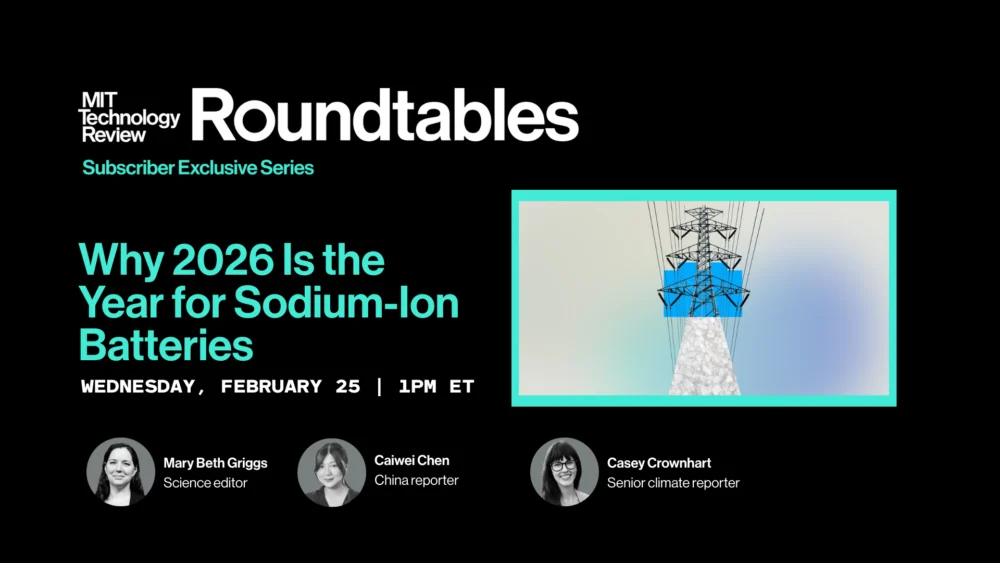
For the better part of three decades, the narrative of the portable electronics and electric vehicle (EV) revolutions has been written in lithium. As the lightest metal on the periodic table, lithium offered an unparalleled combination of energy density and weight, making it the undisputed champion of the battery world. However, as the global economy hurtles toward a total decarbonization of the transport and energy sectors, the limitations of the lithium-ion hegemony are becoming impossible to ignore. Supply chain bottlenecks, the volatile pricing of raw materials, and the environmental and ethical concerns surrounding lithium extraction have forced the industry to look for a viable alternative. That alternative has arrived in the form of sodium-ion technology, and current industrial trajectories suggest that 2026 will be the definitive inflection point where this technology moves from the laboratory and pilot plant into the heart of the mass market.
The move toward sodium-ion batteries represents more than just a chemical swap; it is a strategic realignment of the global energy infrastructure. Sodium, found in abundance in the world’s oceans and salt crusts, is roughly 1,000 times more plentiful than lithium. This geographic ubiquity promises to democratize battery production, allowing nations without significant lithium deposits to develop domestic energy storage industries. As we approach the mid-2020s, the convergence of manufacturing maturity, material science breakthroughs, and a desperate need for lower-cost energy storage is positioning sodium-ion as the most significant challenger to lithium’s dominance.
The Chemical Imperative: Why Sodium, Why Now?
To understand why sodium-ion is reaching a critical mass in 2026, one must first look at the fundamental chemistry. Sodium and lithium are "chemical cousins," both residing in the first column of the periodic table. This similarity allows sodium-ion batteries to function on a principle nearly identical to their lithium-based counterparts: ions move between an anode and a cathode through an electrolyte to store and release energy.
Historically, the primary hurdle for sodium was its physical size. Sodium ions are larger and heavier than lithium ions, which meant they were more difficult to "intercalate" or tuck into the crystal structure of the battery’s electrodes. This resulted in lower energy density and shorter cycle lives. However, the development of "hard carbon" anodes and new classes of Prussian Blue analogues for cathodes has largely mitigated these issues. While sodium-ion batteries still lag behind high-end nickel-cobalt-manganese (NMC) lithium batteries in terms of energy per kilogram, they have now reached parity with, or even exceeded, the performance of Lithium Iron Phosphate (LFP) batteries in several key metrics.
By 2026, the industry is expected to see sodium-ion cells achieving energy densities of 160–180 Wh/kg. While this won’t power a long-range luxury sedan 500 miles on a single charge, it is more than sufficient for urban commuters, micro-mobility devices like e-bikes, and—most importantly—stationary grid storage.
Economic Disruptions and Supply Chain Resilience
The most compelling argument for the shift toward sodium is economic. The cost of lithium carbonate has been a rollercoaster, at times spiking by 400% or more in a single year due to supply-demand imbalances. Sodium, by contrast, is essentially dirt cheap. The precursor materials for sodium-ion batteries are estimated to be 30% to 40% less expensive than those for lithium-ion.
Furthermore, sodium-ion batteries offer a hidden manufacturing advantage: they do not require copper current collectors for the anode. Because sodium does not alloy with aluminum at low voltages (unlike lithium), manufacturers can use aluminum foil for both the cathode and the anode. This not only reduces costs further but also simplifies the recycling process.
In the current geopolitical climate, supply chain resilience is a matter of national security. The concentration of lithium processing in a handful of regions has created a "bottleneck" risk. Sodium-ion technology allows for a more localized "salt-to-battery" pipeline. By 2026, we anticipate the completion of several "Gigafactory" scale production lines specifically designed for sodium-ion, particularly in East Asia and parts of Europe, which will allow for the economies of scale necessary to drive prices down to the $40–$50 per kWh range at the pack level.
The EV Market: The Rise of the "People’s Car"
While the high-end automotive market will likely stick with lithium-ion (or eventually solid-state lithium) for its performance benefits, the mass-market EV sector is where sodium-ion will make its greatest impact. The year 2026 is projected to see the first major wave of affordable, entry-level electric vehicles powered exclusively by sodium batteries.
These vehicles will target the "value" segment—cars priced between $15,000 and $25,000. For the average urban driver who travels less than 40 miles a day, a sodium-ion battery providing a 150-to-200-mile range is an ideal trade-off. Sodium-ion also brings a significant safety advantage: it is much less prone to thermal runaway (fire) than lithium-ion, and it can be discharged to zero volts for shipping, making transportation of the batteries significantly safer and cheaper.
Moreover, sodium-ion batteries perform remarkably well in cold climates. Lithium-ion batteries famously lose a significant portion of their capacity and charging speed when temperatures drop below freezing. Sodium-ion cells, however, retain upwards of 90% of their capacity at -20°C. This makes them a superior choice for the Nordic markets, Canada, and the northern United States, solving one of the primary "range anxiety" hurdles for potential EV buyers in colder regions.
Stationary Storage: The Grid’s New Backbone
Beyond the garage, the most transformative application for sodium-ion technology lies in stationary energy storage systems (ESS). As the world integrates more intermittent renewable energy from wind and solar, the need for massive, "always-on" battery arrays has skyrocketed.
In stationary storage, the weight of the battery is largely irrelevant. If a battery is twice as heavy as a lithium-ion equivalent but costs 40% less and lasts for 5,000 cycles, it is the clear winner for a utility company. Sodium-ion is perfectly suited for this "long-duration" role. By 2026, we expect to see the commissioning of the first multi-gigawatt-hour storage projects utilizing sodium-ion chemistry. These projects will act as a buffer for the grid, storing excess solar power during the day and discharging it during the evening peak, effectively replacing the "peaker plants" that currently run on natural gas.
Industrial Maturation and the Path to 2026
The transition to sodium-ion is not a distant dream; the infrastructure is being laid today. One of the most significant advantages of this technology is its compatibility with existing lithium-ion manufacturing equipment. Approximately 80% to 90% of the machinery used to produce LFP batteries can be repurposed for sodium-ion with only minor adjustments to the chemical mixing and coating processes. This "drop-in" capability means that the transition does not require the multi-billion-dollar "ground-up" investment that an entirely new technology might.
However, the road to 2026 is not without challenges. The industry must still standardize the supply chain for hard carbon anodes, which are currently more expensive than the graphite used in lithium batteries due to lower production volumes. There is also the matter of "cycle life"—the number of times a battery can be charged and discharged before it degrades. While lithium-ion can reach 3,000 to 6,000 cycles, sodium-ion is currently hovering around the 2,000 to 4,000 mark. Material scientists are working feverishly to close this gap, and many experts believe that by 2026, the longevity of sodium cells will be sufficient for the 10-to-15-year lifespan required for both automotive and grid applications.
A Multi-Chemistry Future
It is a mistake to view the battery market as a zero-sum game where one chemistry must "kill" the other. Instead, 2026 will mark the beginning of a specialized, multi-chemistry ecosystem. In this future, high-nickel lithium batteries will power long-haul trucking and luxury EVs; LFP will remain a staple for mid-range vehicles; and sodium-ion will dominate the low-cost EV market and the massive global grid storage sector.
The emergence of sodium-ion is a testament to the maturation of the energy transition. It signals a move away from the "scarcity mindset" of the early 2020s toward a more sustainable, abundant, and economically stable model. As we look toward 2026, the "Year of Sodium" represents more than just a breakthrough in electrochemistry—it represents the moment when the clean energy transition finally becomes affordable for everyone, everywhere. The humble salt of the earth is poised to become the most important commodity of the next decade, ensuring that the path to a carbon-neutral future is paved with a material that is as accessible as it is powerful.
