

For billions of years, Earth was defined by its natural boundaries: a rocky core, a liquid hydrosphere, and a delicate gaseous envelope that shielded life from the vacuum of the cosmos. However, in the span of less than seventy years, humanity has added a new, invisible layer to this planetary architecture. This layer, often referred to as the "anthroposphere," is a dense, swirling shell of high-technology hardware, discarded rocket stages, and thousands of active sensors that facilitate the modern world. What began in 1957 with the solitary, rhythmic beep of Sputnik 1 has evolved into a hyper-congested orbital ecosystem that is both a testament to human ingenuity and a looming environmental catastrophe.
The sheer scale of this transformation is difficult to overstate. Just five years ago, the number of active satellites orbiting our planet hovered around 3,000—a figure that had grown steadily but predictably since the dawn of the Space Age. Today, that number has surged to approximately 14,000, and the trajectory shows no signs of plateauing. This exponential growth is driven primarily by a fundamental shift in how we utilize space, moving away from a handful of government-funded, multi-billion-dollar scientific missions toward the mass deployment of commercial "megaconstellations."
At the forefront of this orbital gold rush is Elon Musk’s SpaceX, whose Starlink program alone accounts for nearly 10,000 satellites currently in orbit. The objective is noble in its technical ambition: providing high-speed, low-latency internet to every corner of the globe, from the most remote mountain ranges to the middle of the Pacific Ocean. However, the methodology—launching batches of dozens of satellites at a time into Low Earth Orbit (LEO)—has fundamentally altered the celestial landscape. Where astronomers once looked through telescopes at a pristine "wild universe," they now must contend with "satellite streaks" that mar long-exposure photography and interfere with deep-space observations.
The shift toward megaconstellations represents a pivot in the aerospace industry’s economic model. In the 20th century, satellites were massive, school-bus-sized structures designed to last decades in Geostationary Orbit (GEO), some 22,000 miles above the surface. Today’s "smallsats" are often no larger than a kitchen appliance, operating in LEO at altitudes between 200 and 1,200 miles. Because they are closer to Earth, the signal travel time (latency) is reduced, making them ideal for telecommunications and real-time data processing. However, because their "footprint" on the ground is smaller, thousands of them are required to provide continuous global coverage.
While the proliferation of active satellites provides the backbone for modern life—enabling everything from precision agriculture and climate monitoring to global financial transactions and emergency response—it has also created a secondary, more sinister layer: the orbital graveyard. Beyond the 14,000 active machines lies a cloud of "space junk." Experts estimate there are currently 50,000 pieces of debris larger than a baseball and more than a million objects larger than a coin currently hurtling around the planet.
In the vacuum of space, these objects do not simply float; they travel at orbital velocities exceeding 17,500 miles per hour. At these speeds, even a tiny fleck of paint or a stray bolt possesses the kinetic energy of a speeding bullet or a hand grenade. A collision between a piece of debris and an active satellite doesn’t just destroy the satellite; it creates thousands of new shards of debris, each becoming a potential projectile in its own right. This phenomenon is known as the Kessler Syndrome—a theoretical tipping point where the density of objects in LEO becomes so high that a single collision triggers a cascading chain reaction of destruction, eventually rendering certain orbits completely unusable for generations.
The implications of such a scenario are staggering. Modern civilization is deeply, perhaps irrevocably, dependent on orbital infrastructure. If the "shell" of human-made matter begins to collapse under the weight of its own congestion, the ripple effects would be felt across every sector of the global economy. Weather forecasting, which relies on a sophisticated network of polar-orbiting and geostationary satellites, would lose its predictive power, leaving coastal cities vulnerable to unannounced storms. GPS, which synchronizes the timing of global banking networks and guides everything from commercial airliners to delivery drones, could be degraded or lost. The digital divide would widen as satellite-based internet services failed, cutting off remote communities from the global information exchange.
Addressing this crisis requires a radical rethinking of space as a "global commons," similar to the high seas or the atmosphere. For decades, space was treated as an infinite void where discarded hardware could be left to drift indefinitely. That era of "disposable" space flight is over. The international community is now grappling with the need for robust Space Traffic Management (STM) systems. Unlike the clear-cut rules of the road for maritime or aviation travel, the regulations governing orbital paths are currently a patchwork of national guidelines and voluntary international best practices.
One of the most significant regulatory shifts in recent years has been the Federal Communications Commission’s (FCC) "five-year rule," which requires satellite operators to ensure their spacecraft deorbit and burn up in the atmosphere within five years of completing their mission. Previously, the guideline was 25 years—a timeframe that many experts argued was far too long given the current rate of launches. By forcing companies to take responsibility for the end-of-life disposal of their hardware, regulators hope to prevent the "high-tech shell" from becoming a permanent landfill.
Furthermore, a new industry is emerging to tackle the problem of active debris removal (ADR). Startups and national space agencies are experimenting with "space tugs," harpoons, nets, and even magnetic docking systems designed to capture defunct satellites and tow them into lower orbits where atmospheric drag will naturally destroy them. While the technology is promising, the legal and geopolitical hurdles are immense. A "harpoon" designed to catch a piece of junk could, in theory, be used as a weapon to disable a rival nation’s active reconnaissance satellite. In the current climate of heightened geopolitical tension, the line between environmental cleanup and orbital warfare is dangerously thin.
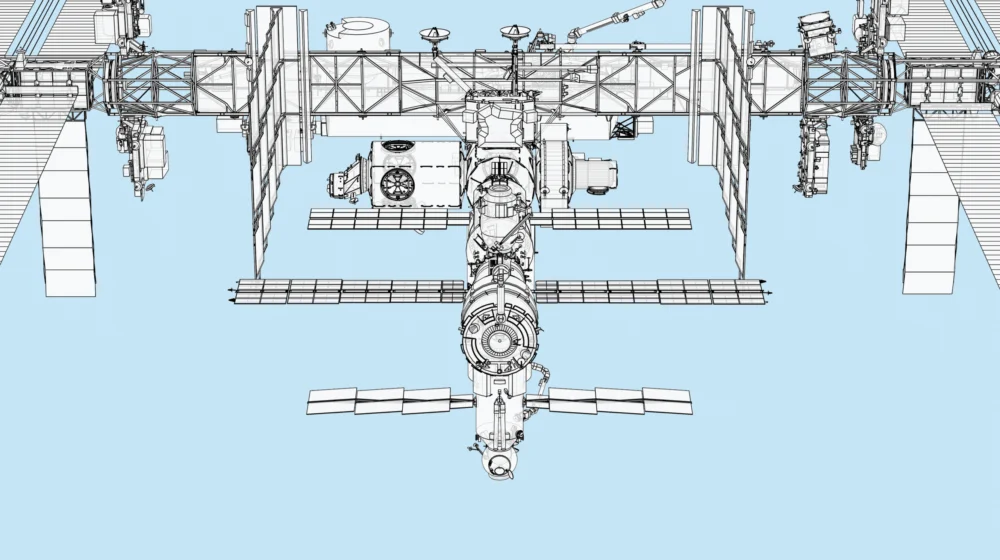
Looking toward the future, the anthroposphere is set to expand even further. We are on the cusp of a new era of human spaceflight, characterized by the rise of commercial space stations and the "lunar economy." As the International Space Station (ISS)—the "orbiting metal bubble" that has housed humans for over two decades—nears its planned retirement at the end of the decade, it will be replaced by a series of private outposts. Companies like Axiom Space and Blue Origin are racing to build modular habitats that will serve as laboratories, film studios, and tourist destinations.
Simultaneously, the "Moon to Mars" initiative aims to establish a permanent human presence on the lunar surface. This will require a new "shell" of satellites around the Moon to provide communication and navigation for lunar colonists. The lessons learned from the congestion of Earth’s orbit will be vital in ensuring that we do not repeat the same mistakes in the lunar environment.
The challenge of the 21st century will be finding a balance between our insatiable desire for connectivity and the physical limits of our orbital environment. The anthroposphere is a remarkable achievement; it has turned the Earth into a "smart planet," where data flows seamlessly and the mysteries of the universe are more accessible than ever before. However, if we continue to treat the space around our planet as a limitless resource without a sustainable management plan, we risk encasing ourselves in a prison of our own making—a shell of high-tech debris that could block our path to the stars for centuries to come.
The thickening layer of human-made matter is no longer just a backdrop for science fiction; it is a critical infrastructure that requires the same level of environmental stewardship as our oceans and forests. As we continue to put more "stuff" into space than ever before, the focus must shift from merely reaching orbit to maintaining it. The future of global communication, scientific discovery, and our very status as a spacefaring species depends on our ability to navigate the crowded, complex, and high-stakes reality of the orbital anthroposphere.
