

The return of measles to the headlines is not merely a localized medical anomaly; it is a profound failure of the invisible infrastructure that has sustained global public health for over half a century. In the northern London borough of Enfield, a localized outbreak has already seen 34 confirmed cases since the beginning of the year, primarily among children under the age of 11. The severity of the disease is underscored by the fact that one in five of these patients required hospitalization. Across the Atlantic, the situation is even more dire. Since October, South Carolina has reported a staggering 962 cases, with large-scale outbreaks—defined as more than 50 confirmed cases—sweeping through four different U.S. states and smaller clusters appearing in a dozen others.
Measles is often described by epidemiologists as the "canary in the coal mine." Because it is one of the most contagious viruses known to science—boasting an R0 (basic reproduction number) of 12 to 18—it is usually the first disease to resurface when the protective wall of herd immunity begins to crumble. To prevent the spread of measles, a community requires a vaccination rate of at least 95%. When that figure dips even slightly, the virus finds the cracks. Today, we are seeing those cracks widen into chasms, and the implications extend far beyond a single virus.
The Anatomy of a Resurgent Threat
The current surge in measles cases is fundamentally driven by a decline in the administration of the MMR (measles, mumps, and rubella) vaccine. In South Carolina, the percentage of kindergartners who have received both doses of the vaccine has been in a steady five-year decline, falling from 94% in the 2020-2021 school year to 91% today. In some specific school districts, coverage has plummeted to as low as 20%, creating pockets of extreme vulnerability. London presents a similarly bleak picture; in some boroughs, vaccination rates for five-year-olds have hit a low of 58%, far below the threshold needed for safety.
The consequence of this decline is the loss of "elimination status," a prestigious designation awarded by the World Health Organization (WHO) when a country proves that a disease is no longer endemic. Last month, the United Kingdom, Spain, Austria, Armenia, Azerbaijan, and Uzbekistan all lost their measles elimination status. Canada lost its status the year prior. This represents a historical regression, effectively undoing decades of progress in pediatric medicine.
For those who view measles as a benign childhood rite of passage, the clinical reality is a sobering corrective. The infection typically begins with high fevers, coughs, and conjunctivitis, followed by the signature maculopapular rash. However, for a significant percentage of the population, the complications are devastating. These include permanent blindness, severe pneumonia, and encephalitis (inflammation of the brain). In rare but tragic instances, the virus can lead to subacute sclerosing panencephalitis (SSPE), a fatal progressive neurological disorder that emerges years after the initial infection has seemingly cleared. Before the vaccine’s introduction in 1963, measles killed an estimated 2.6 million people annually. Since then, the vaccine has prevented nearly 59 million deaths.
The Domino Effect: Polio, Mumps, and Beyond
Public health experts, including Anne Zink, an emergency medicine physician and clinical fellow at the Yale School of Public Health, warn that measles is just the vanguard. If the social contract of universal vaccination continues to fray, other pathogens that were once considered relics of the past will inevitably follow.
Polio is the most chilling example. In 2022, a young man in New York was paralyzed by polio, a disease that had not been seen in the United States for nearly a decade. The case occurred in a community with low vaccination rates, illustrating how quickly a "vanished" disease can reclaim territory. Because polio is asymptomatic in the vast majority of cases, by the time a single case of paralysis is identified, it is highly likely that hundreds or even thousands of others in the community are already carrying and shedding the virus.
Mumps, the second component of the MMR vaccine, is also poised for a comeback. While generally less contagious than measles, mumps can be exceptionally painful and carries long-term risks. It is notorious for causing orchitis (painful swelling of the testicles) in post-pubertal males, which can lead to infertility. Other complications include meningitis and permanent hearing loss. For those who have experienced the "mild" version of the disease, the reality involves weeks of debilitating swelling and the risk of neurological involvement.
Perhaps the most overlooked threat in this shifting landscape is Hepatitis B. Unlike measles, which is airborne, Hepatitis B lives on surfaces for extended periods. If a child is exposed to the virus early in life and is unvaccinated, they face a high risk of developing chronic infection, which frequently leads to cirrhosis and liver cancer later in life. In the 1970s, Alaska had some of the highest rates of childhood liver cancer in the world due to Hepatitis B. It was only through universal newborn vaccination programs that the state managed to eliminate the spread of the virus.
The Policy Shift and the Rise of Hesitancy
The resurgence of these diseases is occurring against a backdrop of significant shifts in public health policy and a growing "trust deficit" toward medical institutions. Recently, the U.S. Centers for Disease Control and Prevention (CDC) updated its childhood vaccination recommendations, notably removing the universal recommendation for the Hepatitis B vaccine for all newborns. Furthermore, high-ranking officials within the CDC’s vaccine advisory panel have begun to publicly question the necessity of broad polio vaccination recommendations.
These policy shifts, while intended by some to allow for more "parental autonomy," are viewed by many in the medical community as a dangerous concession to vaccine hesitancy. This hesitancy has even begun to affect non-vaccine medical interventions. A growing number of parents—roughly 5%, up from 2.9% in 2017—are now refusing the Vitamin K shot for their newborns. Vitamin K is essential for blood clotting, and its refusal has led to an uptick in infants being admitted to intensive care units with intracranial hemorrhages—bleeding into the brain that can cause lifelong stroke-like symptoms or death.
The roots of this hesitancy are complex. They are fed by a "luxury of forgetfulness," where the success of vaccines has made the horrors of the diseases they prevent invisible to the current generation. This is compounded by the rapid spread of misinformation on social media and a broader political polarization of public health. When vaccination becomes a marker of political identity rather than a tool for survival, the collective immunity of the population is compromised.
Economic and Industry Implications
The return of vaccine-preventable diseases also carries a heavy economic burden. A single case of measles triggers a massive public health response, involving contact tracing, quarantine measures, and mobile vaccination clinics. In 2019, a measles outbreak in Washington State cost the public health system an estimated $3.4 million for just 71 cases. When cases reach into the thousands, as seen in South Carolina, the strain on state budgets and healthcare infrastructure becomes immense.
Furthermore, the healthcare industry faces a shifting challenge. Hospitals must maintain rigorous isolation protocols for highly contagious diseases they haven’t had to manage at scale for decades. There is also the "opportunity cost" of these outbreaks; every dollar and man-hour spent containing a measles outbreak is a resource diverted from addressing modern health crises like the opioid epidemic, mental health, or chronic lifestyle diseases.
Future Outlook: Reclaiming the Narrative
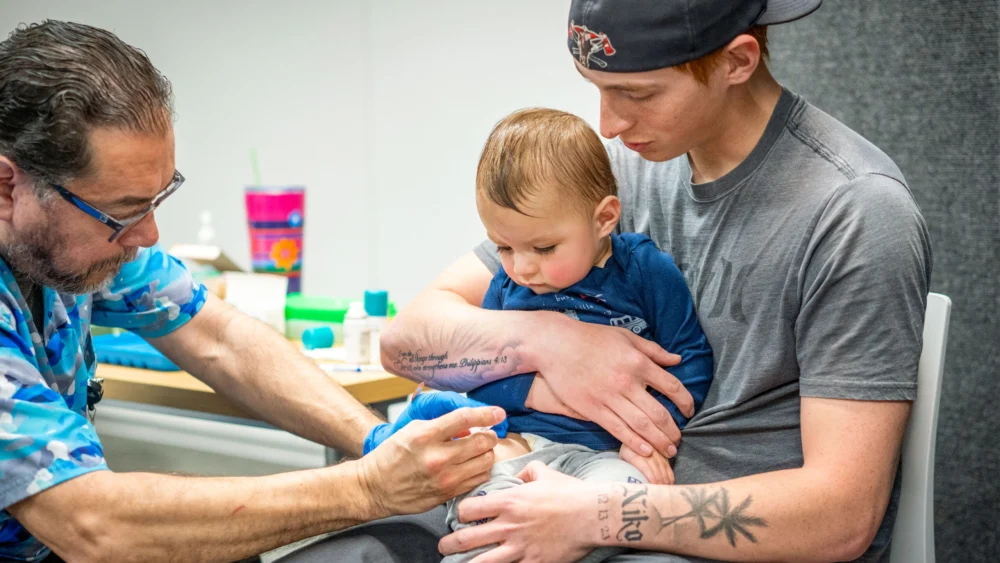
The path forward requires a multifaceted approach that transcends simple mandates. Public health departments are already pivoting toward more localized, accessible solutions. In South Carolina, mobile clinics are offering free MMR vaccinations to residents in high-risk areas, attempting to lower the barriers to access.
However, the more significant challenge is cultural and psychological. Rebuilding trust in the "agency-less" patients—the children who cannot choose for themselves—is the ethical core of the issue. As Dr. Zink notes, one of the most difficult aspects of modern medicine is treating a child for a devastating illness that could have been prevented by a simple, safe injection.
If the current trend continues, we may be entering an era of "re-emerging infectious diseases," where the medical milestones of the 20th century are gradually surrendered. To prevent this, public health must move beyond clinical data and engage in a more profound dialogue with the public about the nature of risk, the reality of disease, and the shared responsibility of living in a connected society. The rise in measles cases is a warning; whether it remains a temporary spike or becomes the new normal depends entirely on our collective willingness to defend the hard-won victories of the past.
