

For decades, the field of biomechanics—the study of the mechanical laws relating to the movement or structure of living organisms—has focused heavily on the mechanics of the musculoskeletal system, gait analysis, and the optimization of performance for male athletes. However, a critical and long-overlooked frontier of human movement is finally receiving the rigorous scientific attention it deserves: the complex, three-dimensional kinematics of breast tissue. At the forefront of this movement is Joanna Wakefield-Scurr, a professor of biomechanics at the University of Portsmouth in the United Kingdom, whose work is bridging the gap between clinical health, high-performance athletics, and textile engineering.
The genesis of Wakefield-Scurr’s career in this niche field was born out of personal necessity. Twenty years ago, while grappling with persistent breast pain that her primary care physician could neither explain nor resolve, she was offered a generic solution: find a more supportive bra. As a scientist, Wakefield-Scurr sought empirical evidence to guide her purchase, only to discover a startling vacuum of data. There was no standardized metric for support, no deep understanding of soft-tissue displacement during high-impact activity, and very little peer-reviewed research on the physiological consequences of inadequate breast support.
Today, Wakefield-Scurr leads an 18-person powerhouse known as the Research Group in Breast Health. This team has transformed what was once a fringe topic into a sophisticated discipline that combines infrared motion-capture technology, physiological monitoring, and material science. Their mission is to decode the "mysteries" of the breast—a biological rarity that presents unique engineering challenges because it lacks the internal structural support found elsewhere in the body.
The Biological and Mechanical Challenge
To understand the complexity of breast biomechanics, one must first appreciate the anatomical uniqueness of the organ. Unlike limbs, which are stabilized by bone and moved by muscle, or organs encased within the thoracic cavity, the breast is an external appendage composed of glandular tissue, fat, and Cooper’s ligaments. These ligaments are thin, fascial structures that provide minimal internal support. Effectively, the breast is a mass of soft tissue suspended on the front of the chest wall, making it highly susceptible to the laws of inertia and momentum.
Wakefield-Scurr’s laboratory was the first to mathematically map the movement of breasts during physical activity. Using high-speed cameras and reflective markers, the team discovered that breasts do not simply move up and down. Instead, they follow a complex, three-dimensional figure-eight pattern. As the torso moves, the breasts swing side-to-side, bounce vertically, and move in and out relative to the chest wall. During a single hour of slow jogging, the average breast will bounce approximately 10,000 times. Without intervention, this constant oscillation can lead to the stretching of Cooper’s ligaments—a process that is biologically irreversible—and significant physical discomfort.
This displacement isn’t just a matter of aesthetics; it is a matter of physiological efficiency. The lab’s research into "breast slap"—the scientific term for the impact of the breast against the chest wall when the two move out of phase—has shown that this lag in movement can cause acute pain and even alter an athlete’s gait. When a woman experiences breast pain, her body subconsciously compensates by shortening her stride or changing her arm swing, which can lead to secondary injuries in the knees, hips, or lower back.
The Hidden Health Crisis: Exercise Barriers and Respiratory Impact
The implications of Wakefield-Scurr’s research extend far beyond the gym. Her findings have highlighted a significant public health issue: breast discomfort and the embarrassment associated with excessive movement are among the primary barriers preventing women from participating in physical activity. In a world facing an obesity crisis and rising rates of sedentary-related illnesses, the lack of adequate sports equipment is a structural barrier to female health.
Furthermore, the "solution" to breast movement often introduces its own set of problems. Historically, the sports bra industry relied on "compression"—essentially squashing the tissue against the chest to minimize movement. However, Wakefield-Scurr’s team has demonstrated that overly restrictive compression can significantly limit a woman’s respiratory capacity. By tightening the chest wall to stabilize the breasts, these garments can restrict the expansion of the ribcage, making it harder to breathe during maximal exertion. This creates a paradoxical situation where the equipment designed to help a woman exercise is actually hindering her aerobic performance.
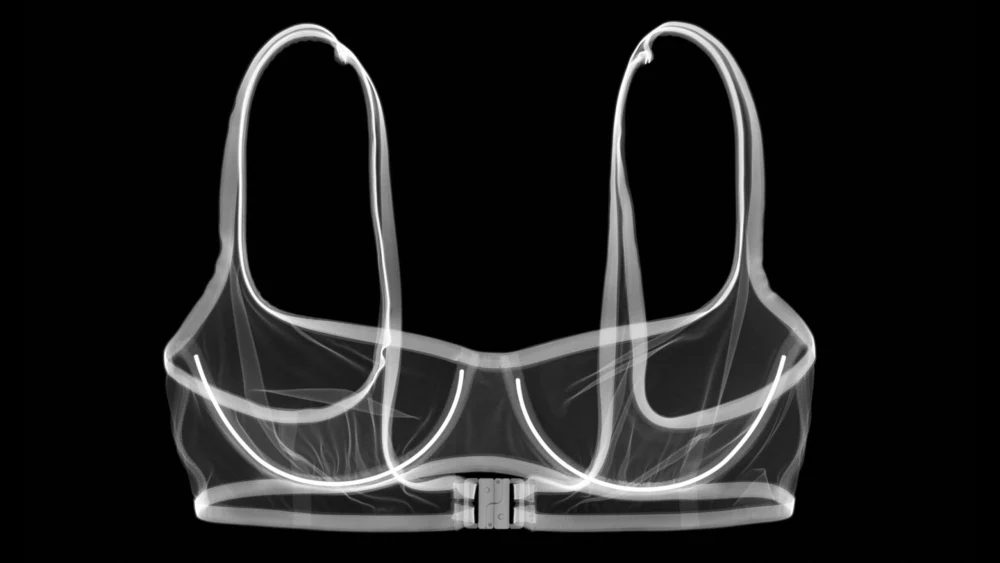
Conversely, a bra that is too loose or poorly designed contributes to chronic neck and shoulder pain. The weight of the breasts, if not distributed correctly across the shoulders and ribcage, puts undue strain on the trapezius muscles and the cervical spine. Wakefield-Scurr’s research suggests that the most effective designs are those that utilize "encapsulation"—supporting each breast individually in its own cup—combined with high-performance features like underwires, padded straps, and adjustable underbands. Their data shows that these high-impact designs can reduce movement by up to 74% compared to wearing no bra at all, a metric that can be the difference between a productive workout and a painful one.
Industry Implications and the Rise of "FemTech" Engineering
The work being done at the University of Portsmouth is sending shockwaves through the global apparel industry, which is currently valued at hundreds of billions of dollars. Major athletic brands are no longer viewing bras as mere "apparel"; they are viewing them as "equipment." This shift has birthed a new professional identity: the breast biomechanic.
These specialists work at the intersection of fashion and physics. They are tasked with translating kinematic data into textile patterns. The industry is moving away from the "small, medium, large" sizing convention, which fails to account for the diversity of breast shapes and densities. Instead, we are seeing the rise of data-driven design, where 3D body scanning and finite element analysis (FEA)—the same computational modeling used to test the structural integrity of bridges and aircraft—are applied to bra construction.
This evolution is part of a larger trend known as "FemTech," where technology is specifically designed to address female biological needs. As more women enter high-impact sports like CrossFit, rugby, and marathon running, the demand for medical-grade support that doesn’t compromise on comfort has skyrocketed. Wakefield-Scurr’s lab is currently inundated with requests from clothing manufacturers eager to have their prototypes validated by her rigorous testing protocols.
The Future of Support: Smart Materials and Reactive Fabrics
As we look toward the future, the field of breast biomechanics is exploring the frontier of smart materials. Wakefield-Scurr is currently investigating "active" fabrics that can change their properties in real-time. Imagine a bra made of non-Newtonian or dilatant materials—fabrics that remain soft and flexible during low-impact activities like walking or sitting, but instantly stiffen and provide maximum support the moment they sense the high-velocity impact of a sprint.
This would solve the ultimate trade-off in bra design: the conflict between the comfort of a stretchy, breathable fabric and the rigidity required for high-impact support. By utilizing materials that react to the rate of strain, the next generation of sports bras could offer a "dynamic fit" that adapts to the user’s movement second-by-second.
Furthermore, the integration of wearable sensors could allow these garments to provide feedback to the wearer. A "smart bra" could monitor heart rate, respiratory rate, and even breast displacement, alerting an athlete if her form is breaking down or if her garment has lost its elasticity and needs to be replaced.
A New Standard for Women’s Health
The work of Joanna Wakefield-Scurr and her team represents a fundamental shift in how society views women’s bodies in motion. For too long, breast pain was dismissed as an inevitability of womanhood or a minor inconvenience. Through the lens of biomechanics, we now understand it as a complex mechanical problem with profound implications for long-term health, athletic performance, and psychological well-being.
As the "Research Group in Breast Health" continues to expand, they are setting a new global standard for evidence-based design. The "job of the future" in this space isn’t just about making better clothes; it’s about applying the highest levels of scientific rigor to an area of human anatomy that was ignored for centuries. In the words of Wakefield-Scurr, the demand for this knowledge is so high that their "cups runneth over." For the millions of women who have spent their lives struggling with inadequate support, the arrival of the breast biomechanic is not just a technological advancement—it is a long-overdue revolution in equity and comfort.
