

The global logistics industry is currently grappling with a sophisticated evolution in organized crime: the rise of vehicle transport fraud. This is no longer a matter of simple carjacking or "smash-and-grab" tactics; rather, it has become a complex digital enterprise where luxury vehicles vanish into thin air through the manipulation of the very systems designed to move them. Criminal syndicates are increasingly utilizing email phishing and highly realistic fraudulent paperwork to impersonate legitimate transport companies. By infiltrating digital brokerage platforms, these "ghost" transporters secure contracts to move high-value assets—often Lamborghinis, Porsches, and other six-figure vehicles—only to divert the shipment the moment it is loaded onto a trailer.
The mechanics of this fraud reveal a disturbing intersection of cybercrime and traditional grand theft auto. Once a vehicle is diverted, these groups employ a combination of advanced computer skills to scrub digital footprints and "old-school" physical techniques to alter Vehicle Identification Numbers (VINs) and forge registration documents. In many instances, by the time a rightful owner or a dealership realizes the scheduled delivery has been missed, the vehicle has already been resold on the black market or shipped in a container across international borders. This epidemic has largely remained out of the public eye, yet it has rocked the automotive logistics industry over the last 24 months. The sophistication of these operations suggests a level of organization that rivals legitimate corporate structures, utilizing data-mining to find high-value targets and social engineering to bypass the security protocols of brokers and drivers alike.
As the physical world faces these logistical threats, the biological world is confronting an even more existential danger: the accelerating rise of antimicrobial resistance (AMR). Currently, infections caused by drug-resistant bacteria, fungi, and viruses are linked to more than 4 million deaths annually. Without a radical shift in how we discover and deploy medicine, experts predict this figure could exceed 8 million by mid-century. The traditional pharmaceutical pipeline for antibiotics has slowed to a crawl, as the economic incentives for developing short-course curative drugs are often overshadowed by chronic-use medications.
Into this breach steps a new generation of computational biologists, led by innovators like César de la Fuente at the University of Pennsylvania. De la Fuente’s team is leveraging artificial intelligence to search through vast genomic databases—essentially "mining" the blueprints of life—to find peptides with potent antibiotic properties. These peptides, which are short chains of up to 50 amino acids, serve as the body’s natural defense mechanisms. By training AI models to recognize the patterns of effective antimicrobial sequences, researchers can now identify promising candidates in unexpected places, including the genomes of extinct species or deep-sea organisms. Furthermore, the vision extends to "de novo" design: using AI to assemble amino acids into entirely new configurations that have never existed in nature. These synthetic molecules are engineered to bypass the resistance mechanisms that modern "superbugs" have developed, potentially providing a permanent advantage in the evolutionary arms race against pathogens.
This shift toward high-stakes technological intervention is also mirrored in the realm of national security. The Pentagon is reportedly nearing a significant strategic pivot, preparing to sever its business ties with Anthropic, the high-profile AI safety and research company. This move is more than a simple contract termination; it signals a hardening of the US military’s requirements for its AI partners. If the Department of Defense moves forward with this severance, it could create a "forced choice" for other contractors: any entity wishing to do business with the US military may be prohibited from working with Anthropic. This development is particularly striking given recent reports that Anthropic’s "Claude" model was utilized in high-stakes operations, including the raid to capture a former Venezuelan president. The tension highlights a growing divide between the "AI safety" movement and the pragmatic, often aggressive, needs of generative AI for military espionage and tactical decision-making.
While the US focuses on the military applications of AI, European regulators are turning their attention to the social consequences of the digital age. Germany is moving closer to implementing a comprehensive ban on social media for children under the age of 16. This legislative push is driven by a rare consensus between the country’s center-left government and conservative opposition, both of whom argue that the current digital environment is fundamentally unsafe for developing minds. The proposed ban is not merely about screen time but is a direct response to the addictive nature of algorithms, the prevalence of cyberbullying, and the mental health crisis currently affecting young people across the West. Should Germany succeed, it could set a precedent for the entire European Union, fundamentally altering the business models of platforms like TikTok, Instagram, and Snapchat.
Domestically, the intersection of technology and government policy is becoming increasingly volatile. Robert F. Kennedy Jr., as part of a broader administrative overhaul, has set his sights on the regulation of baby formula. While his advocates suggest this is a necessary step to remove harmful additives and improve nutritional standards, public health advocacy groups are expressing deep concern. The fear is that these changes may be driven by ideological stances rather than peer-reviewed science, potentially disrupting a fragile supply chain and confusing parents with guidelines that contradict established pediatric consensus.

Resistance to government overreach is also taking on a technological flavor. A growing community of "makers" and hackers has begun using 3D printing and laser-cutting technology to actively resist the operations of Immigration and Customs Enforcement (ICE). These creative hackers are developing tools to interfere with surveillance systems and provide logistical support to immigrant communities, effectively using "garage-tech" to counter the multi-billion-dollar surveillance apparatus of the state. This grassroots digital resistance is gaining momentum as ICE continues to expand its network of data-sharing agreements with local law enforcement agencies.
In the corporate world, the hype surrounding AI is meeting a moment of truth. Global consultancies like McKinsey, BCG, and PwC have spent the last year building thousands of "AI agents"—autonomous software programs designed to handle complex business tasks without human intervention. The industry is now entering a critical phase where these firms must prove that these agents can deliver tangible value rather than just serving as expensive experiments. There is a growing concern among technology analysts that the hype surrounding "agentic AI" has outpaced its current reality, with many systems still struggling with basic reasoning and reliability in high-stakes corporate environments.
The intrusion of technology into everyday life is also causing friction in the service industry. Restaurant workers are increasingly reporting discomfort and hostility toward the use of smart glasses, such as Meta’s Ray-Bans, by diners. These devices allow for surreptitious video recording, turning a private meal into potential content for social media without the consent of the staff or other patrons. This erosion of public privacy is prompting some high-end establishments to implement "no-tech" zones, mirroring the growing cultural backlash against the constant surveillance of the "influencer" era.
Environmental science is also reporting strange and alarming phenomena. In the Arctic, rivers are turning a vivid, rust-colored orange. While initial suspicions pointed toward illegal mining operations, scientists have determined that the culprit is actually climate change. As the permafrost thaws, it releases iron and other minerals that have been locked in the frozen earth for millennia. When these minerals hit the water and oxidize, they turn the rivers orange, altering the pH levels and potentially devastating local fish populations. This is a visible, physical manifestation of the thawing permafrost—a process that researchers are now monitoring from space using satellite imagery to track the collapse of northern ecosystems.
Even as the Earth’s climate becomes more erratic, the quest for exploration continues. NASA recently reached a milestone with its Mars Perseverance rover, allowing an AI system to drive the vehicle autonomously for 456 meters over two days. While some critics noted the "slow" pace of the traversal, the achievement represents a massive leap in robotic autonomy, reducing the rover’s reliance on the time-delayed signals from Earth. Interestingly, while robots are mastering the terrain of Mars, their counterparts on Earth—food delivery bots—are facing a much more hostile environment. In several US cities, slow-moving delivery robots have become targets of public anger, with reports of pedestrians attacking the machines as symbols of unwanted automation and sidewalk congestion.
The frontiers of AI are also expanding into the sensory realm. New research has led to the development of a machine capable of "translating" photographs into smells. By analyzing the visual components of an image—such as a forest or a bakery—the AI-powered system synthesizes a corresponding chemical scent. While this offers a new dimension for immersive technology, it also raises questions about the "digitalization" of our most primal senses and the potential for "sensory hacking" in the future.
This era of disruption is not limited to science and crime; it is also redefining the arts. Mark Fischbach, known to millions as the YouTuber "Markiplier," recently completed a transition from digital content creator to legitimate film director. By independently funding, producing, and releasing his film in theaters, Fischbach has demonstrated that the traditional Hollywood gatekeeping system is increasingly irrelevant. His success suggests a future where creators with large, loyal audiences can bypass studios entirely, controlling the means of production and distribution in a way that was previously impossible.
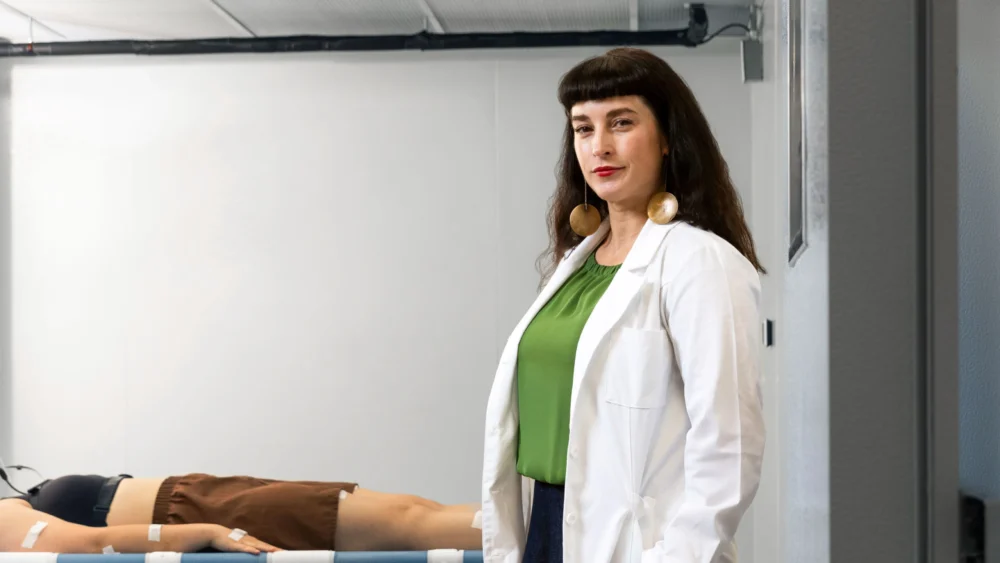
Finally, as we look toward the future, the physical limits of the human body are being tested like never before. Climate change is subjecting populations to extreme temperatures that push the boundaries of human thermoregulation. In Europe alone, heat-related deaths are skyrocketing, with projections suggesting millions of additional fatalities by the end of the century. Scientists are now racing to understand the "blind spots" in our knowledge of how the body reacts to extreme heat and cold. This research is no longer just academic; it is a vital survival guide for a world where the "comfortable" temperature range for human life is rapidly shrinking. From the way we build our cities—like the eye-popping, futuristic Niemeyer Sphere in Germany—to the way we adapt our social lives to sub-zero winters in New York, the coming decades will be defined by our ability to use technology not just for profit or theft, but for the fundamental preservation of human life in an increasingly volatile environment.
